Context
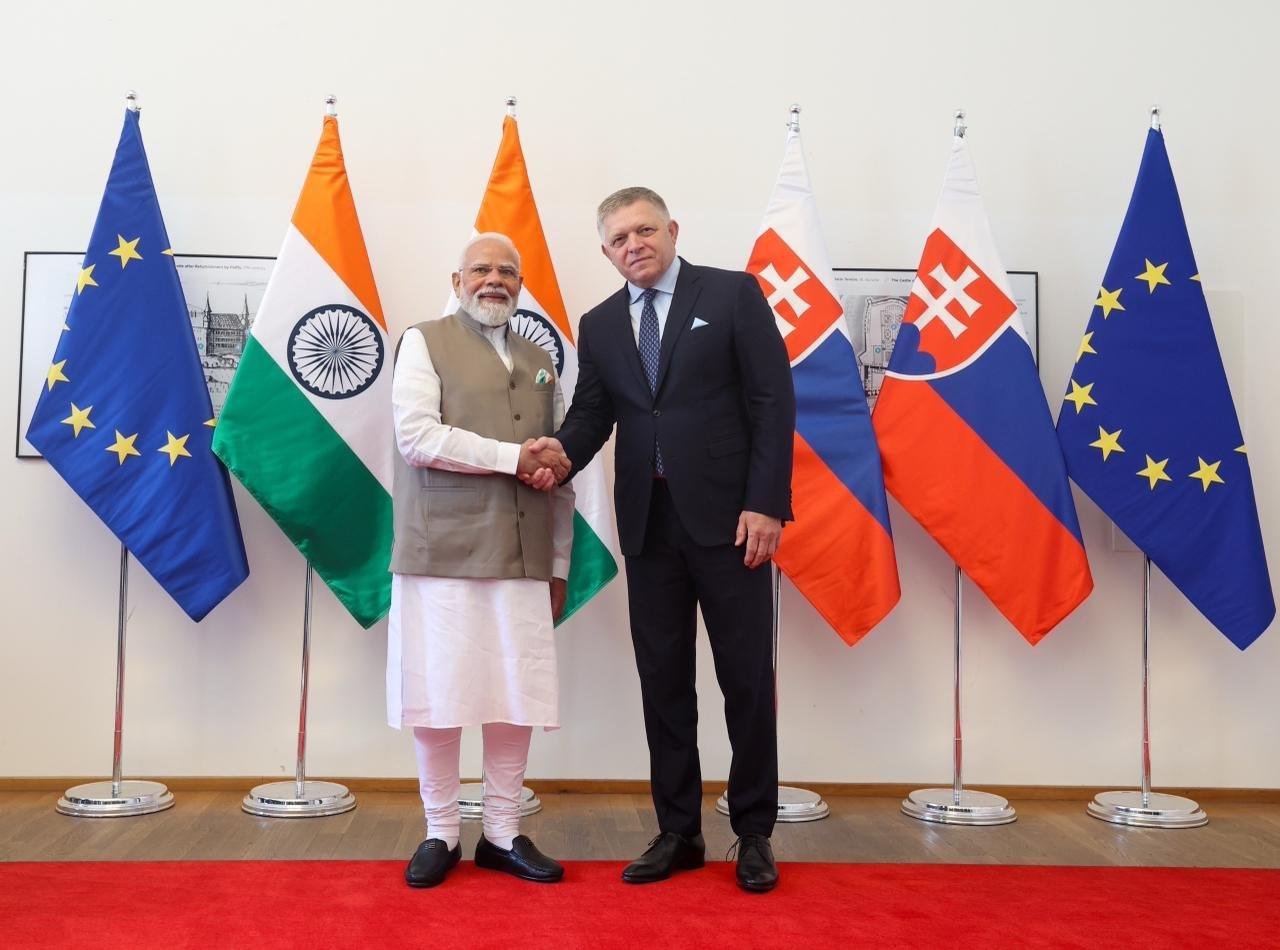
Recently, India and Slovakia elevated their ties to a Comprehensive Partnership during Prime Minister Narendra Modi’s visit to Bratislava, the first by an Indian Prime Minister since Slovakia’s independence in 1993.
India–Slovakia Relations: India and Slovakia share cordial ties based on democratic values and growing cooperation in economic and strategic sectors. Slovakia’s position in Central Europe and its membership of the EU and NATO make it an important partner for India.
Historical Background
- India established diplomatic relations with Slovakia in 1993 after the peaceful dissolution of Czechoslovakia.
- The relationship draws upon India’s longstanding association with former Czechoslovakia, one of the earliest countries to recognize independent India.
- Bilateral ties have gradually expanded through political dialogue, economic engagement, cultural exchanges, and cooperation in international forums.
Key Pillars of Cooperation
- Political and Global Engagement
- Regular high-level interactions and institutional mechanisms have strengthened bilateral relations.
- Both countries advocate multilateralism, respect for international law, and reform of global governance institutions.
- Slovakia supports India’s aspiration for permanent membership of a reformed United Nations Security Council (UNSC).
- Cooperation extends to areas such as counter-terrorism, climate action, sustainable development, and UN reforms.
- Slovakia has consistently backed closer cooperation between India and the European Union.
- Trade and Economic Relations
- Bilateral trade has expanded steadily, exceeding €1.28 billion in 2024.
- Key areas of cooperation include automobiles, engineering goods, electronics, pharmaceuticals, machinery, and advanced manufacturing.
- The partnership is supported by complementary strengths in innovation, manufacturing capabilities, and industrial value chains.
- People-to-People Contacts
- The Indian community in Slovakia is estimated at 5,000–7,000 people.
- Members of the diaspora are primarily engaged in IT, engineering, academia, and entrepreneurship, contributing to stronger societal and economic linkages.
Major Outcomes of Prime Minister Modi’s Visit
- Comprehensive Partnership: The bilateral relationship was elevated to a Comprehensive Partnership, creating a broader framework for cooperation across diverse sectors.
- Defence Cooperation
- A Letter of Intent was signed to enhance defence collaboration.
- Both sides agreed to promote joint development, co-production, and defence industrial cooperation.
- Digital and Emerging Technologies
- An MoU on Digital Technology was signed to strengthen cooperation in digital transformation.
- An India Chair on Artificial Intelligence will be established at a Slovak university.
- The two countries agreed to expand engagement in space activities and civil nuclear energy.
- Trade, Investment and Industrial Collaboration
- Priority sectors identified for future collaboration include automobiles, railways, electronics, advanced manufacturing, and green technologies.
- Slovakia supported the early implementation of the India–EU Free Trade Agreement (FTA) to facilitate greater economic integration.
- Labour Mobility
- An MoU on Labour Migration was signed to facilitate the movement of skilled professionals.
- Both countries agreed to work towards a Social Security Agreement to safeguard workers’ interests.
- Counter-Terrorism
- India and Slovakia reiterated their commitment to combating terrorism in all its forms.
- They agreed to establish a Joint Working Group on Terrorism.
- Both sides reaffirmed support for the Comprehensive Convention on International Terrorism (CCIT) at the United Nations.
Significance
- Enhances India’s engagement with Central Europe and strengthens its outreach to the wider European region.
- Opens new avenues for collaboration in defence production, artificial intelligence, digital technologies, space, and clean energy.
- Facilitates greater trade, investment, industrial partnerships, and skilled workforce mobility.
- Promotes cooperation on security challenges, institutional reforms, and international governance issues.
- Demonstrates the growing alignment of Indian and European interests in an increasingly interconnected global environment.
Conclusion
The elevation of India–Slovakia ties to a Comprehensive Partnership marks an important milestone in bilateral relations. By broadening cooperation across strategic, economic, technological, and people-centric domains, the partnership is expected to deepen India’s engagement with Central Europe while contributing to shared growth, security, and long-term collaboration.