Context
On 14 September 2026, Djibouti became the 72nd country and eighth African nation to sign the Artemis Accords.
Its entry highlights the growing participation of developing countries in shaping norms for peaceful civil space exploration.
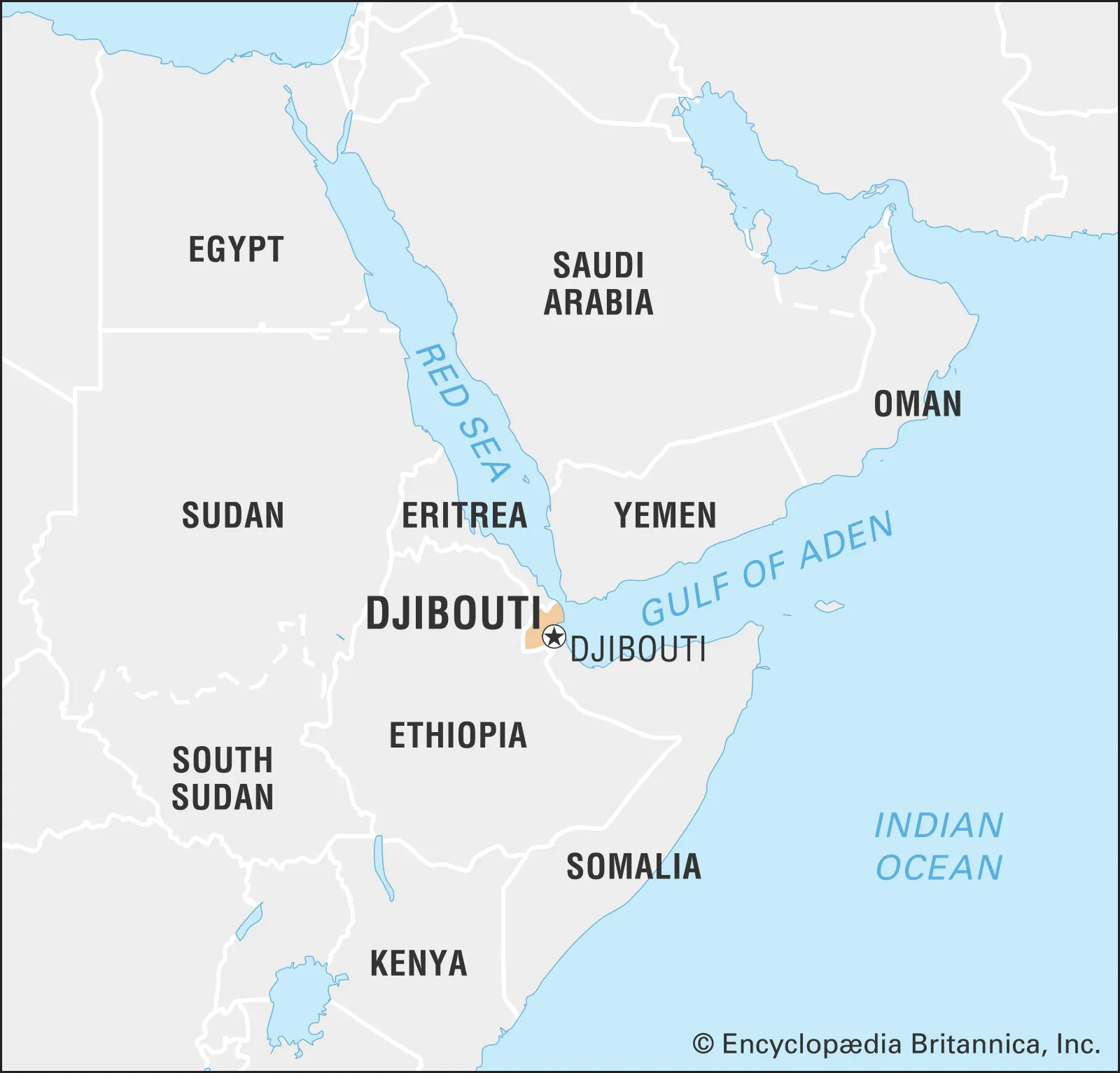
About Djibouti
- Djibouti is located in the Horn of Africa.
- It is bordered by:
- Eritrea to the north;
- Ethiopia to the west and southwest;
- Somalia to the southeast.
- It has coastlines along the Red Sea and Gulf of Aden.
- Its capital is Djibouti City.
Its location near the Bab-el-Mandeb Strait gives it major strategic importance for maritime trade between the Red Sea and the Indian Ocean.
Key Geographical Features
Tectonic Setting
Djibouti lies near the Afar Triple Junction, where the Red Sea, Gulf of Aden and East African rift systems interact.
This explains its:
- faulting;
- volcanism;
- geothermal potential.
Arid Environment
The country has a hot, dry climate characterised by:
- low rainfall;
- high evaporation;
- limited permanent surface water.
Temporary streams called wadis carry water mainly after rainfall.
Lake Assal
Lake Assal lies around 155 metres below sea level and is the lowest point in Africa.
Its extreme salinity reflects both high evaporation and the country’s tectonic setting.
What Are the Artemis Accords?
The Artemis Accords, launched in 2020, provide non-binding principles for responsible civil space exploration.
Important principles include:
- peaceful purposes;
- transparency;
- interoperability;
- emergency assistance;
- registration of space objects;
- sharing of scientific data;
- preservation of space heritage;
- deconfliction of activities;
- responsible use of space resources.
They complement existing international space law, particularly the Outer Space Treaty, 1967.
Why Does Djibouti’s Entry Matter?
- Broader space diplomacy: Participation is expanding beyond established space powers.
- African representation: Djibouti’s entry widens African participation in discussions on future lunar and deep-space activity.
- Capacity building: Cooperation can support scientific research, satellite applications, education and technical skills.
- Norm shaping: Smaller states gain a voice in emerging norms governing peaceful space activity.
Thus: Limited domestic space capability does not exclude participation in global space governance.
FAQs
Q1. Where is Djibouti located?
In the Horn of Africa.
Q2. Which major water bodies border Djibouti?
The Red Sea and Gulf of Aden.
Q3. What is the lowest point in Africa?
Lake Assal.
Q4. What is the Afar Triple Junction?
A tectonic region where the Red Sea, Gulf of Aden and East African rift systems meet.
Q5. What is the purpose of the Artemis Accords?
To promote peaceful, transparent and responsible civil space exploration.