Why in the News?
- Operation Sindoor (May 7–10, 2024) highlighted how UAVs (Unmanned Aerial Vehicles) and UCAVs (Unmanned Combat Aerial Vehicles) are no longer just for reconnaissance (surveillance) but have become crucial for precision strikes in the India–Pakistan context.
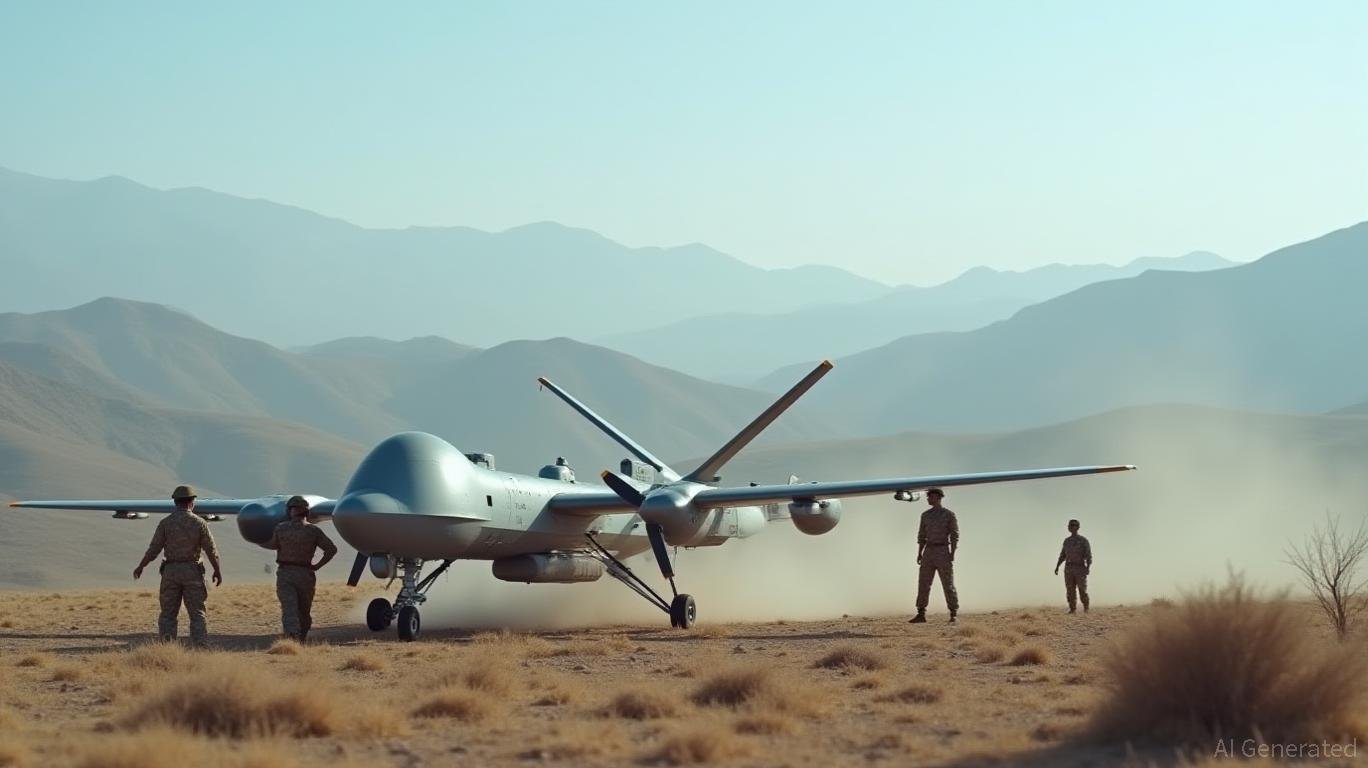
- In 2024, India finalized an order for 31 MQ-9B Reapers (variants: SkyGuardian/SeaGuardian), marking a big step in military modernization and maritime domain awareness (MDA).
- Globally, the UAV export landscape is changing:
- S. lagging due to MTCR (Missile Technology Control Regime) restrictions on exports.
- Israel is busy with West Asia conflicts.
- China and Türkiye are rapidly exporting UAVs, creating opportunities for India to enter this space.
Key Highlights
- Battlefield Shift to Unmanned Warfare
- Nagorno-Karabakh Conflict (2020): Normalized drone-led warfare (drones used for strikes and surveillance).
- The Nagorno-Karabakh conflict (2020) was a six-week war between Armenia and Azerbaijan over the disputed region of Nagorno-Karabakh, which is internationally recognized as part of Azerbaijan but had been controlled by ethnic Armenians since the early 1990s.
- Operation Sindoor (2024): Confirmed UAV/UCAV centrality in ISR (Intelligence, Surveillance, and Reconnaissance) + precision strikes for India.
- Takeaway: Air power is now distributed, persistent (can stay longer), and attritable (low-cost, can be risked in combat).
- Nagorno-Karabakh Conflict (2020): Normalized drone-led warfare (drones used for strikes and surveillance).
- India’s Current Inventory and Gaps
- In Service:
- Heron (MALE – Medium Altitude Long Endurance, for ISR)
- Harop (Loitering munition – drones that circle and then attack target)
- Gaps:
- HALE (High-Altitude Long-Endurance) strike capability with heavy payloads.
- Low-cost swarms (multiple small drones attacking together).
- In Service:
- All-weather MDA (Maritime Domain Awareness – tracking and securing sea areas).
- MQ-9B Purchase:
- Strengthens maritime ISR and strike.
- But still doesn’t meet all land-border and high-altitude needs.
- S. and Components Strategy
- MTCR restrictions limit U.S. drone exports.
- S. may focus more on components like:
- Engines
- EO/IR sensors (Electro-Optical/Infrared for imaging)
- SATCOM (Satellite Communication)
- EW systems (Electronic Warfare)
- India is likely to import components, not full systems, and integrate them into Indian platforms.
- Global Supplier Landscape
- China and Türkiye: Cost-effective UAVs, but strategically off-limits for India.
- Israel: Technologically strong, but busy in West Asia conflicts.
- Europe: Offers tie-ups and JVs (Joint Ventures).
- Net Result: India must combine imports, co-development, and indigenous production.
- Indo-Pacific Demand and India’s Export Potential
- Countries like Vietnam, Philippines, Taiwan, South Korea, Japan need MDA and border ISR due to gray-zone tactics (low-level, ambiguous military actions without full war).
- Their needs match India’s experience → export potential for India.
- Opportunity for “drone diplomacy” and setting international UAV standards with like-minded countries.
Implications for India
- Force Posture and Deterrence
- Persistent UAV ISR/strike → better border vigilance along LAC (China border) and LoC (Pakistan border).
- Layered fleets: HALE + MALE + loitering munitions + swarms → low-risk deterrence.
- Procurement and Industrial Strategy
- Needs hybrid approach:
- Imports for niche tech.
- JVs for subsystems.
- Needs hybrid approach:
- Make in India for large-scale production.
- Priorities: engines, composites, sensors, datalinks, AI-based autonomy, weaponization.
- Geopolitics and Market Influence
- S.–Israel bandwidth gap + China/Türkiye rise → space for Indian UAV exports.
- Indian UAVs can anchor security partnerships in the Indo-Pacific.
- Maritime Security and Gray-Zone Resilience
- Integrated UAV network (Coast Guard + Navy + Air Force) for MDA.
- Data fusion from drones, satellites, and patrol assets → real-time actionable picture.
- Compliance and Norms
- Exports must align with:
- MTCR
- IHL (International Humanitarian Law)
- Build secure supply chains and trusted software.
- Exports must align with:
Challenges and Way Forward
| Challenge | Way Forward |
| Capability gaps in HALE, swarms, all-weather MDA | Fast-track programs with strict timelines |
| Dependence on foreign tech (engines, sensors) | Co-development, indigenization, vendor guarantees |
| Slow procurement process | Simplify DPP (Defence Procurement Procedure), trial-while-in-service |
| Fragmented C2 (Command & Control) | Create tri-service C2 backbone with open standards |
| Export compliance | Set up UAV Export Cell, align with MTCR |
| Financing | Aggregate large orders, enable leasing, export credit |
| Ethical concerns on autonomy | Define human-in-loop policy, maintain IHL standards |
| Talent shortage | Fund R&D consortia, expand testing facilities |
Conclusion
Unmanned air power is now central to modern warfare. Operation Sindoor proved its importance for India. The MQ-9B buy strengthens maritime ISR/strike, but India must fill gaps in high-altitude and attritable strike drones.
By blending imports, JVs, and Make in India, and using export opportunities in Indo-Pacific, India can move from a buyer to a global UAV exporter, boosting national security and strategic influence.
| EnsureIAS Mains Question
Q. Operation Sindoor and the MQ-9B acquisition highlight the growing role of UAVs/UCAVs in modern warfare. Discuss the strategic, technological, and industrial implications of this shift for India. How can India leverage this opportunity to become a leading UAV exporter in the Indo-Pacific region? (250 Words) |
| EnsureIAS Prelims Question Q. With reference to Unmanned Aerial Vehicles (UAVs) and Operation Sindoor, consider the following statements: 1. Operation Sindoor was conducted by India to showcase UAV capabilities in joint drills with the United States. 2. MQ-9B is a high-altitude, long-endurance armed drone with surveillance and strike capabilities. 3. MQ-9B drones are manufactured by Hindustan Aeronautics Limited (HAL) in India under a technology transfer agreement. Which of the statements given above is/are correct? a. 1 and 2 only Answer: a. 1 and 2 only |