Why in the News?
- In February 2025, the Centre introduced the New Income Tax Bill 2025.
- It was then given to a Parliamentary Select Committee for review which recommended some changes in July 2025.
- The centre withdrew this older version of the bill in August 2025 and introduced the updated version of it.
- The updated bill incorporated most of the recommendations of the Committee and corrected the anomalies and drafting errors.
- Then the updated Income Tax Bill,2025 was passed by both Lok Sabha and Rajya Sabha in August 2025.
- This bill is expected to come into effect from 1 April 2026.
| Parliamentary Select Committee
1. Nature and Category a. A Select Committee is an ad hoc (temporary) committee of Parliament. b. Formed for a specific purpose, usually to examine a particular Bill, and dissolved once the task is complete. c. Part of India’s broader parliamentary committee system, which also includes Standing Committees (permanent) like the Privileges Committee. 2. How is it formed? a. Any MP can suggest that a Bill should go to a Select Committee. b. This is done through a motion in the House. c. The motion must be approved by the House. 3. Who are the members? a. Members’ names are written in the motion. b. A person can be a member only if they agree. c. The Chairman is chosen by the Rajya Sabha Chairman from the members. d. The Minister or MP who is in charge of the Bill is usually a member. e. No fixed number of members. f. If it is a Joint Committee (both Houses), ratio of Rajya Sabha to Lok Sabha members is 1:2. 4. How does it work? a. Quorum: At least one-third of members must be present for a meeting. b. If voting is tied, the Chairman has an extra vote to break the tie. c. Can make smaller sub-committees for specific topics. d. The report is signed by the Chairman; members can also write their disagreements. e. The report is shared with all MPs. 5. What does it do? a. Read the Bill clause by clause to check if it meets its purpose. b. Can call experts, stakeholders, and officials to explain points. c. Can ask for written suggestions or visit places for direct study. d. Can suggest changes in the Bill. 6. What happens after the report? a. The report is only advice, the government can accept or reject it. b. The committee can also prepare its own version of the Bill. c. The Minister in charge can ask the House to discuss and pass that version. |
Why was this Bill brought in?
- The old Income Tax Act, 1961 has been in use for over 60 years.
- Over time, it became too long, too complicated, and full of outdated rules.
- The New Income Tax Bill, 2025 is meant to make tax law shorter, clearer, and easier to follow.
- It also updates provisions to match today’s digital world and modern business practices.
How has the law been simplified?
- Size reduced:
- Words: From 5.12 lakh → 2.59 lakh (about half the length).
- Chapters: 47 → 23.
- Sections: 819 → 536.
- Easier to read: Uses simpler words, removes old-fashioned language. Adds more tables (18 → 57) and formulae (6 → 46) to make calculations clear.
- Better organisation: Sections are rearranged in a logical sequence so you can find things faster.
Key changes for taxpayers
- One single “Tax Year”: The old law had “Previous Year” (when you earn) and “Assessment Year” (when you pay tax). Now both are merged into one ‘Tax Year’ for simplicity.
- Late refunds allowed: Even if you file your return late, you can still get a refund (not possible earlier).
- Loss carry-forward stays: You can still carry forward business losses to adjust against future profits.
- Faster TDS corrections: Time to fix TDS mistakes reduced from 6 years to 2 years, which will mean fewer pending complaints.
- TDS (Tax Deducted at Source) is a system where a certain percentage of your income is deducted by the payer (like employer, bank, etc.) before making payment to you, and deposited directly with the government as advance tax.
- Clearer deduction rules: The bill clearly tells how much amount is taxable and how much is tax free especially for commuted pensions and gratuity received by family members. This avoids confusion about tax on these retirement-related payments to families.
- Commuted pension: When your monthly pension is changed into a one-time lump sum payment.
- Gratuity: A lump sum payment given to you (or your family) when you retire or if the employee dies.
Special provisions for certain sectors
- MSMEs: In this bill, the definitions of MSMEs match with that of the definition given in the MSME Act for uniformity.
- Religious trusts: The provision that a religious trust does not have to give tax on anonymous donation is retained.
- Professionals with high earnings: Professionals earning ₹50 crore+ per year must use specified electronic payment methods (like bank transfers, UPI, NEFT) for receiving and making payments. This means no large cash dealings. (earlier, this was only for businesses).
- Old compulsory investment rule removed: Certain trusts had to invest 15% of their income in approved ways (like government bonds or fixed deposits) before using the rest for their work. Now, this requirement is gone. Trusts can use all their income directly for their activities without first locking up 15% in investments.
- Example: An educational trust earns ₹1 crore in a year. Earlier, it had to first invest ₹15 lakh in approved schemes before spending the rest on school expenses. Now, it can spend the full ₹1 crore directly on education.
Stronger search & seizure powers
- Powers to Access “Virtual Digital Space”
- The new Bill keeps the debatable definition of “virtual digital space.”
- Scope of access: Tax authorities can collect information from email servers, social media accounts, online investment, trading, and banking accounts, remote or cloud servers and digital application platforms.
- Purpose: Applicable during searches and surveys to gather evidence.
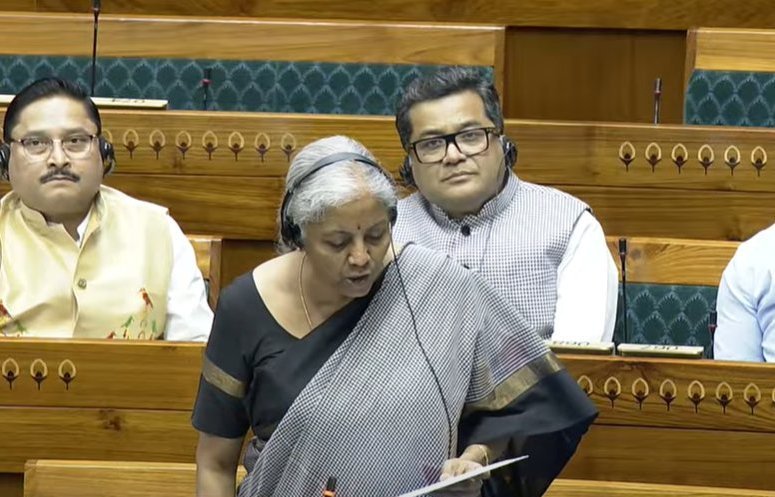
- The Finance Minister said a Standard Operating Procedure (SOP) will be issued to guide the handling of personal digital data seized in such operations.
- Access to digital data:
- Tax officials can demand passwords/access codes to your emails, WhatsApp, social media, and other electronic records during searches.
- If you don’t share them, they can override your system and access it themselves.
- Reason for this:
- The committee said evidence of tax evasion is often found in digital form and taxpayers refuse to share passwords.
- Criticism:
- Opposition MPs say this could misuse power and violate Right to Privacy (as upheld in the Puttaswamy judgment).
- Some members wanted to keep the old, less intrusive rules from the 1961 Act.
What were the errors in the Feb 2025 version that was fixed in this New Bill?
- No TCS on Education Remittances
- If money is sent abroad for education through a bank or financial institution under the Liberalised Remittance Scheme (LRS), there will be no Tax Collected at Source (TCS).
- This point was missing earlier.
- Company Dividend Tax Rules Fixed
- Corrected mistakes in rules for dividend deductions for companies that pay tax at concessional rates.
- Lower Alternate Minimum Tax (AMT) for LLPs Restored
- LLPs (Limited Liability Partnerships) not taking special tax benefits will continue to pay AMT at 5%, not the higher 18.5% that was wrongly included earlier.
- Nil-IDS Certificate
- People who don’t owe any tax can now get a nil income declaration certificate.
- Transfer Pricing & Loss Rules Clarified
- Cleared confusion in rules about international transactions between related companies (transfer pricing).
- Made rules clearer on how losses can be carried forward and adjusted in future years.
- ‘Beneficial Owner’ Term Removed
- Removed this term to match the rules in the 1961 Act’s Section 79.
- House Property Income Deduction Clarified
- The 30% standard deduction for house property income will be calculated after subtracting municipal taxes.
- Donation Rule for Non-Profits Changed
- Non-profit organisations will now get exemption on 5% of total donations received, not just 5% of anonymous donations.
| Liberalised Remittance Scheme (LRS)
1. A scheme by the Reserve Bank of India (RBI) that allows resident individuals to send up to USD 250,000 per financial year abroad for purposes like education, travel, gifts, investments, or medical treatment without needing prior RBI approval. Limited Liability Partnership (LLP): 1. A business structure that combines features of a partnership and a company, where partners have limited liability (their personal assets are protected) and the LLP is a separate legal entity from its partners. Alternate Minimum Tax (AMT): 1. It is a special tax rule in India to prevent taxpayers from avoiding taxes by using too many exemptions, deductions, or incentives. 2. Under AMT, if the normal income tax you owe is less than the AMT calculated, you must pay the AMT amount instead. 3. It mainly applies to non-corporate taxpayers (like individuals, partnerships, LLPs) who claim certain deductions under the Income Tax Act. 4. The idea is to ensure everyone pays at least a minimum tax, no matter how many benefits or exemptions they use. 5. Example: If your normal tax is ₹50,000, but AMT is ₹70,000 → you must pay ₹70,000. |
Taxation Laws (Amendment) Bill, 2025
- Why this Bill was passed
- It was passed along with the Income Tax Bill, 2025.
- It made changes to the Finance Act, 2025.
- Saudi PIF Tax Benefits
- The Saudi Public Investment Fund (PIF) and its fully owned companies will not have to pay income tax in India on:
- Dividends
- Interest
- The Saudi Public Investment Fund (PIF) and its fully owned companies will not have to pay income tax in India on:
- Long-term capital gains
- Other investment income
- PIF has investments worth over $925 billion
- It was already given partial tax benefits in 2022, but there were limits for its subsidiary companies.
- Now those limits are gone — PIF gets full tax exemption, just like the Abu Dhabi Investment Authority (ADIA).
- Pension Scheme Tax Benefits
- The Guaranteed Unified Pension Scheme (UPS) will now get the same tax benefit as the National Pension System (NPS).
- At retirement, you can take up to 60% of your UPS savings as a lump sum without paying tax on it
Guaranteed Unified Pension Scheme (UPS) vs National Pension System (NPS)
|
How does this affect you and the economy?
- For individuals:
- Filing and understanding taxes will be easier.
- Late refund claims are now possible.
- For businesses & MSMEs: Simpler compliance, clear rules, and faster corrections.
- For the economy: Transparent, predictable tax laws → attracts investment and boosts confidence.
- For the government: Better tools to investigate tax evasion, especially in the digital era.
Expert opinion
- Tax experts say the new law will reduce disputes, simplify interpretation, and promote fairness.
- Ambiguities in earlier drafts (e.g., about property tax, pensions, late submissions) have been fixed.
- It’s expected to be clearer, fairer, and more future-ready.
Challenges and Way Forward
| Challenges | Way Forward |
| Privacy concerns due to broad “virtual digital space” definition. | Narrow definition + strong safeguards, independent oversight. |
| Risk of misuse of search & seizure powers. | Clear SOPs, time-bound review of seized data. |
| Transition from old Act to new Act may confuse taxpayers. | Extensive taxpayer awareness campaigns, FAQs, helplines. |
| Potential litigation over interpretation of new provisions. | Advance rulings, detailed explanatory notes from Central Board of Direct Taxes (CBDT). |
| Digital compliance burden for small entities. | Simplified compliance portal, reduced paperwork for low-volume taxpayers. |
Conclusion
The Income Tax Bill, 2025 is one of the most significant tax reforms in six decades. It shortens, simplifies, and modernises tax law, making compliance easier for individuals and businesses. While it enhances the government’s digital investigation powers, these must be balanced with privacy protections. If implemented effectively, the new law can increase tax compliance, reduce disputes, and attract global investment.
| Ensure IAS Mains Question
Q. The Income Tax Bill, 2025 aims to simplify and modernise India’s tax framework while introducing stronger digital enforcement powers. Discuss its potential benefits and risks. (250 words) |
| Ensure IAS Prelims Question
Q. Consider the following statements about the Income Tax Bill, 2025: 1. The bill merges the “Previous Year” and “Assessment Year” into a single “Tax Year.” 2. Under the new bill, late refunds are not allowed if the return is filed after the due date. 3. The 30% standard deduction on house property income will now be calculated before deducting municipal taxes. 4. The bill removes the rule that certain trusts must invest 15% of their income in approved modes before using the rest. Which of the above statements is/are correct? a) 1 and 4 only b) 1, 3 and 4 only c) 2 and 3 only d) 1, 2 and 4 only Answer: a) 1 and 4 only Explanation: Statement 1 is correct: Under the New Income Tax Bill, 2025, the traditional distinction between “Previous Year” (when income is earned) and “Assessment Year” (when tax is assessed) has been eliminated. Both have been consolidated into a unified “Tax Year”, simplifying the taxation timeline. Statement 2 is incorrect: Actually, the updated bill permits refunds even for late-filed returns, which wasn’t allowed under the older provisions. Statement 3 is incorrect: The correct rule in the New Bill specifies that the 30% standard deduction should be calculated after deducting municipal taxes from the house property income, not before. Statement 4 is correct: The updated legislation abolishes the old requirement obliging certain trusts to first invest 15% of their income (e.g., in government bonds or fixed deposits) before spending the remainder. Trusts are now free to use their entire income directly for their activities. |