Context
The Ministry of Petroleum and Natural Gas launched the Incentive Scheme for Promotion of Domestic PNG Connections in 2026 to accelerate the expansion of household PNG connectivity.
About the Scheme
- Objective: Promote wider household adoption of Piped Natural Gas (PNG) by incentivising City Gas Distribution (CGD) entities to increase active and billed domestic connections, including conversion of existing unbilled connections.
- PNG: Natural gas supplied to households through pipelines, mainly for cooking.
- Regulation: CGD entities operate in Geographical Areas (GAs) authorised by the Petroleum and Natural Gas Regulatory Board (PNGRB).
- Purpose: Improve access to clean, safe and affordable cooking fuel.
Key Features
- Implementation: Conducted in two tranches over six months.
- GA-wise targets: A minimum number of domestic connections is fixed for each Geographical Area (GA).
- Performance-based incentive: CGD entities must add billed domestic connections above the prescribed threshold to qualify.
- Gas incentive: Each eligible additional connection earns an allocation of 200 Standard Cubic Metres (SCM) of natural gas.
- Focus: Encourages conversion of unbilled connections into active, billed connections.
Significance
- Cleaner Energy: Promotes greater use of PNG as a cleaner household cooking fuel.
- Better Infrastructure Use: Improves utilisation of existing CGD networks by increasing active connections.
- Energy Access: Expands household access to piped cooking fuel.
- Commercial Viability: Increased household connections can raise PNG demand and network utilisation, potentially improving the commercial viability of CGD networks.
Additional Information:
| Fuel | Full Form | Main Composition / Source | Physical Form | Storage / Supply | Major Use |
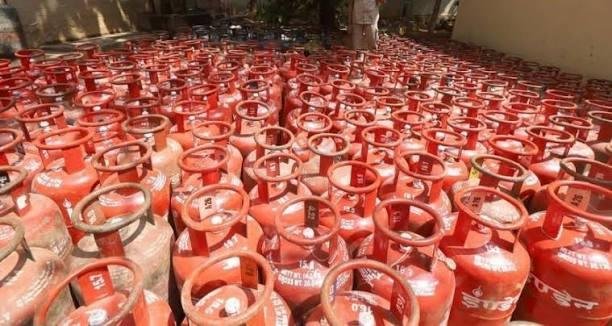
| LPG | Liquefied Petroleum Gas | Mainly Propane + Butane | Liquid under pressure | Cylinders | Domestic cooking, commercial use, Auto LPG |
| PNG | Piped Natural Gas | Mainly Methane (CH₄) | Gas | Supplied through pipelines | Domestic cooking, commercial & industrial use |
| CNG | Compressed Natural Gas | Mainly Methane (CH₄) | Compressed gas | High-pressure cylinders/ cascades | Mainly Transport |
| LNG | Liquefied Natural Gas | Mainly Methane | Liquid at about −161°C | Cryogenic tanks | Long-distance transport, storage, industry |
| CBG | Compressed Biogas | Mainly Methane, produced from organic waste/biomass | Compressed gas | High-pressure cylinders/ cascades | Transport, industry; can be injected into gas networks |
FAQs
Q1. Which ministry is responsible for the scheme?
Ans. The scheme is under the Ministry of Petroleum and Natural Gas.
Q2. What is PNG?
Ans. Piped Natural Gas (PNG) is natural gas supplied to households through pipelines, mainly for cooking and other domestic uses.
Q3. How long will the scheme operate?
Ans. The scheme will be implemented through two tranches over a six-month period.
Q4. Which institution regulates CGD network authorisation?
Ans. The Petroleum and Natural Gas Regulatory Board (PNGRB) authorises entities for development of CGD networks.