Context
- Scientists have discovered a new heat-loving amoeba, Incendiamoeba cascadensis, capable of growing and reproducing at 63°C.
- It sets a new known upper-temperature record for eukaryotic reproduction, exceeding the earlier recognised limit of around 60°C.
- The NASA-supported research was published in the journal Cell in September 2026.
About Incendiamoeba cascadensis
- It is a newly discovered single-celled amoeba found in geothermal waters of Lassen Volcanic National Park, California, USA.
- Its name roughly means “fire amoeba from the Cascades”, referring to its heat tolerance and the Cascade mountain region.
- It is an obligate thermophile—an organism that requires high temperatures for growth. It grows between about 42°C and 63°C, with optimum growth around 55–57°C.
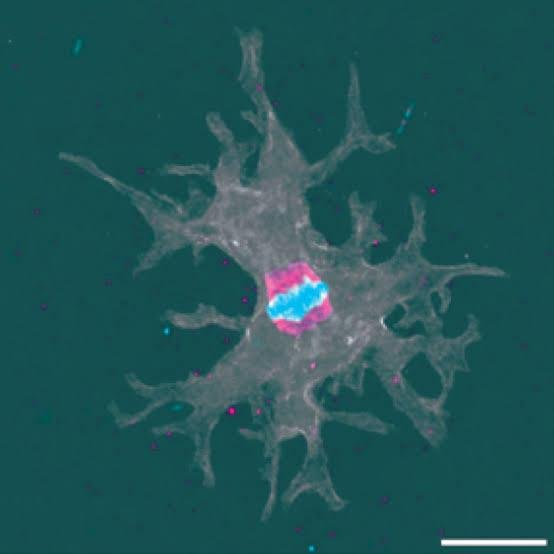
- It occurs in two main forms—an elongated worm-like form and a compact amoeboid form with pseudopodia.
Remarkable Heat Tolerance
- Reproduction: It can reproduce through mitosis at 63°C, the highest confirmed temperature for reproduction among known eukaryotes.
- Movement: It remains capable of movement at around 64°C, even though normal reproduction stops.
- Short-term survival: It can recover after brief exposure to 70°C, but cannot normally grow at such temperatures.
Thus, the amoeba shows different temperature limits for reproduction, movement and survival.
How Does It Survive Extreme Heat?
High temperatures can damage proteins, DNA and cell membranes, making extreme heat particularly challenging for complex cells.
- The amoeba possesses enhanced cellular systems linked to protein stability and maintenance.
- It shows adaptations associated with DNA repair and genome stability, helping protect genetic material from heat damage.
- At very high temperatures, it can change its shape and form a protective outer layer, improving short-term survival.
- However, the complete molecular mechanism behind its exceptional heat tolerance is still being studied.
Scientific Significance
- Limits of life: Extends the known temperature boundary at which eukaryotic cells can reproduce.
- Astrobiology: Broadens understanding of conditions in which complex cellular life could potentially survive beyond Earth.
- Biotechnology: Its heat-stable proteins and cellular mechanisms could provide clues for developing thermostable enzymes and other industrial applications.
Eukaryotes vs Prokaryotes
- Eukaryotes have a true nucleus and membrane-bound organelles; they include animals, plants, fungi and protists such as amoebae.
- Prokaryotes, comprising bacteria and archaea, lack a true nucleus and membrane-bound organelles.
- Some bacteria and archaea can grow at temperatures above 100°C, showing much greater heat tolerance than known eukaryotes.
FAQs
Q1. What is Incendiamoeba cascadensis?
It is a newly discovered heat-loving single-celled amoeba.
Q2. Where was it discovered?
In Lassen Volcanic National Park, California, USA.
Q3. What is its maximum confirmed temperature for reproduction?
It can reproduce through mitosis at 63°C.
Q4. What is an obligate thermophile?
It is an organism that requires high temperatures for growth.
Q5. Why is Incendiamoeba cascadensis significant?
It sets the known upper-temperature record for reproduction among eukaryotes.