Context
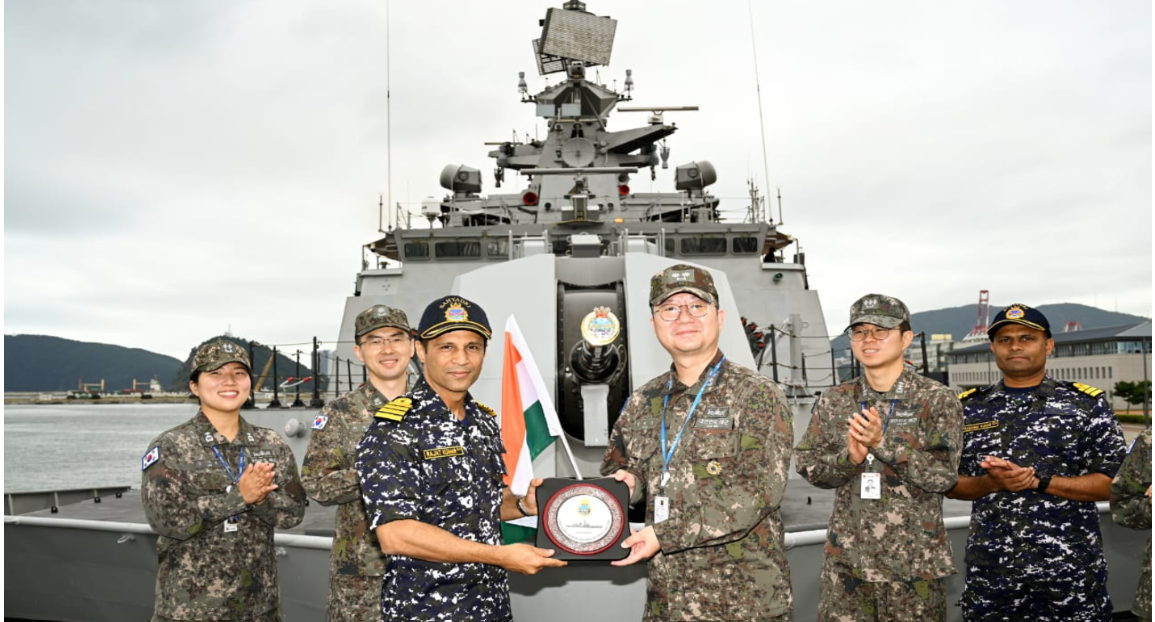
The Indian Navy’s indigenous stealth frigate INS Sahyadri is participating in the India-Republic of Korea Navy (IN-RoKN) bilateral naval exercise at Busan Naval Harbour, South Korea.
About IN-RoKN Exercise
- Participating countries: India and the Republic of Korea (South Korea).
- Nature: Bilateral naval exercise.
- Objective: To strengthen maritime cooperation, improve operational coordination and enhance interoperability between the two navies.
- The first bilateral IN-RoKN naval exercise was conducted in October 2025.
- The exercise marks an important step in expanding direct naval engagement between India and South Korea.
| Important Terms
1. Bilateral exercise: A military exercise conducted between the armed forces of two countries. 2. Interoperability: The ability of the armed forces of different countries to work together effectively by coordinating their operations, communication and procedures. 3. Maritime cooperation: Collaboration between countries to ensure the safety, security and stability of oceans and sea routes. |
Why is this exercise important?
- Indo-Pacific importance: The region is a major centre of global trade, energy routes and strategic competition. Ensuring maritime security in this region is therefore important for both countries.
- Protection of trade routes: Naval cooperation helps secure vital maritime trade routes and improve maritime awareness.
- Regional security: Growing geopolitical tensions and maritime threats necessitate cooperation among like-minded countries.
- Stronger bilateral ties: The exercise strengthens defence relations, mutual trust and cooperation between India and South Korea.
- Interoperability: Helps both navies coordinate operations, understand each other’s capabilities and respond effectively to maritime challenges.
- Strengthening Act East Policy: Deepens India’s strategic engagement with South Korea and other East Asian countries.
Key Features of the IN-RoKN Exercise
The exercise is conducted in two major phases:
- Harbour Phase: Conducted while naval ships are stationed at the port. Key activities include:
- Professional interactions: Exchange of operational knowledge and experience.
- Cross-deck visits: Understanding each other’s ships, equipment and systems.
- Cross-training: Sharing technical knowledge and training practices.
- Sports and cultural activities: Building mutual trust and personal relationships.
- Significance: Builds familiarity, professional understanding and trust between the two navies.
- Sea Phase: Involves joint naval operations at sea. Key focus areas include:
- Operational coordination: Practising coordinated maritime activities.
- Interoperability: Improving the ability to operate together.
- Professional exchange: Gaining practical experience through joint activities.
- Maritime cooperation: Strengthening regional maritime security.
- Participating Ships: INS Sahyadri (Indian Navy) & ROKS Munmu the Great (South Korean Navy).
- Significance: Provides practical experience in joint naval operations and strengthens maritime cooperation beyond harbour-level interactions.
INS Sahyadri: The Indian Naval Ship Participating in the Exercise
- Third ship of the Shivalik-class guided-missile stealth frigates.
- Indigenous warship built by Mazagon Dock Limited, Mumbai.
- Commissioned into the Indian Navy in 2012.
- Weapons and capabilities
- Anti-ship capability: Equipped with BrahMos anti-ship missiles.
- Air defence: Equipped with Barak-1 and Shtil-1 missile systems.
- Anti-submarine warfare: Equipped with anti-submarine rocket launchers.
- Surveillance: Advanced sensors help detect threats from the air, surface and underwater.
- Aviation capability: Can carry multi-role helicopters.
- Strategic significance of INS Sahyadri
- Indigenous defence manufacturing: It reflects India’s growing ability to design and manufacture advanced warships domestically.
- Multi-dimensional warfare: Its weapons and sensors enable it to deal with threats across air, surface and underwater domains.
- Maritime diplomacy: Participation in international naval exercises showcases India’s naval capabilities and strengthens defence partnerships.
- Self-reliance in defence: It demonstrates progress towards the broader vision of Aatmanirbhar Bharat in defence manufacturing.
Conclusion
The IN-RoKN exercise reflects the growing strategic convergence between India and South Korea in the maritime domain. Regular naval cooperation can strengthen bilateral defence relations, improve interoperability and contribute towards a free, open and secure Indo-Pacific region.
Additional InformationIndia’s Important Naval Exercises
Related Concepts 1. Stealth Frigate: A warship designed to reduce its visibility to enemy detection systems. 2. Maritime Domain Awareness (MDA): Understanding activities and developments taking place in the maritime domain to improve security. 3. Indo-Pacific: A geographical and strategic region connecting the Indian and Pacific Oceans. |
Frequently Asked Questions (FAQs)
Q1. What is the IN-RoKN Exercise and who is participating?
It is a key bilateral naval exercise between the Indian Navy and the South Korean Navy to boost maritime cooperation in the Indo-Pacific.
Q2. Which major warships are leading the India-South Korea naval drills?
India’s indigenous stealth frigate INS Sahyadri and South Korea’s ROKS Munmu the Great are spearheading the joint operations.
Q3. When did the inaugural India–Republic of Korea Navy Exercise take place?
The first edition of this strategic maritime engagement was successfully conducted in October 2025.
Q4. What are the key operational phases of the IN-RoKN naval exercise?
The exercise features a Harbour Phase for professional cross-training at port and a Sea Phase for live joint tactical maneuvers.
Q5. Why is the IN-RoKN exercise crucial for India’s foreign policy?
It strengthens India’s Act East Policy and secures vital Indo-Pacific trade routes against rising regional geopolitical challenges.