Context
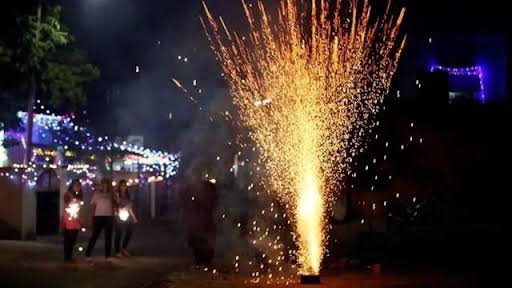
- Firecrackers are traditionally associated with festivals such as Deepavali and form part of India’s cultural and social celebrations. However, their widespread use contributes to air and noise pollution, particularly in already polluted regions such as Delhi-NCR.
- The Supreme Court’s recent intervention has brought this issue into focus, highlighting the need to balance religious freedom, public health and environmental protection.
- Instead of relying only on a blanket ban, the Court has emphasised conditional permission for certified green crackers, regulated timings and stricter enforcement.
Supreme Court’s Recent Guidelines on Green Crackers
The Supreme Court permitted the conditional use of certified green firecrackers in Delhi-NCR on November 7 and 8, recognising the cultural significance of Deepavali while placing public health considerations at the centre of its directions.
- Permitted Timings: Green crackers could be burst only during two designated periods – Morning (6 AM to 7 AM) and Evening 98 PM to 10 PM). Restricting the duration of bursting helps limit the period of concentrated pollution and noise exposure.
- No-Cracker Zones: Firecrackers were prohibited within a 300-metre radius of sensitive locations, including hospitals, nursing homes and healthcare centres, educational institutions, old-age homes and notified silence zones. Authorities were directed to identify and publicly mark these areas as no-cracker zones.
- Restrictions on Manufacturing and Sale
- Only manufacturers certified by the CSIR-NEERI and the Petroleum and Explosives Safety Organisation (PESO) were permitted to manufacture green crackers during the specified period.
- Green crackers had to be packed in sealed boxes and kept separate from conventional or unauthorised firecrackers.
- Firecrackers joined together in long series, commonly called ladis, were prohibited because of their high pollution and noise emissions.
- Only products carrying product-specific QR codes could be sold, helping authorities and consumers identify authorised products.
- Manufacturers and traders were also required to furnish financial security to strengthen compliance.
Constitutional Dimensions: Religious Freedom vs Right to Clean Air
The Constitution protects both religious freedom and the right to life. The firecracker debate raises an important constitutional question: Can a religious or cultural practice continue when it causes harm to the health and well-being of others?
- Article 21: Right to Life and a Healthy Environment
- Article 21 guarantees the right to life and personal liberty. The Supreme Court has interpreted this right to include the right to live in a healthy and pollution-free environment.
- Unregulated firecracker use can increase particulate matter, noise pollution and solid-waste generation, affecting public health. Children, elderly people and persons with disabilities are particularly vulnerable to the harmful effects of pollution.
- Article 25: Freedom of Religion
- Guarantees freedom of conscience & right to freely profess, practise & propagate religion. However, this freedom is subject to reasonable restrictions like morality, health, etc.
- So, a religious or cultural practice cannot be used to justify activities that create unreasonable health risks for others.
- Other Constitutional Provisions on Environmental Protection
- Article 48A: Directs the State to protect and improve the environment and safeguard forests and wildlife.
- Article 51A(g): Makes it a fundamental duty of every citizen to protect and improve the natural environment, including forests, lakes, rivers and wildlife.
Together, these provisions establish that environmental protection is a shared responsibility of the government and citizens.
Why are Firecrackers an Environmental and Public Health Concern?
- Air pollution: Firecrackers release particulate matter and other pollutants, contributing to sudden increases in pollution levels during festivals.
- Respiratory health: Fine particulate matter can enter deep into the lungs and worsen respiratory conditions.
- Noise pollution: Loud explosions disturb residents and can particularly affect children, elderly people, patients and persons with disabilities.
- Solid-waste generation: Firecracker remains contribute to waste accumulation and require proper disposal.
International Approaches to Firecracker Regulation
International environmental agreements provide important principles for regulating activities that can harm public health and the environment.
- Stockholm Declaration, 1972: Recognised that environmental quality is closely connected with human well-being and established an important foundation for international cooperation on environmental protection.
- Rio Declaration, 1992: It highlighted two important principles:
- Precautionary Principle: Authorities should take preventive action against serious environmental risks even when complete scientific certainty about the damage is not available.
- Polluter-Pays Principle: Those responsible for causing pollution should bear the cost of preventing and addressing environmental damage.
- Global Examples:
- Singapore – Prohibits private firecracker use while allowing licensed professional displays.
- Ireland & United Kingdom – Restrict sale of traditional firecrackers to general public.
- Sweden – Allows firecracker use only by trained individuals holding special permits.
- Germany – Restricts certain powerful firecrackers to authorised permit holders.
Challenges and Way Forward
| Challenges | Way Forward |
| 1. Illegal Crackers: Restrictions may lead to unauthorised sales. | Strengthen inspections and QR-code verification. |
| 2. Weak Enforcement: Difficult to monitor production, storage and sales. | Improve coordination among CAQM, police and pollution control boards. |
| 3. Low Public Awareness: People may not understand health risks or green crackers. | Conduct awareness campaigns through schools and communities. |
| 4. Health Risks: Vulnerable groups remain exposed to cracker pollution. | Enforce no-cracker zones near hospitals and schools. |
| 5. Economic Impact: Restrictions affect manufacturers and workers. | Support the shift to certified green crackers through financial and technical assistance. |
| 6. Year-Round Pollution: Firecrackers are only one source of air pollution. | Control emissions from vehicles, industries, construction and waste burning. |
| 7. Cultural Concerns: Restrictions may create public resistance. | Adopt balanced, science-based regulations that protect both public health and cultural practices. |
Conclusion
The firecracker debate is ultimately about balancing individual freedoms with collective welfare. Cultural traditions must evolve in a manner that protects public health and the environment, supported by scientific alternatives, effective regulation and responsible citizen participation. True celebration should not come at the cost of another person’s right to breathe clean air.
Frequently Asked Questions (FAQs)
Q1. Why are firecrackers an environmental concern?
Firecrackers release particulate matter and other pollutants, increase noise levels and generate solid waste, contributing to air pollution and affecting public health.
Q2. What are green firecrackers?
Green firecrackers are certified alternatives designed to reduce emissions and pollution compared to conventional firecrackers. Their manufacture and sale require approval from CSIR-NEERI and PESO.
Q3. How does Article 21 relate to firecracker restrictions?
Article 21 guarantees the right to life, which the Supreme Court has interpreted to include the right to a healthy and pollution-free environment. This supports reasonable restrictions on polluting activities.
Q4. Are religious practices involving firecrackers protected under Article 25?
Article 25 protects freedom of religion, but this freedom is subject to public order, morality and health. Therefore, religious practices cannot justify activities that create unreasonable health risks.