Context
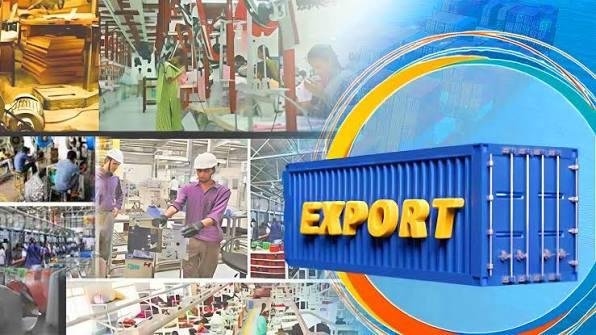
The Ministry of Commerce and Industry revised Export Promotion Mission (EPM) guidelines on 17 November 2026 to improve global market access for MSMEs by expanding export eligibility and enhancing financial assistance for international trade promotion.
About Export Promotion Mission (EPM)
- Objective: Boost India’s export competitiveness through affordable trade finance, global market access, and logistics support, especially for MSMEs (Micro, Small and Medium Enterprises) and first-time exporters.
- Announcement & Approval: Announced in Union Budget 2025–26; approved by the Union Cabinet on 12 November 2025.
- Outlay & Tenure: ₹25,060 crore for six years (FY 2025–26 to FY 2030–31).
- Nodal Ministry & Agency: Department of Commerce (Ministry of Commerce and Industry), run digitally by DGFT (Directorate General of Foreign Trade).
- Target Beneficiaries: MSMEs, first-time exporters, labour-intensive sectors, and low export-intensity districts.
- MSME Share in Economy (Economic Survey 2025–26): 31.1% of GDP (Gross Domestic Product), 48.58% of total exports, and 35.4% of manufacturing output.
Core Pillars (Niryat Protsahan & Niryat Disha)
- Niryat Protsahan (Trade Finance): Covers interest subvention (interest subsidy) on pre- and post-shipment export credit, credit guarantees, alternative trade instruments, export factoring, e-commerce exporter credit, and risk-sharing support for emerging markets.
- Niryat Disha (Non-Financial Support): Covers MAS (Market Access Support), TRACE (Trade Regulations, Accreditation and Compliance Enablement), LIFT (Logistics Interventions for Freight and Transport), INSIGHT (Integrated Support for Trade Intelligence and Facilitation), FLOW (Facilitating Logistics, Overseas Warehousing and Fulfilment), and global outreach for branding, labelling, and packaging.
November 2026 Guideline Changes (Effective 17 November 2026)
- MAS (Market Access Support):
- Export turnover limit for airfare reimbursement in BSMs (Buyer-Seller Meets), RBSMs (Reverse Buyer-Seller Meets), trade fairs, and delegations raised from ₹75 lakh to ₹50 crore.
- Airfare reimbursement raised up to 95% for Micro and Small exporters and 80% for other eligible exporters (subject to caps).
- Minimum EPC (Export Promotion Council) membership period cut from six months to three months.
- TRACE (Trade Regulations, Accreditation and Compliance Enablement): Helps exporters meet foreign quality, safety, testing, and technical standards; eligible certifications/tests for reimbursement increased from 462 to 600.
- LIFT (Logistics Interventions for Freight and Transport):
- Coverage of low export-intensity districts expanded from 13 to 34 States and UTs (Union Territories).
- Added waterways (alongside road, rail, and air) and included LCSs (Land Customs Stations) and ICPs (Integrated Check Posts).
- Extended air freight support to Jammu & Kashmir and Ladakh, besides the North-Eastern Region.
- Cut minimum transport distance from 200 km to 100 km, covering all exportable goods except a negative list.
MSME Classification & Allied Support Measures
Effective 1 April 2025 (following Union Budget 2025–26), Udyam Registration uses composite criteria of investment in plant/machinery/equipment and annual turnover:
| Category | Investment Limit | Annual Turnover Limit |
| Micro | Up to ₹2.5 crore | Up to ₹10 crore |
| Small | Up to ₹25 crore | Up to ₹100 crore |
| Medium | Up to ₹125 crore | Up to ₹500 crore |
Allied MSME Schemes:
- Micro Enterprise Credit Cards: ₹5 lakh credit limit for Udyam-registered micro-enterprises (Budget 2025–26).
- First-Time Entrepreneur Scheme: Loans up to ₹2 crore over five years for 5 lakh first-time Women, SC (Scheduled Caste), and ST (Scheduled Tribe) entrepreneurs.
- SRI (Self-Reliant India) Fund: Growth and equity capital for viable MSMEs via a Fund-of-Funds model.
- National Manufacturing Mission: Boosts domestic manufacturing, clean-tech adoption, and MSME competitiveness.
Significance
- Lowers Trade Barriers: Cuts borrowing costs, foreign quality-certification hurdles, and inland freight costs for smaller exporters.
- Promotes Balanced Regional Exports: Expanding LIFT to 34 States/UTs, LCSs/ICPs, and J&K/Ladakh supports decentralised export growth across border and lesser-known districts.
- Boosts Jobs & Inclusive Growth: Helps labour-intensive sectors, MSMEs, first-time exporters, and women/SC/ST entrepreneurs scale up and create jobs.
- Supports Global Value Chain Integration: Helps Indian firms meet international quality and sustainability standards and expand into e-commerce and overseas markets.
FAQs
Q1. What is the total outlay of the Export Promotion Mission?
Ans. ₹25,060 crore for FY 2025–26 to FY 2030–31.
Q2. Which agency implements the Export Promotion Mission?
Ans. Directorate General of Foreign Trade (DGFT) under the Department of Commerce.
Q3. What are the two sub-schemes under EPM?
Ans. Niryat Protsahan provides financial support, while Niryat Disha supports marketing, certification and logistics.
Q4. What are the revised investment and turnover limits for micro-enterprises?
Ans. Investment up to ₹2.5 crore and annual turnover up to ₹10 crore, effective 1 April 2025.