Context
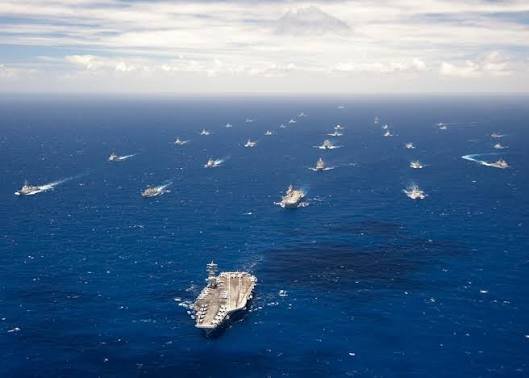
The United States has commenced the 2026 edition of the Rim of the Pacific (RIMPAC) exercise, the world’s largest multinational maritime exercise, with the participation of several countries, including India, to enhance naval interoperability and maritime security in the Indo-Pacific.
Exercise RIMPAC
- Rim of the Pacific (RIMPAC) is the world’s largest international maritime exercise, bringing together navies from partner countries to enhance interoperability and operational cooperation.
- It is organised by the U.S. Navy’s Pacific Fleet and conducted biennially in and around the Hawaiian Islands in the Pacific Ocean.
- First held in 1971, the exercise has evolved into a premier platform for strengthening maritime partnerships.
- It provides participating navies with an opportunity to enhance interoperability, improve collective maritime security, and promote a free, open and inclusive Indo-Pacific.
RIMPAC 2026
- The 2026 edition marks the 30th iteration of the exercise and is being conducted from 24th June to 31st July 2026.
- The theme of the exercise is “Partners: Integrated and Prepared.”
- It brings together forces from 31 countries, involving around 40 surface ships, 5 submarines, 140 aircraft, and over 25,000 military personnel.
- The Indian Navy is participating in the exercise. India first participated in RIMPAC in 2014.
Key Training Components
The exercise strengthens joint operational capabilities through activities such as:
- Anti-submarine warfare
- Air defence operations
- Missile proficiency exercises
- Mine countermeasure operations
- Amphibious operations
- Humanitarian Assistance and Disaster Relief (HADR)
- Live-fire and gunnery exercises
Significance
- Enhances interoperability and operational readiness through joint training and multinational exercises.
- Strengthens collective maritime security and deterrence in the Indo-Pacific region.
- Improves preparedness to address both traditional and non-traditional maritime security challenges, including humanitarian assistance and disaster response.
- Promotes the exchange of operational best practices and strengthens coordination during multinational maritime operations.
- Demonstrates the growing importance of multilateral naval cooperation in addressing emerging maritime challenges in the Indo-Pacific.
- Promotes a rules-based maritime order and deepens strategic cooperation among partner nations.
- Contributes to the security of Sea Lines of Communication (SLOCs) and regional maritime stability.
Conclusion
Exercise RIMPAC reflects the increasing importance of multilateral naval cooperation in maintaining a secure and stable Indo-Pacific. By enhancing interoperability, strengthening collective preparedness, and promoting a rules-based maritime order, it contributes to regional peace, stability, and maritime security.