Why in the News?
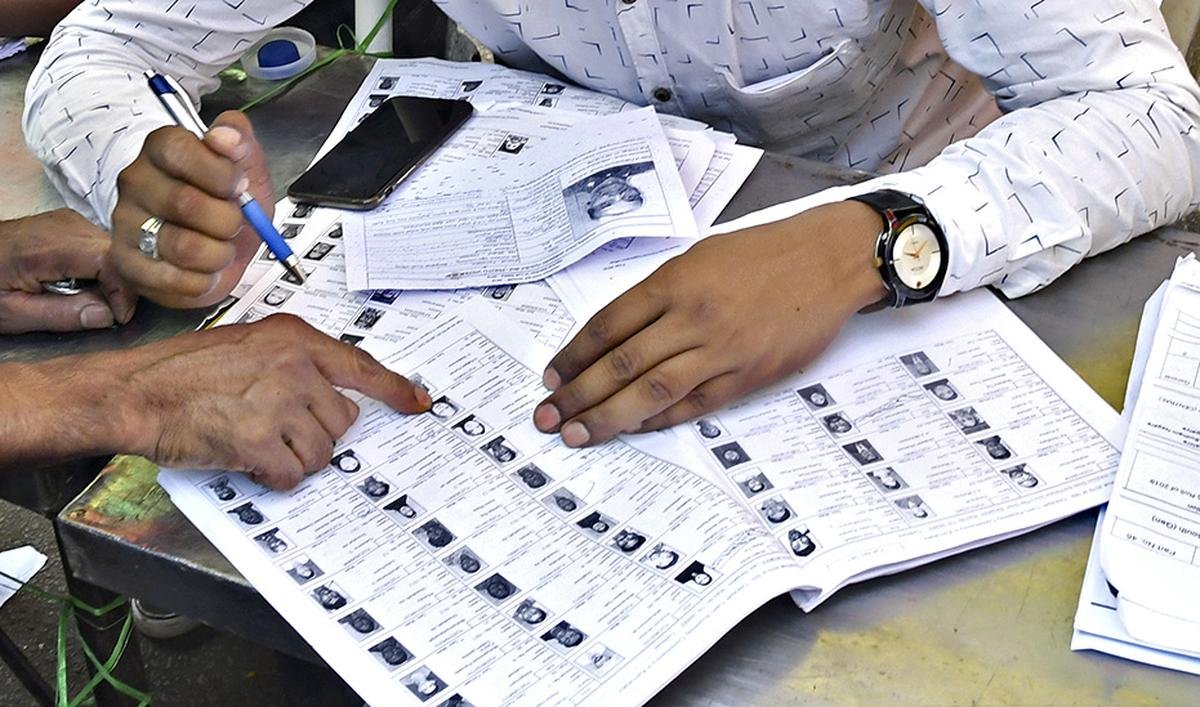
- The Supreme Court of India told the Election Commission of India (ECI) to accept Aadhaar cards, voter ID cards, and ration cards as valid documents for revising the electoral rolls in Bihar.
- The Supreme Court said that the right to vote is very important and lies at the core of India’s democratic system.
What are the Key Highlights?
- India’s Unique and Inclusive Beginning:
- Universal Adult Suffrage from the Start: From the very beginning of its democratic journey, India allowed every adult citizen the right to vote, without discrimination based on gender, caste, religion, education, or property.
- Article 326 of the Constitution: Grants the right to vote to all citizens above a certain age (originally 21, now 18), ensuring equality and inclusivity in the electoral process.
- 61st Constitutional Amendment (1989): Lowered the voting age from 21 to 18 years, empowering India’s youth to participate in democracy.
- India vs. Western Democracies: A Comparative Perspective:
- United Kingdom: Initially gave voting rights only to male property owners. Universal male suffrage came only in 1918, and women had to wait until 1928.
- United States: Although African Americans legally gained the vote in 1870 and women in 1920, poll taxes, literacy tests, and other barriers kept many from voting.
- India’s Contrast: While thinkers like J.S. Mill supported limiting voting to the educated, India rejected such views and adopted instant and full universal suffrage.
- Legal and Constitutional Framework of the Right to Vote:
- Statutory, Not Fundamental Right:
- Not a Fundamental Right: Despite its importance, the right to vote is not mentioned as a fundamental right in the Constitution.
- Rejected Proposal: Proposals by Dr. B.R. Ambedkar and K.T. Shah’s proposals to make voting a fundamental right were rejected by the Constituent Assembly’s Advisory Committee.
- Supreme Court Rulings:
- Kuldip Nayar v. Union of India (2006): The Supreme Court ruled that voting is a statutory right, not a constitutional or fundamental one.
- Rajbala v. State of Haryana (2016): A smaller bench termed voting a “constitutional right,” but this view does not override the earlier larger bench.
- Anoop Baranwal v. Union of India (2023): The Court upheld the statutory view, although Justice Ajay Rastogi in his minority opinion linked voting to Article 19(1)(a) (freedom of expression) and Article 21 (right to life).
- Current Legal Position: The right to vote remains a statutory right, governed by the Representation of the People Act, 1951.
- Statutory, Not Fundamental Right:
- Governing Laws and Institutions:
- Representation of the People Acts (RPA):
- i. RPA, 1950: Deals with the preparation of electoral rolls, qualifications of voters, and other procedural matters.
- ii. RPA, 1951: Governs the conduct of elections, prevention of corrupt practices, and settlement of election disputes.
- iii. Section 62 of RPA, 1951: Specifies who can vote.
- iv. Section 19 of RPA, 1950: Defines eligibility to be registered as a voter:
- Indian citizen
- 18 years or older
- Ordinary resident of the constituency
- Not disqualified by law
- Representation of the People Acts (RPA):
- Election Commission of India (ECI)
- Article 324: Grants the ECI powers to supervise, direct, and control elections.
- Section 21 of RPA, 1950: Authorizes ECI to prepare and revise electoral rolls to maintain accuracy and fairness.
- Innovations by Sukumar Sen: Introduced symbols on ballots to help illiterate voters, making democracy accessible.
- Challenges in Electoral Rolls and the Right to Vote:
- Accuracy and Integrity of Voter Lists
- Essential for Democracy: Fair elections rely on accurate, inclusive, and up-to-date voter rolls.
- Common Errors:
- Missing names
- Duplicate entries
- Wrong details
- Inclusion of ineligible voters
- Impact: Such errors harm the principle of “one person, one vote” and may lead to impersonation or exclusion.
- Accuracy and Integrity of Voter Lists
- Supreme Court Guidance:
- Minor errors in the rolls do not invalidate an election.
- Only large-scale or serious irregularities can be grounds to challenge results.
- Role of Individuals and Political Parties
- Only Individuals can legally apply to be added or raise objections to the electoral rolls.
- Supreme Court in Lakshmi Charan Sen v. A.K.M. Hassan Uzzaman (1985):
- Political parties must help ensure inclusion of genuine voters and exclusion of ineligible ones.
- Especially important as many voters are illiterate or unaware.
- Special Voting Provisions:
- Postal Ballots (Rule 18 of Conduct of Election Rules, 1961):
- Armed forces
- Paramilitary forces
- Police personnel on duty
- Election staff
- Government employees posted abroad
- Overseas Indian Voters:
- Can register under Section 20A of RPA, 1950.
- Must vote in person; postal or proxy voting is not allowed.
- Postal Ballots (Rule 18 of Conduct of Election Rules, 1961):
What are the Challenges and Way Forward?
| Challenges | Way Forward / Solutions |
| 1. Inaccuracies in Electoral Rolls – Missing names, duplicate entries, ineligible voters | Strengthen voter verification processes through regular and transparent audits
Use technology (e.g., Aadhaar-linked authentication) cautiously and ethically |
| 2. Citizenship Doubts in Border States (e.g., Bihar SIR) | Ensure due process and natural justice before removal
Follow Supreme Court rulings strictly (e.g., Lal Babu Hussein, Md. Rahim Ali) |
| 3. Illiteracy and Lack of Awareness | Conduct widespread voter education drives Use visual tools (as done by Sukumar Sen) and multilingual materials to empower voters |
| 4. Statutory, Not Fundamental Right | Consider public debate or constitutional amendment to elevate voting to a fundamental right
Ensure stronger legal safeguards |
| 5. Political Apathy and Low Voter Turnout | Encourage civic participation through campaigns
Explore options like compulsory voting or voter incentives (with caution) |
| 6. Electoral Malpractices (e.g., Booth capturing, Bribery) | Strengthen Election Commission’s surveillance and powers
Increase use of CCTV, webcasting, and EVM/VVPAT transparency |
| 7. Difficulties for Migrants and Urban Poor | Create mechanisms for remote voting or one-nation-one-voter ID
Ensure portability of voter registration |
| 8. Overseas Voters Face Limitations (e.g., no postal vote) | Allow safe postal or proxy voting for NRIs
Use secure digital tools after feasibility and security checks |
Conclusion:
India’s bold decision to adopt universal adult suffrage from the start marked a revolutionary break from colonial legacies and global norms. Despite the right to vote being statutory, its role in sustaining democracy is unquestionable. As India’s democratic journey evolves, ensuring inclusive, fair, and accessible elections remains a continuous process dependent on vigilant institutions, active citizenship, and strong legal safeguards.
| Ensure IAS Mains Question:
Q. “Despite adopting Universal Adult Suffrage from the beginning, India continues to face challenges in maintaining inclusive and accurate electoral rolls.” Discuss the legal and institutional safeguards to protect voting rights in India, with reference to the recent Bihar electoral roll revision issue. (250 words) |
Ensure IAS Prelim MCQ:Q: Which of the following statements regarding the right to vote and electoral roll revision in India is/are correct?
Select the correct answer using the code below:A) 1 and 2 only Answer: B)Explanation:Statement 1 is Incorrect: The right to vote is not a Fundamental Right. It is a statutory right, governed by the Representation of the People Act, 1951. Statement 2 is Correct: The Supreme Court in Kuldip Nayar (2006) held that voting is a statutory right. Statement 3 is Incorrect: Only individuals, not political parties, can legally apply for inclusion or raise objections to the electoral roll. Statement 4 is Correct: The Election Commission derives its powers from Article 324 of the Constitution and Section 21 of the RPA, 1950 to revise electoral rolls. |