| Important questions for UPSC Pre/ Mains/ Interview:
1. Why are electoral rolls central to Indian democracy? 2. How are electoral rolls prepared and revised? 3. What is Form 7 and what is its legal basis? 4. What changed after the 2022 amendment? 5. What is the Special Intensive Revision (SIR)? 6. What is the nature of the Form 7 controversy? 7. What is the scale of voter deletions reported? 8. What safeguards exist in the verification process? 9. What administrative and technological challenges are visible? 10.What are the associated Security and Political Dimensions? 11.What are the associated Benefits and Concerns? 12.What reforms are suggested going forward? |
Context
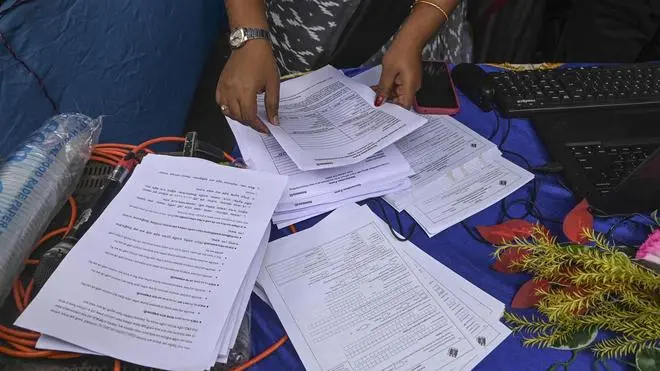
Concerns have emerged over the alleged misuse of Form 7 applications during the ongoing Special Intensive Revision (SIR) of electoral rolls. Reports indicate large-scale deletions of voters’ names across multiple States, raising questions about verification processes and voter protection.
Q1. Why are electoral rolls central to Indian democracy?
- Electoral rolls determine who can vote in elections.
- Prepared under the Representation of the People Act, 1950.
- Ensure universal adult suffrage under Article 326 of the Constitution.
- Accuracy of rolls directly affects:
- Electoral legitimacy
- Political representation
- Voter confidence in the system.
Q2. How are electoral rolls prepared and revised?
- Managed by the Election Commission of India.
- Revised periodically through:
- Summary Revision (annual updates)
- Continuous updation
- Special Intensive Revision (comprehensive exercise)
- Involves enumeration, objection stage, verification, hearings, and final publication.
Q3. What is Form 7 and what is its legal basis?
- Statutory form used to object to inclusion of a name in electoral rolls.
- Governed by the Registration of Electors Rules, 1960.
- Objections allowed on grounds of:
- Death
- Duplicate entry
- Change of residence
- Ineligibility (age or citizenship).
Q4. What changed after the 2022 amendment?
- Earlier: Only voters from the same polling booth could file objections.
- After amendment: Any voter in the constituency can file Form 7 objections.
- Objective: Improve roll accuracy.
- Consequence: Increased potential for bulk objections and misuse.
Q5. What is the Special Intensive Revision (SIR)?
- A large-scale roll-cleaning exercise undertaken by ECI.
- Phase II reportedly covered ~51 crore voters across major States.
- Conducted on a compressed timeline.
- Includes:
- Data collection
- Form submission
- Booth Level Officer (BLO) verification
- Hearing by Electoral Registration Officer (ERO)
- Final roll publication.
Q6. What is the nature of the Form 7 controversy?
- Allegations of bulk filing of Form 7 applications without voter consent.
- Reports of impersonation and false objections.
- Opposition parties allege systematic targeting of certain voter groups.
- Cases reported from States like Rajasthan and Gujarat.
- Raises concerns of:
- Administrative oversight gaps
- Weak digital authentication
- Procedural lapses under time pressure.
Q7. What is the scale of voter deletions reported?
- Around 5 crore voters removed across nine States and three UTs.
- Total electorate reduced from ~51 crore to ~44.4 crore.
- Categories of deletion: ASD (Absent, Shifted, Dead/Duplicate).
- Highest deletions reported in Uttar Pradesh, followed by Tamil Nadu and Gujarat.
Q8. What safeguards exist in the verification process?
- Procedural safeguards:
- Mandatory physical verification by BLO.
- Death claims require confirmation (death certificate or neighbour verification).
- Multiple visits required for “Absent” cases.
- Notice issued before deletion.
- Legal remedies:
- Right to attend ERO hearing.
- Appeal to District Magistrate within 15 days of publication.
- False declarations punishable under Section 32 of RP Act, 1950.
Q9. What administrative and technological challenges are visible?
- Compressed timeline limits thorough verification.
- Large-scale data management complexity.
- Risk of digital form misuse.
- Pressure on BLOs due to manpower constraints.
- Inadequate grievance redress awareness among vulnerable populations.
Q10. What are the associated Security and Political Dimensions?
- Electoral rolls can influence constituency outcomes.
- Large deletions may alter voter composition.
- Risk of politicisation of administrative processes.
- Raises institutional credibility concerns for ECI.
Q11. What are the associated Benefits and Concerns?
- Benefits of Intensive Revision
- Cleans duplicate and outdated entries.
- Prevents impersonation at polling booths.
- Enhances accuracy of electoral database.
- Concerns
- Risk of mass disenfranchisement.
- Marginalised groups more vulnerable.
- Bulk Form 7 filings may bypass genuine verification.
- Transparency deficit during compressed schedule.
Q12. What reforms are suggested going forward?
- Strong scrutiny of bulk applications.
- Digital authentication and audit trails for Form 7 submissions.
- Longer verification timelines in large States.
- Public dashboard transparency on objections and deletions.
- Stronger accountability mechanisms for wrongful deletions.
Conclusion
The controversy surrounding Form 7 during the Special Intensive Revision highlights the delicate balance between electoral roll accuracy and protection of voting rights. While cleansing ineligible entries is essential, procedural robustness and transparency are critical to prevent voter disenfranchisement and preserve the credibility of India’s electoral democracy.