
Context
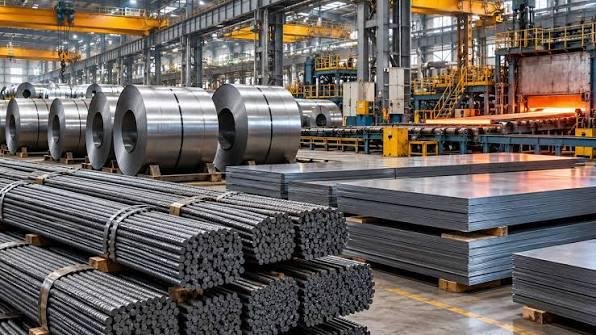
The Ministry of Steel released the draft National Steel Policy: Vision 2047 on 11 October 2026 for public consultation, proposing a shift towards productivity-led competitiveness and reduced dependence on protection through duties and quality rules.
About the Draft Policy
- Capacity Target: Aims to raise crude steel capacity from 220 MT (Million Tonnes) to 604 MT by 2047.
- Demand Targets: Projects finished steel consumption to reach 505 MT (from 164 MT) and per capita consumption from 116 kg to 302 kg.
- Export Goal: Targets 45 MT of steel exports by 2047, including steel embedded in manufactured goods.
- Raw Materials: Requires 772 MT iron ore and 236 MT coking coal; inputs comprise 65–70% of total steelmaking costs.
- Decarbonisation: Targets lowering emission intensity from 2.54 to 1.54 tonnes of CO₂ per tonne of steel by 2047, supporting Net Zero 2070.
India’s Steel Sector: Status & Profitability
- Global Position: World’s second-largest steel producer (approx. 170 MT output in 2025–26), after China (961 MT).
- Sector Profitability: Recorded an average EBITDA-to-sales ratio of 15% (2000–2025), outperforming broader Indian manufacturing by 3–4 percentage points.
- Key Concern: High profitability partly stems from trade protection and quality regulations rather than efficiency alone.
Sources of Protection & Economic Costs in Steel Sector
- Iron Ore Export Duty: A 30% export duty on high-grade iron ore (over 58% Fe content) keeps domestic prices 30–40% below global levels, benefiting domestic steelmakers while disincentivising miners and exploration activities.
- High Import Tariffs: Effective duty on steel stands at around 18%—combining a 7.5% Basic Customs Duty (BCD) and an 11.5% safeguard duty—significantly higher than ASEAN (Association of Southeast Asian Nations) averages of 3–4%.
- Quality Control Orders (QCOs): Mandatory BIS (Bureau of Indian Standards) standards cover 228 steel products; despite recommendations to rationalise, only 59 products have been suspended, serving as potential non-tariff barriers that restrict cheap imports
- Higher Downstream Costs: Domestic Hot-Rolled Coil (HRC) commands a 6–7% price premium over global benchmarks, inflating input costs for critical downstream sectors like automobiles, construction, exporters, and MSMEs (Micro, Small and Medium Enterprises).
- Mining Exploration Bottleneck: Only about 10% of India’s geological potential has been explored, as mandatory auctions without sufficient private exploration incentives hamper fresh investment in raw material discovery.
Impact of Removing Protection
- Tariff Reduction Effect: A 6% price drop in steel could reduce profits by 25% for top private producers, 50% for state-run producers, and 40% for fast-growing firms
- Iron Ore Duty Removal: Exposing steelmakers to global iron ore prices could cut fast-growing firms’ profits by 95%, lower private profit margins to 7%, and push public firms into losses.
- Analysis: Demonstrates that high profitability relies on policy protection (cheap raw materials and import tariffs) rather than pure operational efficiency.
Key Reform Proposals
- Calibrated Liberalisation: Phase down import tariffs to ASEAN levels (3–4%) over five years and streamline QCOs (Quality Control Orders).
- Remove Export Duty: Abolish the 30% iron ore export duty to ensure market prices for miners and compel steelmakers to stay globally competitive.
- Mining Policy Reform: Adopt exploration-friendly rules (like Australia) with clear mining rights to incentivize private mineral exploration.
- Strategic Privatisation: Restructure or privatise lagging SAIL (Steel Authority of India Limited) plants to boost efficiency as its market share fell from 30% to 10%.
Key Challenges
- Import Pressure: Rising cheap steel imports and Chinese overcapacity drive demands for higher safeguard duties.
- Transition Risk: Sudden market liberalisation could severely impact PSUs (Public Sector Undertakings) and smaller producers.
- Raw Material Security: Capacity expansion requires huge quantities of coking coal, which relies heavily on imports.
- Decarbonisation Cost: Transitioning to cleaner green steel requires massive financial investments.
- Low Capacity Utilisation: Only 77.6% of installed capacity is utilised, making robust demand growth essential for expansion.
Way Forward
- Phased Reforms: Gradually reduce import protection using clear, multi-year timelines.
- Mining Reforms: Streamline mineral exploration policies to secure long-term raw material supply.
- Targeted Trade Defence: Keep safeguard duties strictly temporary and aligned with WTO (World Trade Organization)
- Productivity & Green Linkage: Tie policy incentives directly to technological efficiency and lower emission benchmarks.
- PSU Governance: Improve public steelmakers like SAIL (Steel Authority of India Limited) through better governance and strategic privatisation.
FAQs
Q1. Where does India rank in steel production?
Ans. Second globally, with about 170 Mt production in 2025–26, after China (961 Mt).
Q2. What is a safeguard duty?
Ans. A temporary tariff to protect domestic industries from a sudden surge in imports.
Q3. What is a Quality Control Order (QCO)?
Ans. A mandatory BIS quality standard for products sold in India, which can also restrict imports.
Q4. How does protected steel affect other industries?
Ans. Higher steel prices increase input costs for construction, automobiles and MSMEs, reducing their competitiveness.