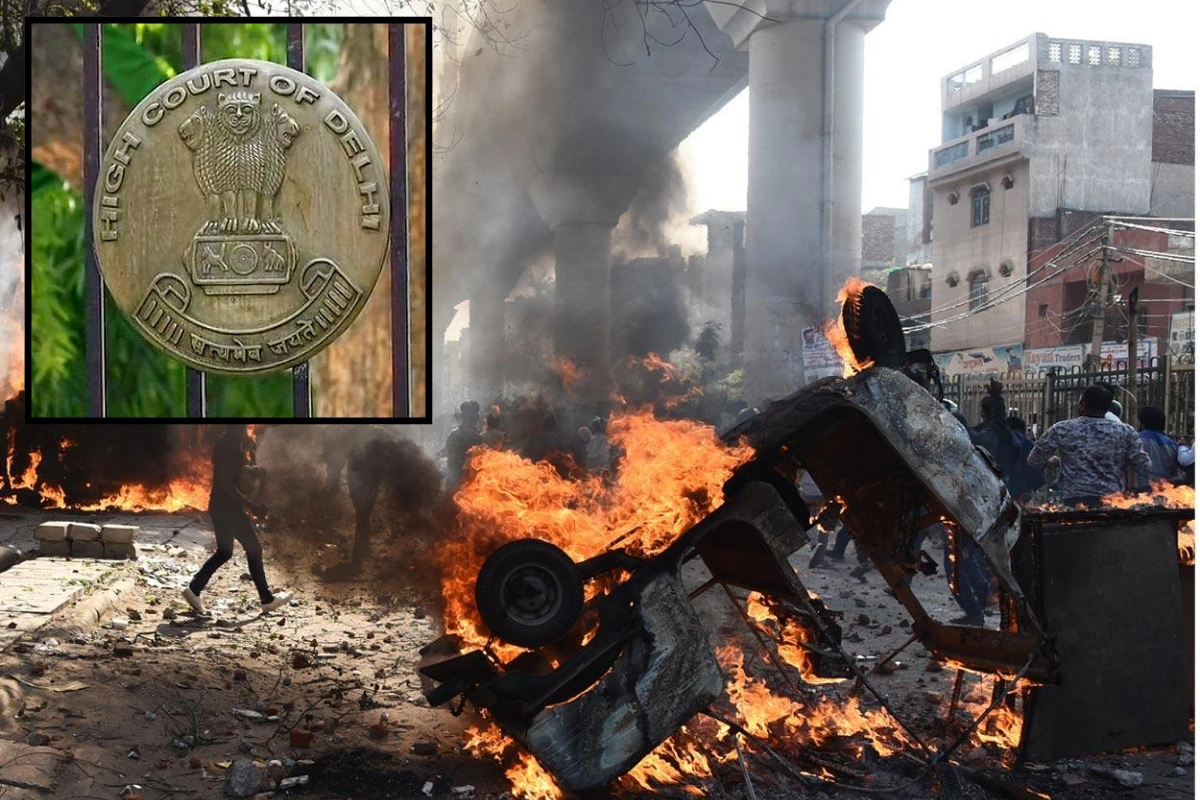
Why in the News?
- The Delhi High Court has denied bail to Umar Khalid, Sharjeel Imam, Gulfisha Fatima, and others accused as alleged conspirators in the 2020 Delhi riots, stating that the events were part of a “premeditated and well-orchestrated conspiracy.”
- The accused have been charged under the Unlawful Activities (Prevention) Act, 1967 (UAPA), including provisions prescribing the death penalty for terrorist acts, and have been in custody for over five years without trial commencing.
Key Highlights
- Background of the Case
- The 2020 Delhi riots led to the death of 54 people (including police and intelligence officers) and damage to over 1,500 properties.
- The prosecution alleges that the riots were the outcome of a deep-rooted conspiracy, involving WhatsApp groups and “secret meetings.”
- UAPA Provisions Invoked
- Section 15: Defines “terrorist acts,” including those causing terror by explosives, firearms, or “any other means.”
- Section 16: Provides punishments for terrorist acts, including the death penalty in certain cases.
- Section 43D(5): Restricts bail unless the court finds accusations are not prima facie true.
- The prosecution argues that activities like organising a “chakka jam” fall under “any other means” of creating terror.
- Evidence Presented
- Reliance mainly on WhatsApp chats and testimonies of protected witnesses (e.g., ‘Radium’ and ‘Sodium’).
- Witnesses claimed the accused openly discussed escalation of violence and targeting areas in Delhi.
- Defence argued:
- Witness accounts were belated, vague, and unreliable.
- Their identity being protected denies proper cross-examination.
- The court held that at the bail stage, such evidence must be presumed true and cannot be critically examined.
- Reasons for Bail Denial
- The court found prima facie reasonable grounds to believe accusations were true, fulfilling UAPA’s low threshold to deny bail.
- A “mini-trial” at the bail stage was considered impermissible.
- The accused sought parity with earlier bail granted to Devangana Kalita, Natasha Narwal, and Asif Iqbal Tanha, but the HC said those orders were not precedents as directed by the Supreme Court.
- Defence argued their actions fell under Section 13 (unlawful activities), a lesser offence, but the court declined detailed examination at bail stage.
- Delay in Trial
- The accused have spent more than five years in custody while the trial has yet to begin.
- In Union of India v. K.A. Najeeb (2021), the Supreme Court had ruled that prolonged incarceration without trial could override UAPA’s bail restrictions.
- However, in this case, the HC held that expedited trials must balance the rights of both the accused and the State, and dismissed bail despite the delay.
Implications
- Legal Implications
- Reinforces the restrictive nature of bail under UAPA, where even limited evidence can be enough to keep accused in custody.
- Highlights tension between individual liberty (Article 21) and the State’s duty to maintain security.
- Procedural Justice
- Raises concerns over long pre-trial detention, which may amount to punishment without conviction.
- Delays in framing charges reflect inefficiency in handling complex cases under special laws.
- Evidence and Due Process
- Heavy reliance on protected witnesses limits transparency, as their statements cannot be tested through cross-examination.
- Raises broader questions on balancing witness protection with the accused’s right to fair trial.
- Rights vs Security Debate
- The case demonstrates the friction between constitutional rights of protest and the State’s interpretation of protest activities as conspiracy or terror acts.
- Sets a precedent for how dissent-related activities may be legally scrutinised under stringent anti-terror laws.
- Broader Impact
- Prolonged incarceration without trial may undermine public confidence in the justice system.
- Could influence future debates on reforming UAPA’s bail provisions to ensure a fairer balance between liberty and security.
Challenges and Way Forward
| Challenges | Way Forward |
| Stringent bail restrictions under Section 43D(5) of UAPA | Consider judicial guidelines allowing bail where trials face extraordinary delays |
| Prolonged incarceration before charges are framed | Ensure time-bound trials in cases under special laws |
| Heavy reliance on protected witnesses | Create mechanisms for partial disclosure ensuring both witness safety and fair cross-examination |
| Balancing right to protest with national security | Frame clearer distinctions in law between peaceful protest and violent conspiracy |
| Public perception of fairness | Strengthen judicial oversight in pre-trial detention to avoid liberty violations |
Conclusion
The denial of bail in the Delhi riots conspiracy case highlights the stringent framework of UAPA, where even prima facie accusations are enough to restrict liberty. While the law seeks to protect national security, concerns over prolonged incarceration, reliance on untested witness accounts, and delays in trial raise critical questions about fairness and due process. Going forward, the challenge is to ensure that anti-terror laws do not erode constitutional protections, while still addressing genuine threats to public order and national integrity.
| Ensure IAS Mains Question
Q. The denial of bail in UAPA cases, including those related to the 2020 Delhi riots, highlights the tension between national security concerns and the right to personal liberty. Critically discuss this tension in light of judicial interpretations, prolonged incarceration, and the constitutional guarantee of fair trial. (250 words) |
| Ensure IAS Prelims Question
Q. With reference to the Unlawful Activities (Prevention) Act (UAPA), 1967, consider the following statements: 1. Section 15 of UAPA defines a “terrorist act” as any act intended to threaten the unity, integrity, security, economic security, or sovereignty of India. 2. Section 43D(5) restricts the grant of bail if there are reasonable grounds to believe that the accusations are prima facie true. 3. The Supreme Court in Union of India v. K.A. Najeeb (2021) held that prolonged incarceration without trial can override the restrictions of Section 43D(5). 4. Bail orders passed under UAPA by a High Court can automatically be used as precedent in other UAPA cases. Which of the above statements are correct? a) 1, 2 and 3 only b) 1, 3 and 4 only c) 2 and 4 only d) 1, 2, 3 and 4 Answer: a) 1, 2 and 3 only Explanation: Statement 1 is correct: Section 15 defines “terrorist act” in broad terms including acts threatening unity, security, or sovereignty of India. Statement 2 is correct: Section 43D(5) creates a high bar for bail if accusations appear prima facie true. Statement 3 is correct: In K.A. Najeeb (2021), the SC granted bail on grounds of prolonged incarceration despite Section 43D(5). Statement 4 is incorrect: In the Delhi riots case, the SC specifically said earlier bail orders (e.g., Devangana Kalita case) would not serve as precedent. |
|
Also Read |
|
| UPSC Foundation Course | UPSC Daily Current Affairs |
| UPSC Monthly Magazine | CSAT Foundation Course |
| Free MCQs for UPSC Prelims | UPSC Test Series |
| ENSURE IAS NOTES | Our Booklist |