Context
- The Status of Coral Reefs of the World: 2025, the seventh global assessment by the Global Coral Reef Monitoring Network (GCRMN), highlights the increasing frequency and intensity of disturbances affecting coral reefs.
- It identifies climate-driven marine heatwaves and the global bleaching events they trigger as the primary drivers of the global decline in hard coral cover.
- The decreasing interval between disturbances is leaving reefs with less time to recover.
About Coral Bleaching
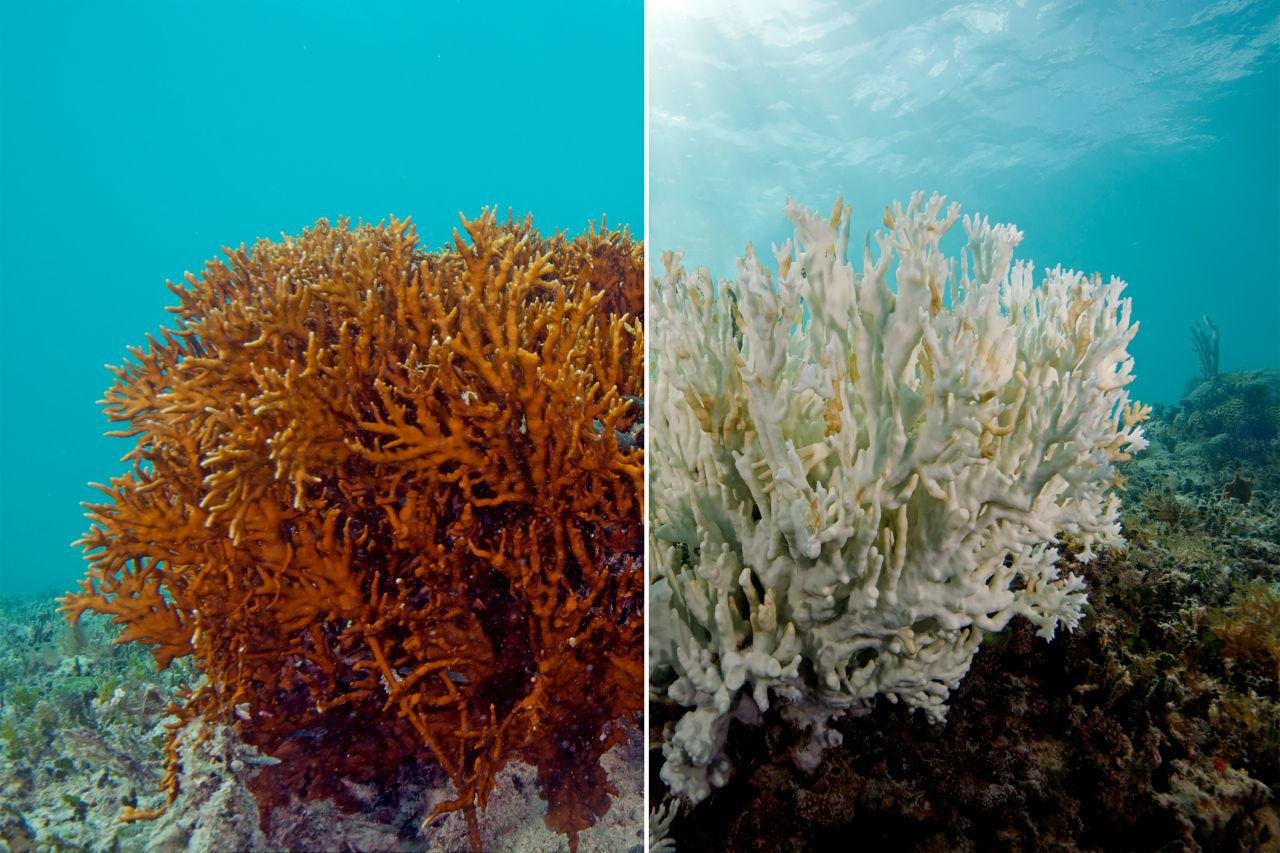
- Coral bleaching is a stress response in which corals lose their symbiotic algae, causing them to appear pale or white.
- Corals normally live in association with microscopic algae called zooxanthellae. These algae produce food through photosynthesis and contribute to coral colour.
- Environmental stress can cause corals to expel these algae, disrupting the symbiotic relationship and reducing their nutritional support.
- Bleaching is not immediately equivalent to death. Recovery is possible if stressful conditions ease, whereas prolonged or severe stress can lead to mortality.
Major Causes
- High ocean temperatures: Excessive heat is the principal trigger of bleaching.
- Pollution and runoff: Pollutants, sediments and freshwater entering coastal waters create additional stress.
- Excessive sunlight: Intense solar radiation can aggravate stress, particularly in shallow waters.
- Extremely low tides: Temporary exposure to air and direct sunlight can damage shallow-water corals.
- Changes in ocean acidity: Altered ocean chemistry adds further pressure on coral ecosystems.
Major Coral Reef Regions in India
The principal coral reef regions of India are:
- Gulf of Mannar
- Gulf of Kutch
- Lakshadweep
- Andaman and Nicobar Islands
FAQs
Q1. What is the key difference between coral bleaching and coral mortality?
Bleaching is a stress response, whereas mortality means the coral has died. A bleached coral can survive if environmental conditions improve.
Q2. Why does the frequency of disturbances matter for reef health?
Coral ecosystems require adequate intervals to recover. Repeated disturbances before recovery is complete can cause cumulative ecological damage.
Q3. What role does photosynthesis play in coral survival?
Photosynthesis by zooxanthellae converts sunlight into energy-rich food, making the coral–algae association important for coral nutrition.
Q4. Why are shallow-water corals particularly vulnerable?
They experience greater exposure to sunlight, air during exceptionally low tides and rapid changes in water temperature.
Q5. How can human activities influence the severity of bleaching impacts?
Local pressures such as pollution and sedimentation can reduce the condition of reefs, making them less resilient to environmental disturbances.
Q6. Why is coral bleaching an important climate-change indicator?
Large-scale bleaching events reflect the increasing exposure of marine ecosystems to abnormal ocean temperatures and provide an important signal of climate-related stress.