Context
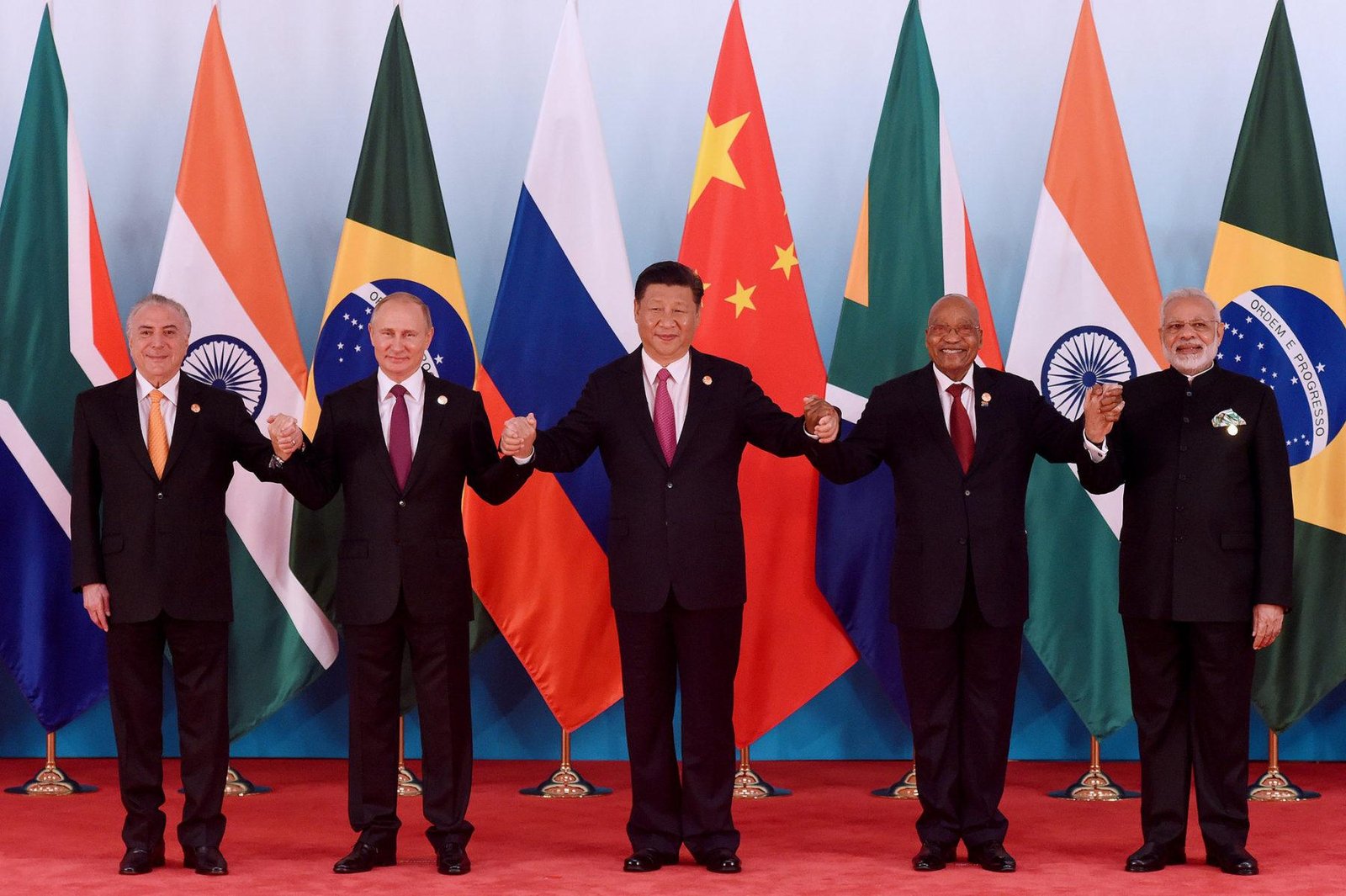
With the 18th BRICS Summit scheduled to be held in New Delhi on September 12–13, 2026, Chinese Ambassador to India Xu Feihong outlined Beijing’s priorities for the grouping through the five-point “POWER” framework, focusing on deeper cooperation & greater representation of the Global South.
About the ‘POWER’ framework
China’s framework identifies five broad priorities for BRICS:
| ‘POWER’ | Key Idea | |
| P – Principle | Support a Rules-based global order | Key principles include:
1. Sovereign equality of countries 2. Non-interference in internal affairs 3. Peaceful settlement of disputes 4. Preventing a return to a “might is right” global order China also links this approach with its idea of a “community with a shared future for humanity” & initiatives such as the Global Security Initiative & Global Governance Initiative. |
| O – Openness | Resist protectionism – Economies to be interconnected. | 1. Strengthening multilateral trade, with the WTO at its core
2. Protecting principles such as Most-Favoured-Nation (MFN) treatment 3. Greater cooperation in energy, critical minerals, infrastructure and industrial supply chains |
| W – Win-Win | Development for all as central agenda | 1. Accelerating progress towards UN Sustainable Development Goals (SDGs)
2. Building a common post-2030 global development agenda 3. Giving Global South countries an equal role in international cooperation 4. Improving macroeconomic policy coordination 5. Facilitating trade and investment 6. Expanding local-currency trade and cross-border payments 7. Building resilient food and agricultural systems |
| E – Engine | Drive global economic growth | BRICS has significant economic weight, accounting for nearly half of the world’s population, around 30% of global economic output and about one-fifth of global trade.
China therefore proposes greater cooperation in digital economy, smart manufacturing, AI and its application in health, agriculture and education. |
| R – Responsibility | Maintain continuity and cooperation | India and China are scheduled to hold the BRICS presidency in successive years. Therefore, effective coordination between the two countries can:
1. Maintain continuity in BRICS initiatives 2. Prevent disruptions during leadership transitions 3. Strengthen the grouping’s ability to represent developing-country interests |
About BRICS
- BRICS is a grouping of major emerging economies that works to strengthen cooperation in areas such as trade, investment, finance, technology, sustainable development & global governance.
- Origin: ‘BRIC’ was coined by economist Jim O’Neill in 2001 for Brazil, Russia, India and China.
- Expansion: South Africa joined in 2010, converting BRIC into BRICS.
- Nature: Platform for economic, political & development cooperation among member countries.
- New Development Bank (NDB): Established by BRICS to finance infrastructure and sustainable development projects in member and other developing countries.
- Global Governance: The grouping supports reforms to make international institutions more representative, inclusive and reflective of present-day global realities.
- BRICS 2026 Theme: “Building for Resilience, Innovation, Cooperation and Sustainability”
Conclusion
China’s POWER framework positions BRICS as a platform to advance a multipolar, open, and development‑oriented global order, with success hinging on effective India–China coordination and the grouping’s ability to deliver concrete gains for the Global South.
The recent revival of bilateral ties (resumption of 5 direct flight routes & reopening of border trade after 6 years) offers scope for deeper cooperation. Building on this momentum, China has invited India to the upcoming BRICS Summit, expressing hope that sustained collaboration can strengthen BRICS’ continuity and credibility as a representative voice of developing nations in global governance.
FAQs
Q1. What is the POWER framework?
It is China’s five‑pillar agenda (Principle, Openness, Win‑Win, Engine, Responsibility) to guide BRICS cooperation and Global South representation.
Q2. What does “Principle” emphasize?
Support for a rules‑based global order, sovereign equality, non‑interference, peaceful dispute settlement, and rejection of “might is right.”
Q3. How is “Openness” defined?
Resisting protectionism, strengthening WTO‑based trade, MFN treatment, and cooperation in energy, minerals, infrastructure, and supply chains.
Q4. What is the “Win‑Win” pillar?
Development for all: advancing SDGs, shaping a post‑2030 agenda, equal Global South participation, macroeconomic coordination, local‑currency trade, and resilient food systems.
Q5. What does “Engine” signify?
BRICS as a driver of global growth through digital economy, AI, smart manufacturing, and applications in health, agriculture, and education.
Q6. What is meant by “Responsibility”?
Ensuring continuity in BRICS initiatives, especially via India–China coordination during successive presidencies, to strengthen Global South representation.