Context
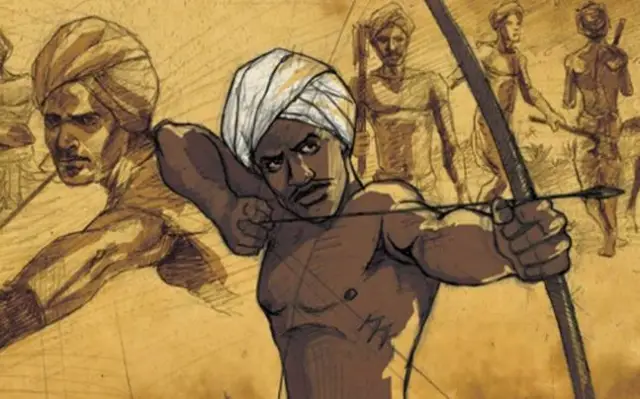
Recent debates on tribal identity and the status of tribal converts have renewed attention on the legacy of Birsa Munda, one of the most influential tribal leaders of colonial India. Revered as “Dharti Aba” (Father of the Earth), he emerged as a symbol of resistance against colonial exploitation and a champion of tribal rights, cultural identity, and self-governance.
About Birsa Munda
Early Life
- Birsa Munda was born on 15 November 1875 in Ulihatu village in present-day Khunti district of Jharkhand.
- He belonged to the Munda tribe of the Chotanagpur region.
- He is popularly remembered as “Dharti Aba” (Father of the Earth) by tribal communities.
- His father, Sugna Munda, was associated with the Sardari movement, which sought to protect traditional tribal land rights.
- Birsa briefly studied in missionary institutions before eventually distancing himself from missionary influence.
Colonial Transformation of Tribal Society
- Erosion of Traditional Land Rights
- Colonial land policies significantly altered the socio-economic structure of tribal communities in Chotanagpur.
- The traditional Khuntkatti system, under which land was collectively owned by descendants of the original settlers, gradually weakened.
- Revenue intermediaries, landlords, and moneylenders acquired greater control over tribal land and resources.
- Impact on Tribal Communities
- Large-scale land alienation and dispossession.
- Rising indebtedness and economic exploitation.
- Expansion of forced labour practices.
- Weakening of customary institutions and village self-governance.
These developments generated widespread resentment and laid the foundation for organised tribal resistance.
Ulgulan: The Great Rebellion
- Nature of the Movement
- Birsa Munda led the Ulgulan (Great Rebellion) during the late nineteenth century.
- It was not merely an agrarian uprising but a broader movement with political, economic, social, cultural, and religious dimensions.
- The movement opposed:
-
- British colonial rule.
- Exploitative landlordism.
- Encroachment on tribal land and customary rights.
- External interference in tribal social and cultural life.
Core Objectives
- Restoration of traditional land rights.
- Protection of tribal identity and customs.
- Revival of indigenous institutions.
- Assertion of community autonomy and self-governance.
Dombari Buru
- The movement reached its peak at Dombari Buru in present-day Khunti district.
- Thousands of followers gathered to challenge colonial authority and assert their rights.
- British forces responded with armed suppression, leading to significant casualties.
- The episode remains a defining symbol of Adivasi resistance.
Arrest and Death
- Birsa Munda was arrested in February 1900 after months of resistance against colonial authorities.
- He died in Ranchi Jail on 9 June 1900 at the age of 25.
- Although the uprising was suppressed, his ideas continued to shape tribal consciousness and political mobilisation.
Religious and Social Reform
Emergence of the Birsait Faith
- After moving away from missionary influence and interacting with different religious traditions, Birsa developed a distinct spiritual philosophy.
- His teachings emphasised:
-
- Harmony with nature.
- Moral discipline.
- Community solidarity.
- Social reform and self-respect.
These ideas evolved into the Birsait faith, which became an important medium for social mobilisation and cultural assertion.
Social Awakening
- Encouraged unity among tribal communities.
- Promoted cultural pride and collective identity.
- Opposed practices that weakened community cohesion.
- Linked spiritual reform with social and political empowerment.
Legacy and Contributions
- Protection of Tribal Land Rights
- The movement brought tribal land alienation into the centre of public and administrative attention.
- It contributed to the enactment of the Chotanagpur Tenancy (CNT) Act, 1908, which restricted the transfer of tribal land to non-tribal communities and recognised traditional land rights.
- The Act continues to be one of the most important legal safeguards against tribal land alienation in Jharkhand.
- Assertion of Tribal Identity
- Birsa strengthened the political and cultural consciousness of Adivasi communities.
- He emphasised dignity, self-respect, and preservation of indigenous traditions.
- Vision of Self-Governance
- Birsa advocated community control over land, resources, and local institutions.
- His ideas reflected a broader aspiration for tribal autonomy and self-rule.
- This vision later influenced demands for greater political representation and regional autonomy.
- Inspiration for the Jharkhand Movement
- The ideals of Ulgulan continued to inspire tribal political mobilisation throughout the twentieth century.
- His legacy contributed to the movement that culminated in the creation of Jharkhand in 2000.
Significance of Birsa Munda
- Historical Significance
- Led one of the most significant tribal movements against colonial rule in India.
- Highlighted the contribution of tribal communities to India’s anti-colonial resistance and freedom movement.
- Tribal Rights Significance
- Became a powerful symbol of resistance against land alienation and economic exploitation.
- Continues to inspire movements for the protection of tribal rights and natural resources.
- Socio-Cultural Significance
- Promoted cultural revival and social reform within tribal society.
- Strengthened indigenous identity in the face of external pressures.
- Contemporary Relevance
- His ideas remain relevant in discussions on tribal autonomy, forest rights, land governance, and inclusive development.
- He continues to serve as a symbol of social justice, empowerment, and constitutional protection for marginalised communities.
Conclusion
Birsa Munda transformed tribal resistance into a broader movement for land rights, cultural identity, and self-governance. More than a rebel against colonial rule, he emerged as a visionary leader whose ideas continue to guide contemporary efforts towards tribal empowerment, protection of indigenous rights, and inclusive development in India.