Context
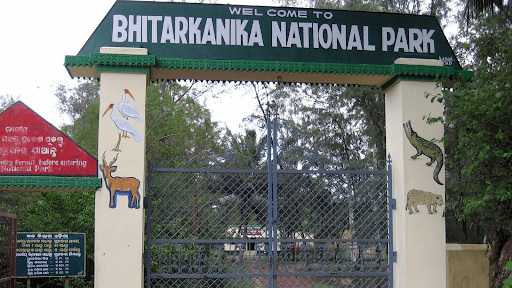
Hundreds of saltwater crocodile hatchlings have recently begun emerging from nests in Bhitarkanika National Park, Odisha, highlighting the park’s importance as a major breeding habitat for the species.
About Bhitarkanika National Park
- Location: Bhitarkanika National Park is located in Odisha, along the state’s coastal region.
- Estuarine Ecosystem: The park lies in the estuarine region of the Brahmani, Baitarani and Dhamra rivers, creating a rich network of creeks, mudflats and wetlands.
- Mangrove Ecosystem: It forms part of one of India’s most important mangrove ecosystems, characterised by vegetation adapted to saline and tidal conditions.
- Protected Area Network: The National Park is surrounded by the Bhitarkanika Wildlife Sanctuary, while Gahirmatha Beach and Marine Sanctuary lie to its east.
- Ramsar Site: Bhitarkanika is also recognised as a Ramsar Site, reflecting its international importance as a wetland ecosystem.
- Mangrove Vegetation: The park has extensive mangrove forests, along with species such as casuarina and grasses, adapted to the tropical and subtropical intertidal environment.
Wildlife Significance
- Saltwater Crocodile: Bhitarkanika supports India’s largest congregation of saltwater crocodiles and is an important breeding and nesting habitat for the species.
- Olive Ridley Turtles: Nearby Gahirmatha Beach is famous for one of the world’s largest nesting congregations of Olive Ridley sea turtles.
- Terrestrial Wildlife: The park also supports spotted deer, sambar, wild boar, hyena and jungle cats, along with several other species.
- Migratory Birds: Its wetlands attract numerous migratory birds during winter, adding to the biodiversity of the coastal ecosystem.
FAQs
Q1. Where is Bhitarkanika National Park located?
It is located in Odisha.
Q2. Which major rivers form the estuarine setting of Bhitarkanika?
The park lies in the estuarine region of the Brahmani, Baitarani and Dhamra rivers.
Q3. Which important reptile is found in Bhitarkanika?
It is known for the saltwater crocodile and supports India’s largest congregation of the species.
Q4. What is the significance of Gahirmatha Beach?
Gahirmatha Beach is an important nesting site for Olive Ridley sea turtles and lies to the east of Bhitarkanika.
Q5. Why is Bhitarkanika ecologically important?
Its combination of mangroves, estuaries, wetlands and intertidal habitats supports rich biodiversity and provides natural protection against coastal hazards.
Q6. Is Bhitarkanika a Ramsar Site?
Yes. Bhitarkanika is recognised as a Wetland of International Importance under the Ramsar Convention.