Context
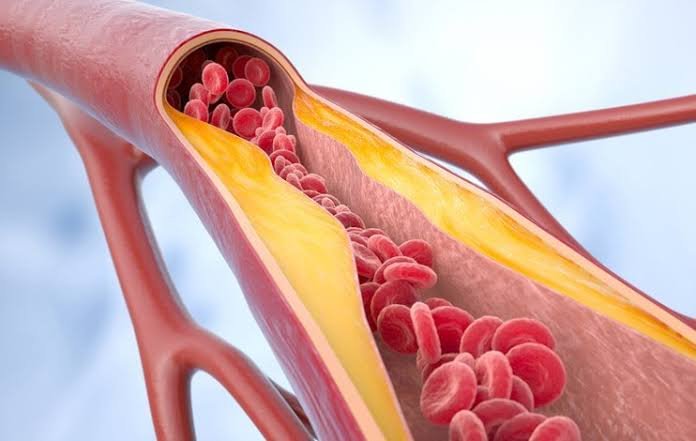
- Leg pain or cramping during walking that improves with rest can indicate Peripheral Artery Disease (PAD), in which narrowed arteries reduce blood flow to the lower limbs.
Arterial Structure and Circulation
- Arteries are blood vessels that generally carry blood away from the heart to body tissues.
- Most arteries carry oxygen-rich blood; the pulmonary arteries are an important exception because they carry deoxygenated blood to the lungs.
- The aorta is the largest artery and branches into progressively smaller vessels that supply organs and tissues.
- Arterial walls are thick and muscular because they withstand the high pressure generated by the heart.
- They contain three layers:
- Tunica intima: Inner endothelial lining that provides a smooth surface for blood flow.
- Tunica media: Smooth muscle and elastic tissue that regulate vessel diameter.
- Tunica externa: Outer supporting layer connecting the vessel with surrounding tissues.
- Elastic arteries, such as the aorta, absorb pressure near the heart, while muscular arteries, such as the femoral and radial arteries, distribute blood to body regions.
Atherosclerosis and Peripheral Artery Disease
- Atherosclerosis is the buildup of plaque inside arterial walls, causing the arteries to narrow and restricting blood flow.
- When this affects arteries supplying the limbs, particularly the legs, it can lead to Peripheral Artery Disease (PAD).
- A typical symptom is intermittent claudication—pain, heaviness or cramping during walking that improves with rest.
- Other signs may include cold feet, weak pulses, skin-colour changes and slowly healing wounds.
- PAD also indicates wider systemic atherosclerosis, which may increase the risk of heart attack and stroke.
Arteries and Veins: Functional Difference
- Direction of flow: Arteries carry blood away from the heart; veins return blood towards the heart.
- Wall structure: Arteries have thicker and more muscular walls, while veins have thinner walls.
- Pressure: Blood pressure is higher in arteries and lower in veins.
- Valves: Most arteries do not require valves, whereas many veins contain valves to prevent backward flow.
- Oxygen content: Most arteries carry oxygenated blood and most veins carry deoxygenated blood, with pulmonary circulation being the major exception.
FAQs
Q1. What are arteries?
Arteries are blood vessels that generally carry blood away from the heart to body tissues.
Q2. Which is the largest artery in the human body?
The aorta is the largest artery.
Q3. What are the three layers of an artery?
They are the tunica intima, tunica media and tunica externa.
Q4. What is atherosclerosis?
It is the buildup of plaque inside arteries, causing narrowing and reduced blood flow.
Q5. What is intermittent claudication?
It is leg pain or cramping triggered by walking or exercise that improves with rest, commonly associated with PAD.