Context
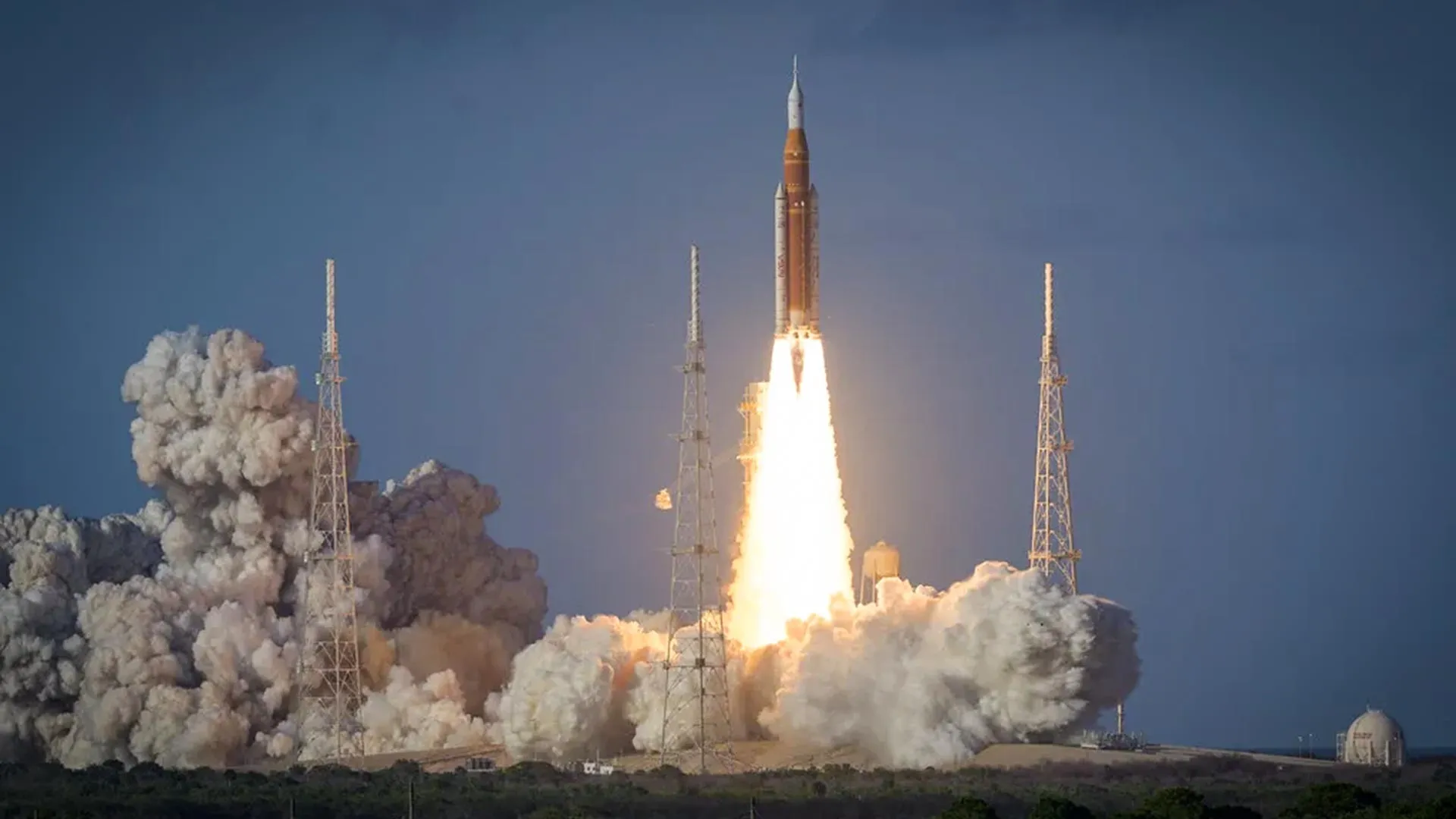
NASA is preparing to launch the Artemis II mission, which will send astronauts around the Moon and marks the beginning of a new era of sustained human presence in lunar space.
Q1. What are the objectives and significance of the Artemis II mission, and how does it mark a turning point in human space exploration after decades?
- The Artemis II mission aims to send humans near the Moon for the first time since 1972.
- It is a crewed flyby mission and does not involve a lunar landing with a duration of ~10 days.
- It will test critical life-support and navigation systems.
- It marks the return of human exploration beyond low Earth orbit.
- The mission represents a transition toward long-term lunar missions.
- It lays the foundation for future human landings and deep-space exploration.
Q2. How does NASA’s long-term lunar strategy differ from the earlier Apollo Program, and what are its implications for sustained human presence on the Moon?
- The Apollo Program focused on short-duration missions and symbolic achievements.
- The new strategy emphasises long-term human presence on the Moon.
- NASA plans to establish a sustainable lunar base. The focus is on repeated & extended missions with regular astronaut visits and continuous scientific research.
- It includes participation from private companies and global partners.
- Infrastructure such as habitats and support systems will be developed.
- The approach supports future missions to Mars and deep space.
Q3. What is the role of different Artemis missions in achieving the goal of a permanent Moon base, and how are these missions interconnected?
- The Artemis programme consists of multiple sequential missions.
- Artemis I was an uncrewed test mission where it tested rocket and spacecraft systems and validated mission design .
- Artemis II will carry astronauts around Moon. Artemis III & later missions aim for human landing.
- Future missions will focus on building lunar infrastructure.
- Missions are planned at regular intervals (~ every 6 months) increasing operational frequency.
- Each mission builds upon previous technological and operational lessons.
- Together, they create a pathway for permanent lunar habitation.
Q4. How do different mission trajectories, such as fast and fuel-efficient routes, affect lunar missions, and what technological trade-offs do they involve?
- Fast routes reduce travel time significantly. Artemis II will reach the Moon in about 3–4 days.
- Faster travel requires powerful launch systems as fuel-efficient routes take longer but save energy. Missions like Chandrayaan-3 used slower trajectories which reduced fuel consumption and increased mission duration .
- Trade-offs involve balancing speed, cost, and payload capacity.
- Advanced propulsion systems are required for fast missions.
Q5. What is the planned flight path of Artemis II, and why is it considered technologically and scientifically significant?
- The spacecraft will first orbit Earth multiple times and then travel toward the Moon.
- The mission includes a lunar flyby trajectory. It will travel far beyond the Moon’s far side up to approximately 6,500 km beyond extending human reach in space.
- This will be the farthest distance humans have ever travelled.
- The mission will validate deep-space navigation systems.
- It will test communication and safety systems for future missions.
Q6. How is India emerging as a key player in the new global lunar race, and what are its long-term ambitions in space exploration?
- India has significantly advanced its space capabilities. It is both a collaborator & competitor in the global space race. ISRO has successfully executed lunar missions.
- India aims to achieve a human Moon landing by 2040.
- Multiple countries are now involved like China, Japan and European partners.
- India’s participation reflects a shift from a bipolar to a multipolar space race.
- Its growing capabilities strengthen its strategic and technological position.
Q7. How does India’s participation in global frameworks like the Artemis Accords enhance its capabilities and strategic position in space exploration?
- India is a signatory to the Artemis Accords.
- The accords promote peaceful and cooperative space exploration.
- Participation enables collaboration with NASA and partners.
- It provides access to advanced technologies and expertise.
- Joint missions enhance scientific and technical capabilities.
- Collaboration includes projects such as NISAR and future lunar exploration initiatives.
- It strengthens India’s role in global space governance.
- It prepares India for its own long-term lunar missions.
Conclusion
The Artemis II mission marks the beginning of a new era of sustained human exploration beyond Earth, with a shift from symbolic achievements to long-term habitation, while also positioning countries like India as key stakeholders in the evolving global space order.