Context
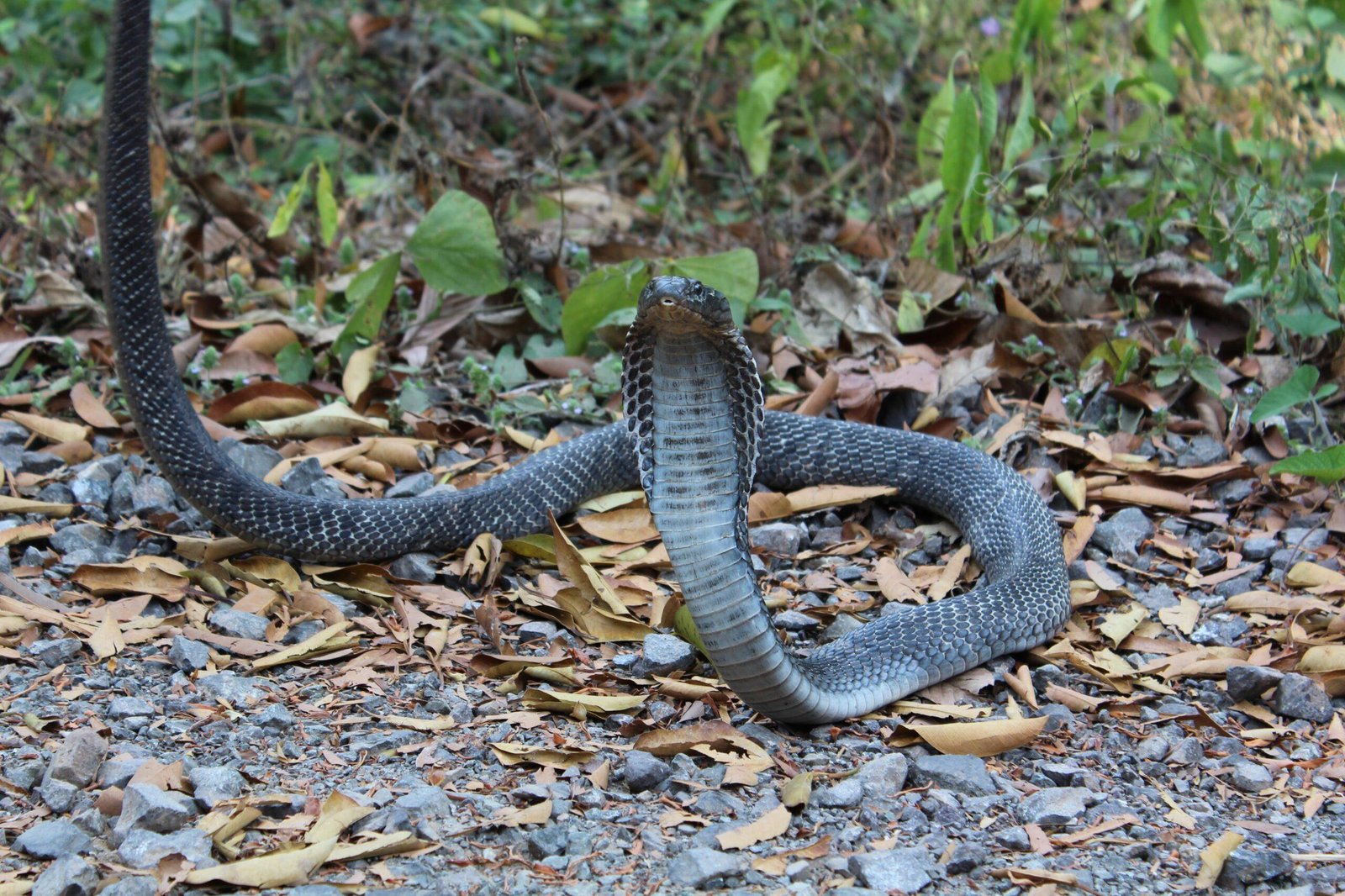
The Andaman Cobra (Naja sagittifera), a highly venomous snake endemic to the Andaman Islands, faces conservation threats from fear-driven human killings, largely due to its defensive venom-spitting behaviour.
About the Species
- Scientific Name: Naja sagittifera.
- Common Name: Andaman Cobra or Andaman Spitting Cobra.
- Family: Elapidae (the family that includes venomous snakes like cobras and kraits).
- Distribution: Endemic to the Andaman Islands (including Little Andaman), India.
- Habitat: Primarily inhabits tropical rainforests and undisturbed forest areas.
- Conservation Significance: A rare, poorly studied species with a restricted geographical range.
Key Features
- Body: Slender build, measuring around 0.9–1.8 metres in length, covered with smooth, glossy scales.
- Colour: Typically dark brown with lighter arrow-like markings along the body.
- Hood: Displays a distinct arrow-shaped marking on the back of its expanded hood.
- Venom: Highly venomous; its venom affects the nervous system (neurotoxic), causing paralysis, along with local tissue damage.
- Defensive Behaviour: Capable of spitting venom toward perceived threats.
- Activity Pattern: Mainly nocturnal (active at night) and solitary.
Conservation Status and Threats
- IUCN (International Union for Conservation of Nature) Status: Endangered (EN).
- Major Threats: Fear-driven retaliatory killing, habitat loss and degradation, and human–wildlife conflict.
- Conservation Measures: Habitat protection, public awareness campaigns, and safe snake-rescue practices.
FAQs
Q1. Why is the Andaman Cobra called a spitting cobra?
Ans. It can occasionally eject venom defensively, though less effectively than specialised spitting cobras.
Q2. What is the IUCN conservation status of the Andaman Cobra?
Ans. Endangered (EN).
Q3. What does an endemic species mean?
Ans. A species naturally restricted to a particular geographical region.