Context
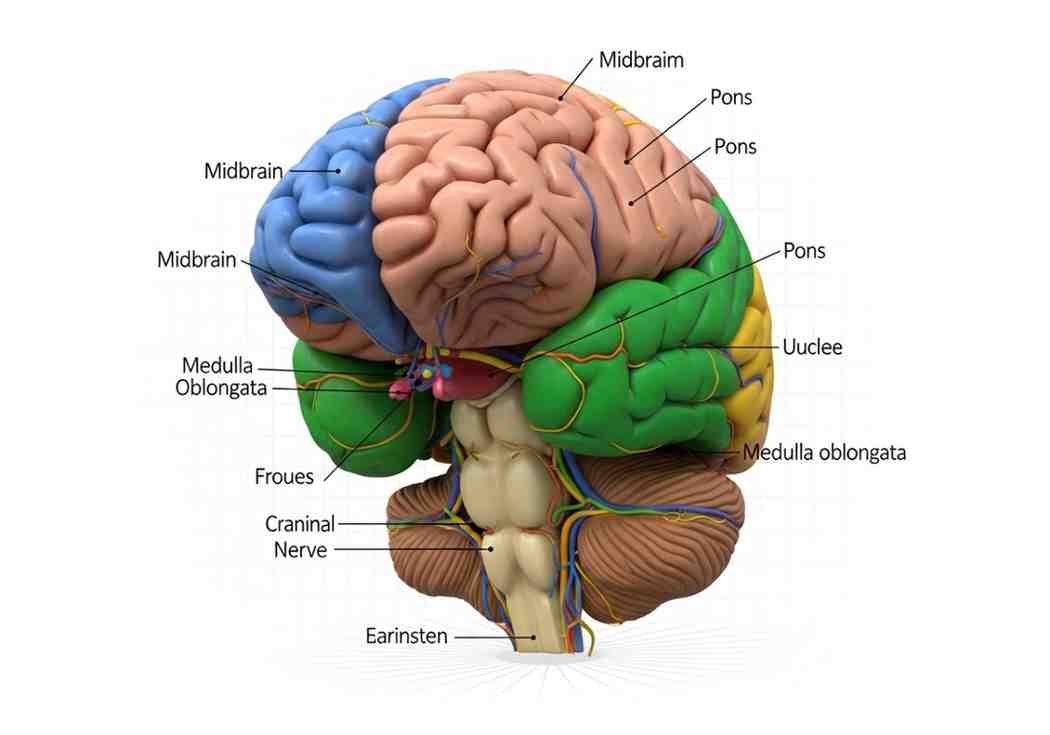
Recently, researchers at IIT Madras developed ANCHOR, a high-resolution 3D digital map of the human brainstem, providing an unprecedented view of its structure and supporting advanced neuroscience research.
About ANCHOR
- ANCHOR (Atlas of Neurochemical Characterization of the Human Brainstem with 3D Reconstruction) is the world’s most detailed 3D atlas of the human brainstem.
- Developed by the Sudha Gopalakrishnan Brain Centre (SGBC), IIT Madras, it maps the brainstem across life stages, from the prenatal period to adulthood.
- It employs a multimodal approach, integrating MRI, histology, and neurochemical architecture.
- The atlas incorporates over 200 brainstem nuclei and fibre tracts, reconstructed from hundreds of serial sections.
- Its high-resolution reconstruction is based on eight complementary immunostains applied across more than 500 tissue sections.
- It enables examination of brain structures at the micron level, providing nearly 1,000-fold higher resolution than conventional MRI.
- It provides a high-resolution reference framework for understanding brain development, neural connectivity, and cellular architecture.
- The atlas is expected to advance research on neurological and neurodegenerative disorders, supporting improved diagnosis and clinical investigations.