| Important questions for UPSC Pre/ Mains/ Interview:
1. Why is early childhood care and development central to India’s development goals? 2. What are the “first 3,000 days” and why are they critical? 3. How does investment in ECCD contribute to economic growth? 4. What has India achieved so far in child development? 5. What are the limitations of existing ECCD efforts? 6. Why is early intervention even more important today? 7. What kind of integrated ECCD framework does India need? 8. Why is a national mission on ECCD necessary? |
Context
- India aims to become a Viksit Bharat and a $30-trillion economy by 2047.
- Achieving this goal requires more than infrastructure and macroeconomic growth.
- It depends critically on long-term investments in human capital, especially during the earliest years of life.
- However, early childhood care and development (ECCD) has not yet received focused, systematic national attention.
Q1. Why is early childhood care and development central to India’s development goals?
- Human capital determines productivity, innovation, and long-term economic growth.
- The foundations of health, learning, and behaviour are laid early in life.
- Weak early foundations lead to lower educational outcomes, reduced employability, and higher public spending later.
- Without strong ECCD, economic growth risks becoming unequal and unsustainable.
Q2. What are the “first 3,000 days” and why are they critical?
- The first 1,000 days, from conception to two years of age, are globally recognised as a vital window of opportunity by the World Health Organization and UNICEF.
- The next six years (up to eight years of age) add another 2,000 days of rapid development.
- Together, the first 3,000 days shape:
- Brain architecture
- Physical health
- Cognitive capacity
- Emotional regulation
- Social skills
- Nearly 80–85% of brain development occurs during this period.
- Deficits in nutrition, care, or stimulation at this stage are often irreversible.
Q3. How does investment in ECCD contribute to economic growth?
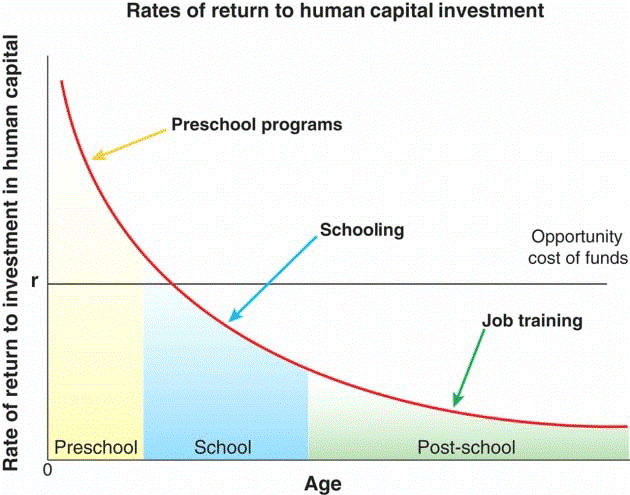
- Well-nourished and cognitively stimulated children perform better in school.
- They acquire skills faster and earn higher incomes as adults.
- ECCD reduces future public expenditure on:
- Health care
- Remedial education
- Social protection
- It expands the tax base through a healthier and more productive workforce.
- Evidence from countries such as the United States, Finland, and South Korea confirms these long-term gains.
- Although benefits emerge after 10–20 years, they are durable and intergenerational.
Q4. What has India achieved so far in child development?
- India has significantly improved child survival over the last five decades.
- Key initiatives included:
- Child Survival and Safe Motherhood programme (1992)
- Reproductive and Child Health programme (1997)
- Consolidation under the National Health Mission
- These efforts reduced infant and under-five mortality and improved immunisation.
- The Integrated Child Development Services (ICDS), launched in 1975 and later strengthened through Mission Saksham Anganwadi and POSHAN 2.0, laid a foundation for nutrition and early care.
Q5. What are the limitations of existing ECCD efforts?
- Most interventions focus on survival rather than full developmental potential.
- Programmes are fragmented across health, nutrition, and education sectors.
- ECCD initiatives are largely targeted at poorer households.
- Middle- and higher-income families are mostly excluded, despite rising developmental challenges such as:
- Childhood obesity
- Excessive screen exposure
- Emotional and behavioural issues
- Early childhood development must therefore be universal, not narrowly targeted.
Q6. Why is early intervention even more important today?
- Advances in epigenetics show that conditions even before conception affect long-term health.
- Parental nutrition, stress, and lifestyle influence gene expression in children.
- Neglect during early life increases the risk of:
- Developmental delays
- Non-communicable diseases
- Mental health disorders
- Paradoxically, during the most critical phase, children have minimal contact with formal systems.
- Reliable guidance on early stimulation and caregiving is scarce, while misinformation is widespread.
Q7. What kind of integrated ECCD framework does India need?
India needs a comprehensive, life-cycle approach from conception to eight years of age.
- Pre-conception and premarital counselling
- Focus on nutrition, mental health, and lifestyle.
- High return by benefiting two generations.
- Parental education
- Promote early stimulation through talking, reading, singing, and play.
- Low-cost actions with large developmental impact.
- Growth and developmental monitoring
- Train families to identify early delays.
- Early intervention is among the most cost-effective health measures.
- Quality early care for ages two to five
- Prevent undernutrition and obesity.
- Build healthy habits and emotional regulation.
- Breaking sectoral silos
- Integrate health, nutrition, and learning.
- Schools should evolve into hubs of learning, health, and wellbeing.
- Societal engagement
- Train teachers in child development beyond academics.
- Involve parents, civil society, philanthropy, and CSR initiatives.
Q8, Why is a national mission on ECCD necessary?
- ECCD requires coordination across multiple ministries.
- Key stakeholders include:
- Ministry of Health and Family Welfare
- Ministry of Education
- Ministry of Women and Child Development
- A national mission would provide:
- Clear goals
- Stable funding
- Accountability
- Long-term continuity
- It would shift ECCD from a welfare lens to a strategic development priority.
Conclusion
India’s future growth depends on investments made during the first 3,000 days of life. A coordinated national mission on early childhood care and development is essential to build resilient human capital and achieve inclusive, sustainable development.