Context
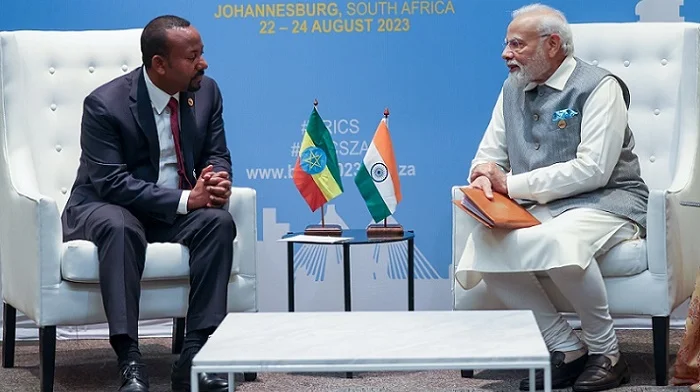
India-Ethiopia relations have gained renewed momentum amid Ethiopia’s efforts to rebuild national consensus after civil conflict and India’s growing engagement with Africa. The recent meeting between Prime Minister Narendra Modi and Ethiopian Prime Minister Abiy Ahmed Ali at the G20 Summit in Johannesburg has further catalysed bilateral ties.
What is Ethiopia’s Strategic Importance?
Ethiopia is one of Africa’s most pivotal states due to the following factors:
- Demography and Economy: With a population of around 109 million (2024), Ethiopia is one of Africa’s fastest-growing economies and has a large domestic market and substantial manufacturing base.
- Geopolitical Location: Located in the Horn of Africa, Ethiopia plays a central role in a region marked by conflict and geopolitical competition.
- Political and Security Role: Despite internal challenges, Ethiopia is viewed as a regional anchor of stability with an effective military and hosts the African Union headquarters, giving it major diplomatic weight.
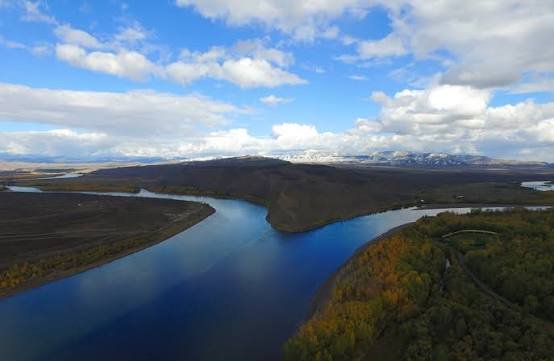
- Energy Potential: Ethiopia is a potential renewable energy powerhouse, especially in hydropower, with the capacity to become a regional energy exporter.
- Trade and Logistics Aspirations: Although landlocked, Ethiopia is seeking strategic autonomy in trade routes, traditionally relying on Djibouti but now exploring access through Somaliland and Eritrea.
Why This Is the Right Moment to Deepen India-Ethiopia Ties?
- Ethiopia is emerging from civil conflict and attempting to build a new national consensus. This phase of regeneration creates a window for trusted partners like India to expand cooperation.
- At the same time:
- India is strengthening its Africa outreach
- Ethiopia has become a member of BRICS
- Global supply chains are being restructured, increasing demand for trusted partners and new markets
How India-Ethiopia Relations Have Evolved?
- Education and Capacity Building
- Indian teachers and professors have contributed to Ethiopia’s education system for over a century.
- Ethiopia was the pilot country for the Pan-African e-Network Project (2007).
- Long-standing collaboration with IIT Delhi for tele-education continues.
- Ethiopia sends one of the largest numbers of African students to India, including the highest number of African PhD students.
- Graduates of Indian-supported programmes have staffed Ethiopia’s new universities.
- Education cooperation remains one of the strongest pillars of the relationship.
- Investment and Economic Cooperation
- Indian businesses entered Ethiopia in the 1950s, with major expansion after Lines of Credit from 2006.
- Total Indian private investment has exceeded $4 billion.
- Earlier focus on agriculture saw setbacks due to taxation and operational issues.
- New Areas of Opportunity
- Mining: Gold, critical minerals, and rare earth elements — crucial for renewable energy, batteries, and semiconductors.
- Ethiopia has vast but underexplored mineral potential.
- Indian Embassy surveys highlight opportunities along with regulatory and logistics challenges.
- Mining cooperation could become a strategic economic pillar.
- Defence Cooperation
- Ethiopia was among the first recipients of Indian military assistance.
- Harar Military Academy (1956) was established with Indian support.
- Since 2009, India has trained Ethiopian forces.
- Ethiopia’s military now needs modernisation after extensive internal and regional deployments.
- India offers cost-effective, battle-tested defence platforms.
- Recent developments:
- New MoU on defence cooperation
- First meeting of the Joint Defence Cooperation Committee
- Scope for defence exports, training, and capacity building
- Multilateral and Trade Dimensions
- Cooperation through BRICS, G20, and South-South platforms enhances political convergence.
- Under the African Continental Free Trade Area (AfCFTA), Ethiopia can serve as a manufacturing and export hub for Indian companies.
- India’s Duty-Free Tariff Preference Scheme remains important for Ethiopian exports, especially amid uncertainty in US and EU trade regimes.
Implications
- Strengthens India’s role as a development partner in Africa
- Secures access to critical minerals for India’s green transition
- Enhances India’s defence exports and training footprint
- Promotes South-South cooperation
- Positions Ethiopia as a gateway for Indian firms into African markets
Challenges and Way Forward
| Challenges | Way Forward |
| Investor concerns over foreign exchange availability | Improve forex access and payment mechanisms |
| Regulatory inconsistency and taxation issues | Update DTAA and Bilateral Investment Treaty |
| Infrastructure and logistics constraints | Joint planning and targeted infrastructure support |
| Limited awareness of opportunities | Showcase Indian investment success stories |
| IMF-related fiscal constraints | Design investments within IMF-compliant frameworks |
| Skills and technology gaps | Expand training, education, and digital cooperation |
Conclusion
India-Ethiopia relations stand at a critical inflection point. With Ethiopia rebuilding internally and India deepening its African engagement, focused cooperation in education, mining, defence, and manufacturing can transform the partnership into one of India’s most consequential relationships in Africa in the coming decade.
| Ensure IAS Mains Question
Q. Examine the strategic significance of Ethiopia for India. How can cooperation in education, mining, and defence deepen India-Africa relations? (250 words) |
| Ensure IAS Prelims Question
Q. Consider the following statements regarding India-Ethiopia relations: 1. Ethiopia hosts the headquarters of the African Union. 2. India’s defence cooperation with Ethiopia began only after 2009. 3. Ethiopia is a potential regional exporter of renewable energy, especially hydropower. Which of the statements are correct? a) 1 and 3 only b) 2 and 3 only c) 1 and 2 only d) 1, 2 and 3 Answer: a) 1 and 3 only Explanation Statement 1 is correct: Ethiopia hosts the African Union headquarters, giving it major diplomatic significance in Africa. Statement 2 is incorrect: India’s defence cooperation with Ethiopia began in the 1950s, not after 2009. Statement 3 is correct: Ethiopia has strong hydropower potential and aims to become a regional renewable energy exporter. |