Why in the News?
- India condemned Israel’s bombing in Doha (September 9, 2025), calling it a “violation of sovereignty”, a stronger statement than its earlier muted responses to Israeli strikes in other countries.
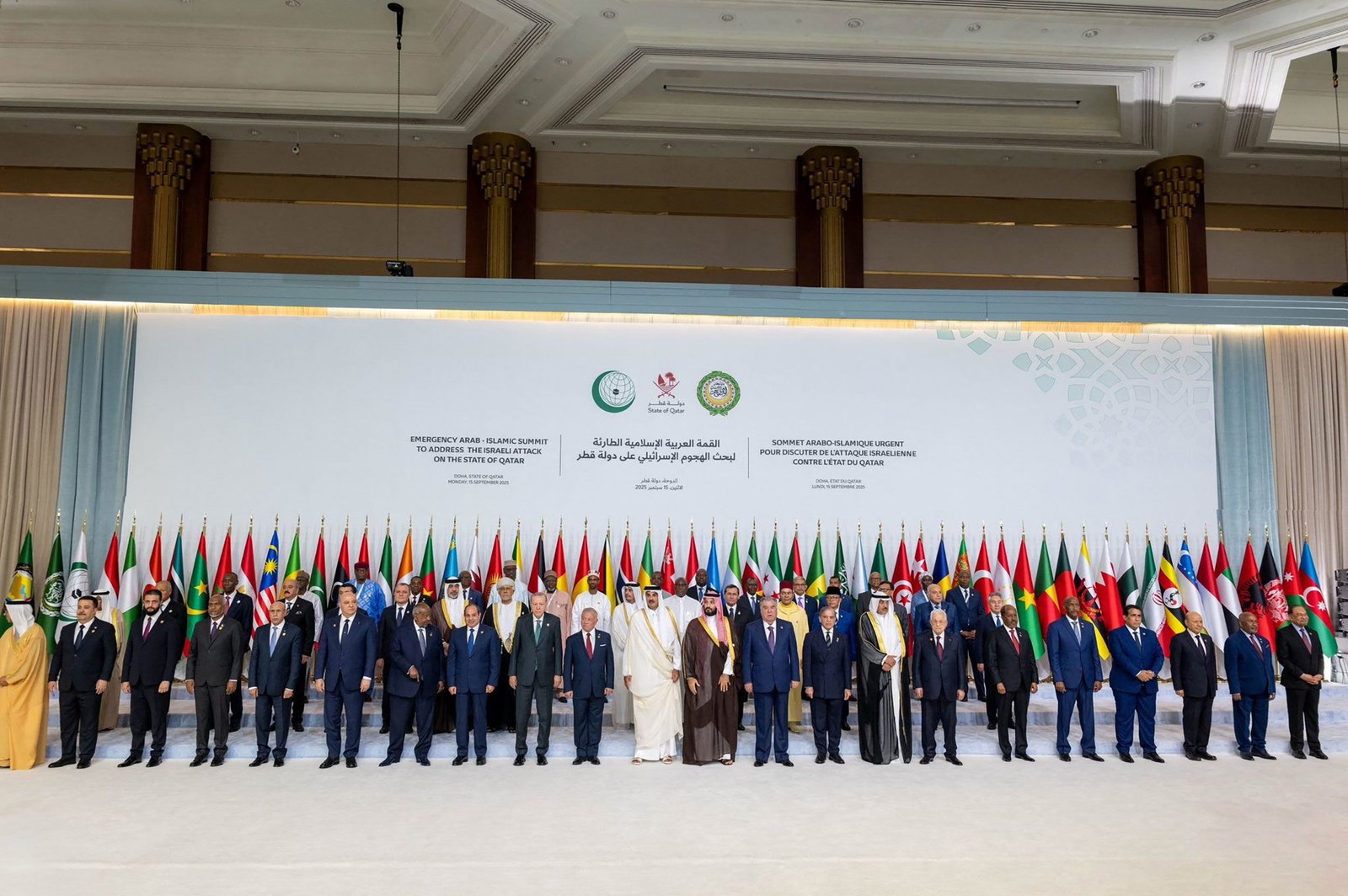
- The condemnation reflects India’s growing concern over rising civilian casualties in Gaza and highlights the importance of India’s bilateral ties with Qatar and the Gulf region, especially in light of new regional security alignments like the Saudi-Pakistan mutual defence pact.
Key Highlights
- The Doha Strike and India’s Condemnation
- On September 9, the Israeli Defence Forces (IDF) struck a home in Doha, targeting Hamas leaders.
- The attack killed five and was defended by Israeli PM Netanyahu as justified since Qatar “harbours” Hamas.
- India, at the UN Human Rights Council, strongly condemned it as a violation of sovereignty and international law.
- Contrast with India’s Earlier Reactions
- In past Israeli strikes on Lebanon, Syria, Yemen, Tunisia, and Iran, India’s reactions were mostly muted.
- Example: After Israel bombed the Iranian Embassy in Damascus (April 2024), India expressed only “concern.”
- India even praised some Israeli operations, like the Hezbollah pager bombings (Sept 2024).
- Its stance on Iran was inconsistent — calling for dialogue but avoiding SCO condemnations initially, before joining a later statement.
- Why Qatar Is Treated Differently
- Qatar hosts a large Indian diaspora and has strong personal ties with India’s leadership.
- It is also a crucial supplier of natural gas, which makes bilateral relations vital for India’s energy security.
- Experts highlight India’s statement was more about protecting bilateral relations than asserting global principles.
- Geopolitical Underpinnings
- Israel’s attack on Qatar raised alarms in Gulf states that host S. military bases.
- Experts suggest Israel is signalling that all Arab states are within its target zone, eroding the process of normalisation.
- The strike also exposed diminishing U.S. credibility as a security guarantor for Gulf Cooperation Council (GCC) states.
- This has triggered GCC talks of a joint defence mechanism against future threats.
- Implications for India’s Broader West Asia Policy
- India’s silence on Gaza’s humanitarian crisis (65,000 killed, including 20,000 children) is straining ties with Arab states.
- India’s limited but notable gestures:
- Called IDF’s killing of journalists “deeply regrettable”.
- Voted for a UNGA resolution supporting the two-state solution.
- Indicates India is recalibrating; balancing close ties with Israel against broader engagement with the Arab world.
Key Terms
- Sovereignty in International Law
- Core principle under the UN Charter ensuring states are free from external interference.
- Violations include cross-border strikes without consent.
- Sovereignty is often contested in cases of counterterrorism operations.
- India has historically invoked sovereignty to defend its own territorial integrity.
- Two-State Solution
- Proposal for resolving the Israel-Palestine conflict by creating independent Israel and Palestine states.
- Supported by the UN, most Arab countries, and India.
- Seeks to balance Israel’s security with Palestinian right to statehood.
- Its relevance resurfaces in every major Gaza conflict.
- Strategic Autonomy
- India’s foreign policy doctrine of not aligning permanently with any bloc.
- Allows flexibility to engage with both the U.S. and Russia, Israel and Arab world.
- Critical for protecting diverse national interests.
- Gulf Cooperation Council (GCC)
- Regional grouping of six Gulf states: Saudi Arabia, Qatar, UAE, Kuwait, Oman, Bahrain.
- Focuses on economic integration, defence, and political coordination.
- Recent debates on a joint defence mechanism show rising insecurity in the Gulf.
- Energy Security
- Ensuring reliable, affordable, and sustainable energy supplies.
- India imports ~85% of its crude oil, much from the Gulf.
- LNG from Qatar is vital for India’s industrial and domestic energy needs.
- Disruptions in Gulf geopolitics directly affect India’s economy.
Implications
- Diplomatic Balancing Act
- India must manage ties with both Israel and Arab states, avoiding alienation.
- Strong condemnation in the Qatar case signals pragmatic diplomacy over rigid alignment.
- Energy Security
- With Qatar being a major LNG supplier, safeguarding bilateral relations ensures energy stability for India.
- A misstep could disrupt long-term contracts and strategic supplies.
- Regional Security Dynamics
- The Saudi-Pakistan defence pact complicates India’s security concerns.
- A divided Gulf could impact India’s diaspora safety and trade interests.
- Strategic Autonomy at Stake
- India’s inconsistent responses highlight challenges in maintaining non-alignment principles.
- Too much silence on Gaza could hurt India’s credibility as a responsible global power.
- Future of West Asia Policy
- India may need to recalibrate its West Asia engagement, strengthening multilateral diplomacy, while protecting its diaspora, energy routes, and strategic investments like Chabahar Port.
Challenges and Way Forward
| Challenges | Way Forward |
| Inconsistent positions on Israel’s regional strikes hurt credibility | Adopt a principled, consistent policy based on international law and humanitarian concerns |
| Balancing ties with Israel vs Arab world | Strengthen issue-based diplomacy, while leveraging India’s diaspora and trade ties in the Gulf |
| Rising energy dependence on Gulf states | Diversify energy imports, while securing long-term LNG contracts with Qatar |
| Geopolitical shifts: Saudi-Pakistan pact, waning U.S. influence | Enhance strategic partnerships with UAE, Saudi, Qatar, and use forums like I2U2, BRICS, SCO |
| Humanitarian crisis in Gaza straining India-Arab ties | Push for ceasefire, support two-state solution, and project India as a voice of peace |
Conclusion
India’s strong condemnation of Israel’s strike in Qatar highlights the intersection of values and realpolitik. While framed as a sovereignty issue, the reaction reflects India’s deep bilateral stakes with Qatar and the Gulf. Moving forward, India must adopt a balanced, consistent, and principled approach in West Asia, safeguarding both strategic interests and its global image as a voice of fairness and peace.
| EnsureIAS Mains Question
Q. Discuss the challenges India faces in balancing its relations with Israel and the Arab world in the context of recent developments in West Asia. Suggest strategies to strengthen India’s position without compromising its core national interests. (250 Words) |
| EnsureIAS Prelims Question
Q. Consider the following statements regarding India’s recent position on Israel’s strike in Qatar: 1. India condemned the Israeli strike in Doha as a violation of sovereignty and international law. 2. India has always maintained a consistent stance on Israel’s strikes in other West Asian countries. 3. India’s condemnation of Israel in the Doha case was largely influenced by its bilateral ties with Qatar and the presence of a large Indian diaspora. Which of the above statements is/are correct? Answer: (b) 1 and 3 only Explanation: Statement 1 is correct: India condemned the Israeli strike in Doha at the UNHRC, calling it a violation of sovereignty and international law. Statement 2 is incorrect: India has not been consistent — it reacted weakly to earlier Israeli strikes in Lebanon, Syria, and Iran. Statement 3 is correct: The condemnation was shaped by India’s strong bilateral ties with Qatar, a crucial gas supplier with a large Indian diaspora. |
|
Also Read |
|
| UPSC Foundation Course | UPSC Daily Current Affairs |
| UPSC Monthly Magazine | CSAT Foundation Course |
| Free MCQs for UPSC Prelims | UPSC Test Series |
| ENSURE IAS NOTES | Our Booklist |