Why in the News?
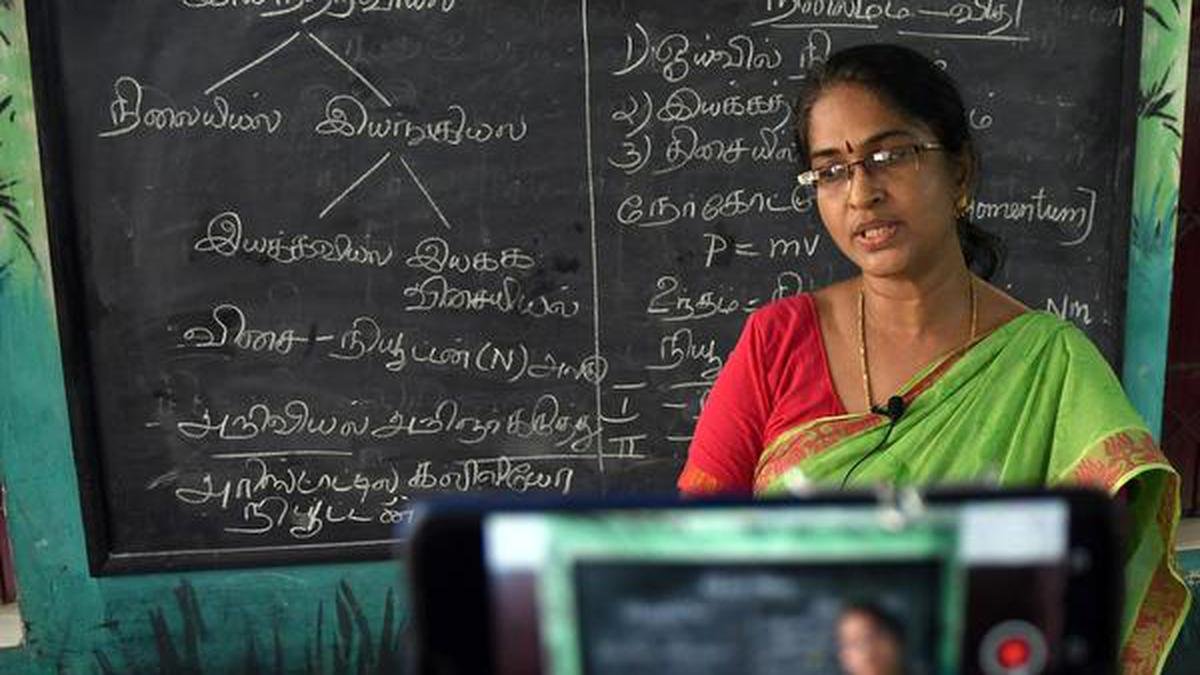
- The nation celebrates Teachers’ Day on September 5, commemorating the birth anniversary of Dr. Sarvepalli Radhakrishnan, highlighting the moral and social significance of teachers.
- With the National Education Policy (NEP) 2020 and subsequent initiatives, teachers are increasingly seen as “transformers” shaping India’s journey toward Atmanirbhar Bharat.
- Recent reforms (ITEP, DIETs of Excellence, digital platforms like SWAYAM, PM eVidya) underscore the growing emphasis on teacher training, digital adaptation, and value-based education.
Ethical Issues Involved
- Moral Development vs Academic Development
- Teachers not only impart knowledge but also instil ethics and civic responsibility.
- In Gandhiji’s view, “True education is that which draws out the best in man — body, mind and spirit.”
- Challenge: balancing academic goals with moral development in a competitive environment.
- Equity and Inclusivity in Education
- Ensuring equal opportunities for students from marginalised communities and those with special needs.
- Rawls’ justice as fairness: the most disadvantaged must be supported.
- Ethical duty to adapt pedagogy for diverse learning capacities.
- Continuous Learning and Professional Integrity
- Tagore’s reminder: “A teacher can never truly teach unless he is still learning himself.”
- Need for constant capacity-building in new pedagogies, digital tools, and multidisciplinary methods.
- Ethical issue: complacency versus lifelong learning.
- Technology and Human Values
- Digital platforms and AI tools aid teachers but cannot replace their human role.
- Kantian ethics: students should be treated as ends, not as data points in a system.
- Ethical dilemma: balancing efficiency with empathy in education.
- Nation-Building and Responsibility
- Teachers shape future leaders, innovators, and responsible citizens.
- Vivekananda: “The teacher is the maker of man.”
- Ethical responsibility to nurture not only employable individuals but also compassionate, ethical citizens.
Course of Action
- Strengthening Value-Based Education
- Integrate ethical reasoning, civic sense, and environmental stewardship into curricula.
- Example: Civil servants like Dr. S. Radhakrishnan himself embodied the teacher-philosopher ideal.
- Encourage mentorship beyond classroom teaching.
- Ensuring Inclusive and Equitable Learning
- Special training for teachers in inclusive practices.
- Infrastructure support for marginalised students (scholarships, assistive technologies).
- Equity audits to monitor fairness across schools.
- Promoting Teacher Capacity-Building
- Expand programmes like NISHTHA, Malaviya Mission, and ITEP for lifelong learning.
- Recognition and incentives for innovative teaching.
- Peer-learning networks to share best practices.
- Balancing Technology with Human Touch
- Position technology as a supportive tool, not a replacement.
- Ensure ethical use of student data and AI tools.
- Blend digital with experiential and values-based learning.
- Reinforcing Teachers’ Role in Nation-Building
- Encourage research and innovation in pedagogy aligned with NEP goals.
- Promote Gandhian trusteeship model — teachers as custodians of knowledge for societal good.
- Teachers as role models for ethical leadership in their communities.
Conclusion
Teachers are the moral bedrock of India’s educational system and nation-building journey. By combining value-based education, inclusivity, continuous learning, and judicious use of technology, teachers can empower students to become ethical, innovative, and compassionate citizens who advance the vision of Atmanirbhar Bharat.
| EnsureIAS Mains Question
Teachers are not merely knowledge transmitters but ethical anchors and nation-builders. In the context of the National Education Policy, 2020, critically analyse the ethical responsibilities of teachers in shaping an inclusive, value-based, and self-reliant India. (250 words) |