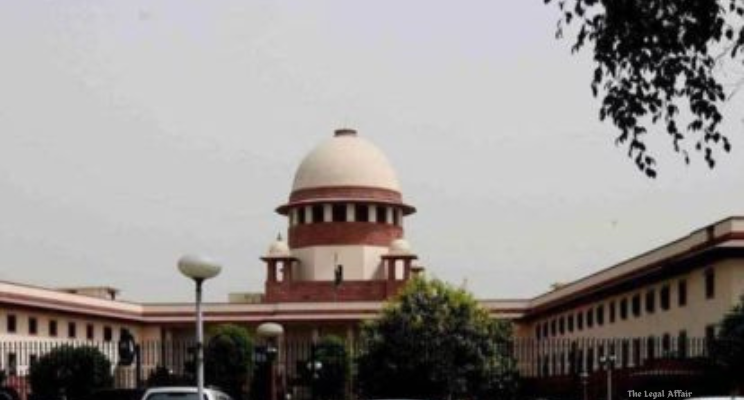
Why in the News?
- The Supreme Court recently intervened in two cases where High Courts allowed criminal proceedings in disputes that were essentially civil in nature.
- The apex court highlighted the fundamental difference between civil and criminal law and warned against the misuse of criminal provisions in business disputes.
- This development has sparked debate on judicial interpretation, pendency of cases, and the balance between civil remedies and criminal punishment.
Key Highlights
1. Supreme Court Intervention
- The SC set aside a Rajasthan HC order denying pre-arrest bail to a couple in a plywood consignment dispute, ruling that such cases are purely civil.
- Earlier, the same Bench reprimanded an Allahabad HC judge for allowing criminal proceedings in a similar commercial dispute.
- The SC described the HC’s reasoning as “shocking” and later recalled its directive stripping the judge’s criminal case roster after CJI’s intervention.
2. Distinction Between Civil and Criminal Law
- Civil Law: Deals with disputes between individuals or organisations; aims at providing remedies such as monetary compensation (damages) or injunctions.
- Criminal Law: Deals with offences against the state or society; aims to punish the offender and deter crimes, involving imprisonment or fines.
- Burden of Proof:
- Civil Cases: The judge decides based on what seems more likely to be true. If one side’s story is a little stronger than the other, that side wins.
(51% vs 49% certainty is enough) - Criminal Cases: The judge must be almost 100% sure the person is guilty before punishing them because their freedom is at stake.
(very high certainty—no reasonable doubt)
- Civil Cases: The judge decides based on what seems more likely to be true. If one side’s story is a little stronger than the other, that side wins.
- Overlap Between Civil and Criminal Proceedings
- Certain actions may attract both civil and criminal liability (e.g., fraud and breach of contract).
- SC clarified: Only if criminal intent existed prior to the agreement can both proceedings run parallel; mere breach of contract is not a crime.
4. Perception of Speed in Civil vs Criminal Cases
- Data from National Judicial Data Grid (NJDG):
- Criminal Trials: 70.17% disposed within a year.
- Civil Suits: Only 37.91% disposed within a year.
- Civil cases are often dragged due to procedural delays like issuing notices, whereas criminal matters involve urgency due to life and liberty.
5. Average Time for Disposal
- Civil cases take much longer than criminal cases.
- Normal civil suit: About 5 years on average.
- Execution of civil judgment: Around 4 years.
- Criminal cases move faster (generally):
- Bail: About 6 months.
- Serious criminal cases (sessions court): Around 4.5 years.
- Smaller criminal cases (magistrate): Around 2.5 years.
- Important: These numbers do not include time for appeals in higher courts, so actual duration is often longer.
Implications
1. Legal Clarity and Judicial Discipline
- Reinforces the principle that criminal law cannot be misused for recovery of dues.
- Promotes judicial discipline by discouraging arbitrary criminalization of civil disputes.
2. Protection of Business Transactions
- Prevents harassment of businesspersons through criminal FIRs in commercial disputes.
- Encourages ease of doing business by reducing fear of criminal charges in trade disagreements.
3. Impact on Judicial Efficiency
- Reduces burden on criminal courts by filtering out frivolous cases.
- However, civil courts remain overburdened, leading to continued pendency issues.
4. Citizens’ Rights and Liberty
- Protects individuals from wrongful arrest and custodial interrogation in purely civil matters.
- Upholds fundamental rights under Article 21 (Right to Life and Liberty).
5. Need for Procedural Reforms
- Highlights the necessity of streamlining civil dispute resolution to avoid misuse of criminal provisions as a faster route.
- Signals the importance of alternative dispute resolution (ADR) mechanisms like arbitration and mediation.
Challenges and Way Forward
| Challenges | Way Forward |
| Misuse of criminal provisions in civil disputes | Clearer judicial guidelines and strict scrutiny before registering FIRs |
| Delay in civil case disposal | Strengthen case management, increase use of ADR, implement time-bound trials |
| Lack of awareness among litigants and police | Sensitization programs for police, lawyers, and judiciary |
| Incomplete judicial data on pendency and appeals | Integrated case tracking system across all courts |
| Burden on lower courts due to overlapping claims | Special commercial courts and digital infrastructure for faster resolution |
Conclusion
The Supreme Court’s intervention underscores the importance of maintaining a strict boundary between civil and criminal law to uphold fairness and prevent misuse of the legal process. While the judgment protects individual liberty and promotes judicial discipline, the larger challenge lies in addressing systemic delays in civil cases, which often push parties to misuse criminal law. Strengthening civil justice mechanisms and promoting alternative dispute resolution is essential to ensure timely and effective justice delivery.
| EnsureIAS Mains Question Q. The Supreme Court’s recent observations on the misuse of criminal law in civil disputes highlight the urgent need for judicial discipline and procedural reforms. Discuss the significance of this distinction between civil and criminal law, its impact on business confidence, and the measures required to prevent such misuse. (250 words) |
| Ensure IAS Prelims Question Q. Consider the following statements regarding the distinction between civil and criminal law in India: 1. Civil law primarily aims to punish the offender, while criminal law focuses on compensation. 2. The burden of proof in criminal cases is “beyond reasonable doubt,” whereas in civil cases it is based on the “preponderance of probabilities.” 3. The Supreme Court recently ruled that mere breach of contract cannot be treated as a criminal offence unless criminal intent existed from the beginning. Which of the statements given above is/are correct? a. 1 and 2 only Answer: b. 2 and 3 only |