Context
Researchers from the Wildlife Institute of India (WII) recently sighted the Critically Endangered White-Bellied Heron along the Lohit River in Arunachal Pradesh, highlighting the conservation significance of Eastern Himalayan river ecosystems.
About White-Bellied Heron
- Scientific Name: Ardea insignis.
- Other Names: Also called Imperial Heron and Great White-Bellied Heron.
- Global Distribution: Found in the Eastern Himalayan foothills across India, Bhutan, and northern Myanmar, with rare sightings in southern China (extinct in Nepal and Bangladesh).
- Indian Distribution: Mainly found in Assam and Arunachal Pradesh (notably Namdapha National Park and the Lohit/Kamlang river basins).
- Habitat: Prefers undisturbed, fast-flowing freshwater rivers with gravel bars and nearby subtropical and temperate forests.
- Population: Fewer than 100 mature birds left globally, with fewer than 10 estimated in India, making it one of the world’s rarest birds.
Key Features
- Size: Stands about 1 to 1.27 metres tall, making it the second-largest living heron in the world (after the Goliath Heron).
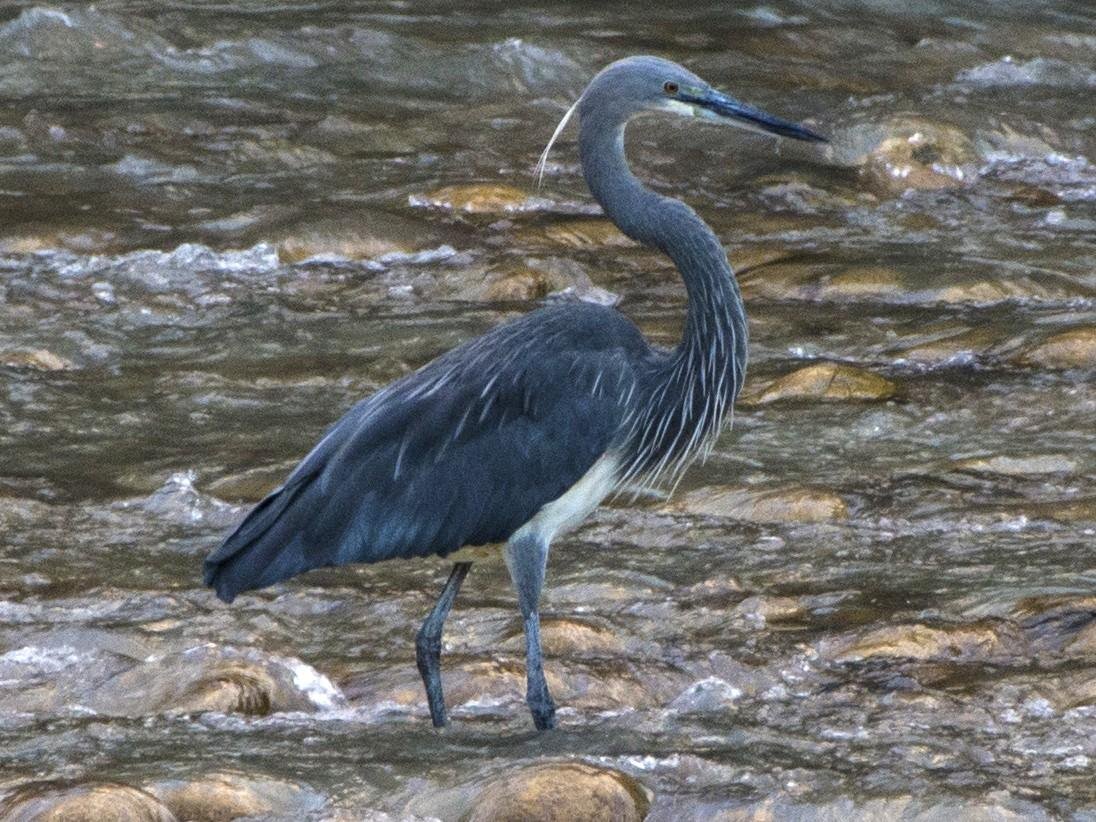
- Appearance: Mostly dark grey feathers (plumage) with a contrasting white belly and throat, long grey legs, and a long, dark pointed bill.
- Diet & Behaviour: Solitary and shy; mainly fish-eating (piscivorous), using its long neck and sharp beak to catch fish in shallow river rapids.
Conservation Status & Threats
- IUCN Status: Listed as Critically Endangered (CR) on the IUCN (International Union for Conservation of Nature) Red List.
- Legal Protection in India: Protected under Schedule I of the WPA (Wildlife Protection Act), 1972.
- EDGE Species: Listed as an EDGE (Evolutionarily Distinct and Globally Endangered) species, meaning it has few close relatives and needs top conservation priority.
- Major Threats: River habitat loss, hydropower dams, sand and gravel mining, forest clearing, poaching, human disturbance, and falling fish stocks.
About Lohit River
- Origin: Rises in eastern Tibet (Zayal Chu range) before entering India.
- Course: Enters India through Arunachal Pradesh (flowing past Walong, Tezu, and Parshuram Kund) and enters Assam.
- River System: A major left-bank tributary of the Brahmaputra River, joining the Siang and Dibang rivers in Assam to form the main Brahmaputra.
- Ecological Link: Forms a vital riparian habitat for the White-Bellied Heron and other Eastern Himalayan biodiversity.
FAQs
Q1. Where is the White-Bellied Heron found in India?
Ans. Primarily in Assam and Arunachal Pradesh, within the Eastern Himalayan region.
Q2. What is the conservation status of the White-Bellied Heron?
Ans. Critically Endangered (CR) under the IUCN Red List.
Q3. What are EDGE species?
Ans. Evolutionarily Distinct and Globally Endangered (EDGE) species with unique evolutionary histories and a high risk of extinction.
Q4. Which is the largest living heron species?
Ans. Goliath Heron (Ardea goliath), followed by the White-Bellied Heron.