Context
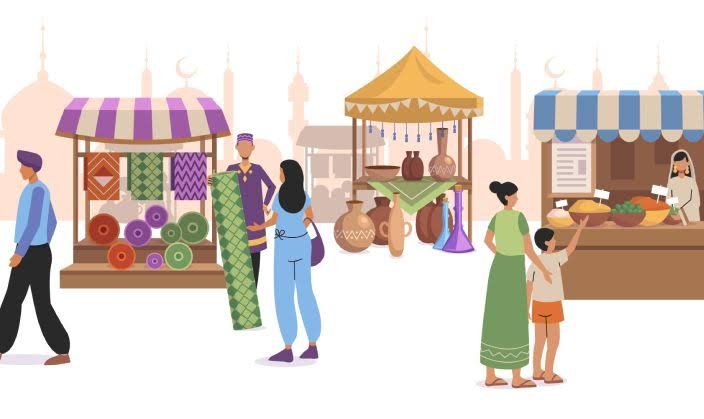
The Ministry of Housing and Urban Affairs (MoHUA) organised the PM SVANidhi Samman Awards 2026 in New Delhi to recognise outstanding implementation of the scheme, which has benefited around 81 lakh street vendors through over 1.21 crore loans worth nearly ₹20,000 crore.
About PM SVANidhi Scheme
- Full Form: Prime Minister Street Vendor’s AtmaNirbhar Nidhi (PM SVANidhi).
- Launch: Started on 1 June 2020 to help street vendors recover from COVID-19 lockdowns.
- Scheme Type: A Central Sector Scheme giving collateral-free loans, digital payment rewards, and social security support.
- Implementing Ministries: Jointly run by MoHUA (Ministry of Housing and Urban Affairs) and DFS (Department of Financial Services) under the Ministry of Finance.
- Objective: Provide formal bank credit, financial inclusion, and steady livelihoods to street vendors.
- Restructuring & Extension: Restructured in August 2025, extending loans till 31 March 2030 with an outlay of ₹7,332 crore.
- Target: Aims to reach 1.15 crore street vendors, including 50 lakh new vendors.
Key Features
1. Collateral-Free Loans: Working capital loans without security in three rising tranches on timely repayment:
- First Loan: Up to ₹15,000.
- Second Loan: Up to ₹25,000.
- Third Loan: Up to ₹50,000.
2. Interest Subsidy: 7% yearly interest subsidy on timely loan repayment, sent straight to bank accounts.
3. Credit Guarantee: Government-backed risk cover via CGTMSE (Credit Guarantee Fund Trust for Micro and Small Enterprises) encourages banks and NBFCs (Non-Banking Financial Companies) to lend easily.
4. UPI-Linked RuPay Credit Card: Credit limit up to ₹30,000 for vendors who repay their second loan on time, helping meet urgent business and personal needs.
5. Digital Cashback: Up to ₹1,600 cashback on eligible digital transactions to promote cashless payments.
6. SVANidhi se Samriddhi: Profiles vendor families to link them with eight Central welfare schemes (like PM-JAY (Pradhan Mantri Jan Arogya Yojana), PMJJBY (Pradhan Mantri Jeevan Jyoti Bima Yojana), PMSBY (Pradhan Mantri Suraksha Bima Yojana), PM-SYM (Pradhan Mantri Shram Yogi Maan-dhan), and ONORC (One Nation One Ration Card)).
7. Skill & Food Safety Training: Training in financial literacy, digital payments, business skills, and street-food hygiene with FSSAI (Food Safety and Standards Authority of India).
8. Wider Area Reach: Gradual expansion beyond statutory towns to census towns and peri-urban areas.
Significance
- Financial Inclusion: Reduces dependence on high-interest local moneylenders through formal bank loans.
- Formalisation & Credit Score: Helps vendors build a formal credit history and official vendor identity (Certificate of Vending / Letter of Recommendation).
- Digital Empowerment: Boosts everyday use of UPI (Unified Payments Interface) and cashless payments in small markets.
- Family Welfare: Connects vendors and their families to health, insurance, pension, and ration schemes under SVANidhi se Samriddhi.
- Urban Livelihoods: Strengthens self-employment, women’s participation, and small businesses in the informal economy.
FAQs
Q1. Which ministries implement PM SVANidhi?
Ans. Ministry of Housing and Urban Affairs (MoHUA) and Department of Financial Services (DFS), Ministry of Finance.
Q2. What is the interest subsidy provided under the scheme?
Ans. 7% annual interest subsidy on eligible loans, subject to timely repayment.
Q3. What is SVANidhi se Samriddhi?
Ans. A welfare initiative linking street vendors and their families to eight selected Central Government schemes.
Q4. Until when has the PM SVANidhi Scheme been extended?
Ans. Until 31 March 2030, with an approved outlay of ₹7,332 crore.