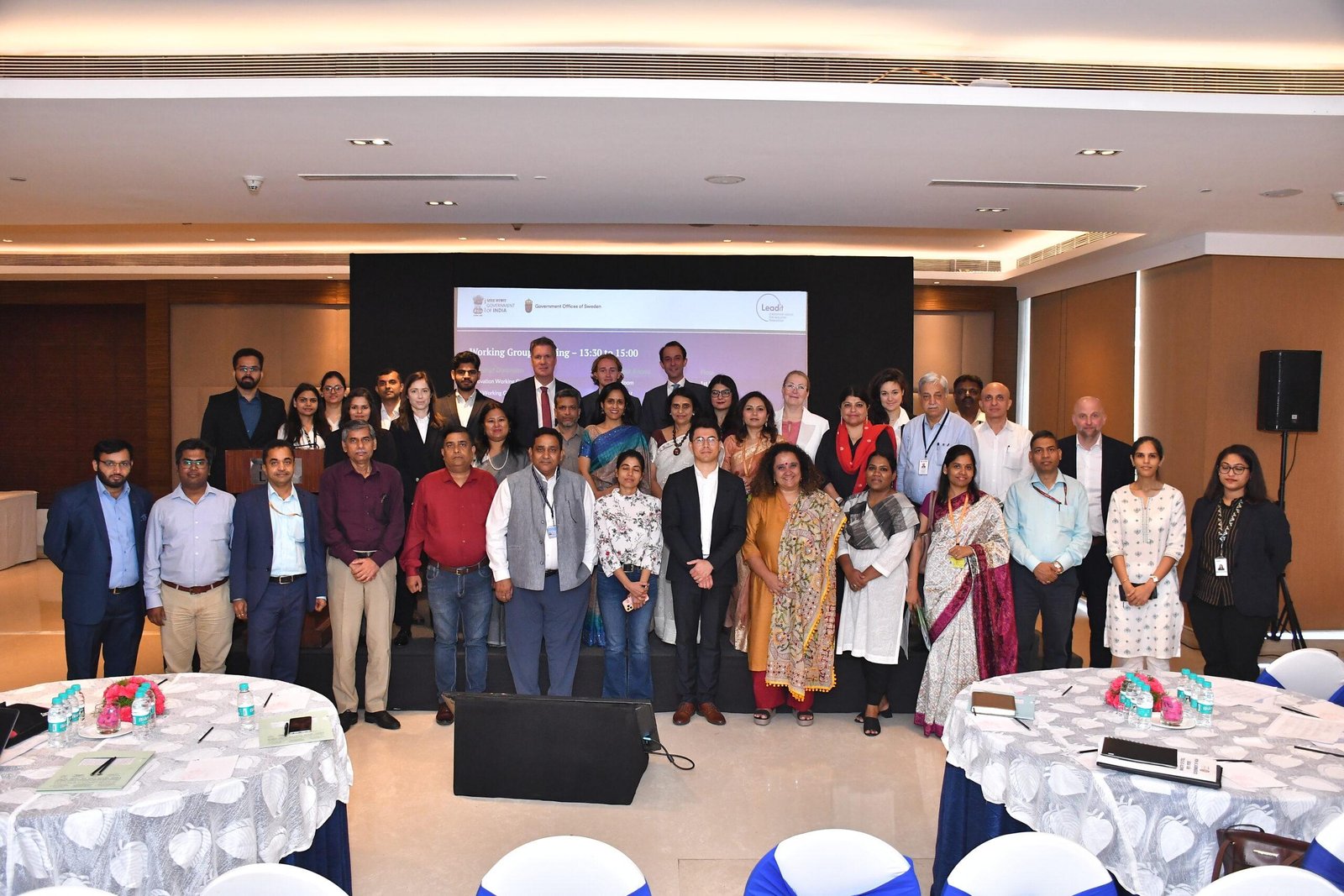
Context
India and Sweden are set to launch LeadIT 3.0 on 17 November 2026, focusing on the practical implementation of clean industrial technologies and industrial decarbonisation ahead of COP31 in Antalya, Türkiye.
About LeadIT
- Establishment: Jointly launched by India and Sweden at the UN (United Nations) Climate Action Summit in New York in September 2019, with support from the WEF (World Economic Forum).
- Objective: To achieve net-zero emissions in heavy industries by 2050, especially steel and cement.
- Nature: A global public-private partnership promoting cleaner industries through policy support, climate finance, and technology sharing.
- Secretariat: Hosted by the SEI (Stockholm Environment Institute) in Sweden.
- Membership: As of November 2026, includes 19 countries and 33 companies (including 13 Indian companies).
Key Initiatives
1. LeadIT 2.0 (2024–2026): Focuses on three areas:
- Just & Inclusive Transition: Protecting workers and developing economies during industrial change.
- Technology Cooperation: Developing and sharing low-carbon technologies.
- Climate Finance: Improving financial and technical support for emerging economies.
2. LeadIT 3.0 (2027–2030): Focuses on building real low-carbon industrial projects, technology partnerships, and measurable results.
3. India–Sweden ITP (Industry Transition Partnership): Links governments, industries, and researchers for cleaner production in the steel and cement sectors.
Significance
- Hard-to-Abate Sectors: Helps cut emissions in hard-to-abate sectors (like steel and cement), where replacing fossil fuels is difficult and costly.
- Technology & Finance: Improves global access to affordable clean technology and climate finance.
- India’s Climate Goals: Supports India’s 2070 net-zero target and commitments under the Paris Agreement.
FAQs
Q1. Which countries launched LeadIT, and when?
Ans. India and Sweden launched it at the UN Climate Action Summit in September 2019.
Q2. Where is the LeadIT Secretariat located?
Ans. At the Stockholm Environment Institute (SEI), Sweden.
Q3. What are hard-to-abate industries?
Ans. Industries such as steel and cement, where reducing emissions is difficult due to high-temperature processes and chemical reactions.
Q4. How does LeadIT support India’s climate goals?
Ans. By promoting clean technologies, international partnerships and climate finance, supporting India’s net-zero target for 2070.