Context
A study published in Nature Aging on 10 November 2026 identified a potential role for mitochondria-derived extracellular vesicles in Alzheimer’s disease progression, highlighting how these particles may transfer disease-associated factors between brain cells.
About Extracellular Vesicles
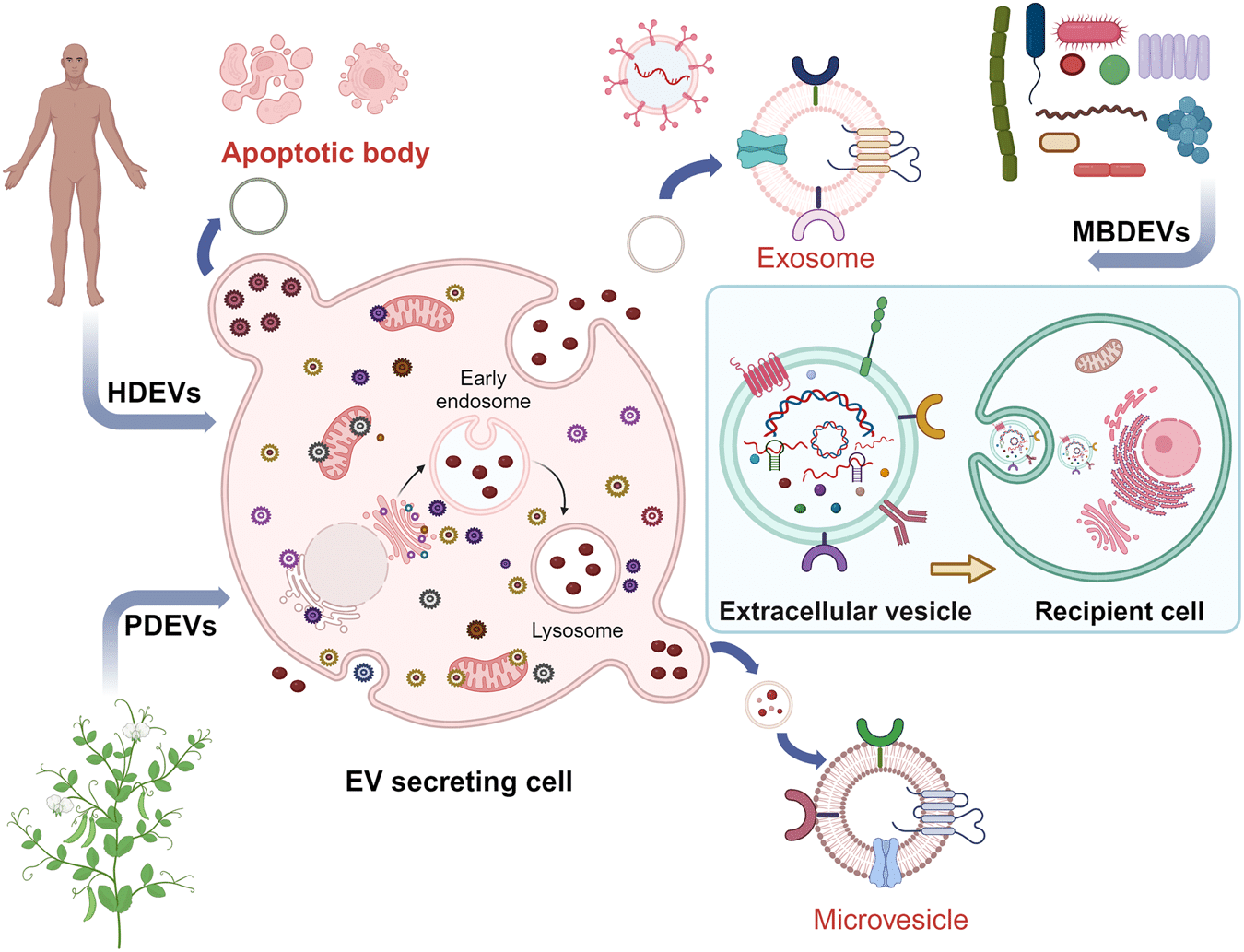
- Definition: Extracellular vesicles (EVs) are small, lipid-bilayer-enclosed particles released by cells into surrounding tissues and bodily fluids.
- Occurrence: EVs are found in blood, urine, saliva and cerebrospinal fluid, making them accessible for studying cellular activity and disease-related changes.
- Biochemical composition: EVs carry lipids, proteins and nucleic acids (DNA and RNA), which can influence the functioning of recipient cells.
- Molecular signature: Their biological cargo partly reflects the origin and condition of parent cells, providing information about cellular processes.
- Intercellular communication: EVs transfer biological molecules between cells, influencing immune responses, tissue repair and other physiological processes.
- Non-replicating nature: EVs cannot reproduce independently because they lack the cellular machinery required for replication.
Types of Extracellular Vesicles
EVs are traditionally classified according to their formation mechanisms:
- Exosomes (approximately 30–150 nm): Originate within intracellular compartments called endosomes and are released when these compartments fuse with the cell membrane.
- Microvesicles (approximately 100–1,000 nm): Form through outward budding of the plasma membrane, enabling the direct release of cellular material.
- Apoptotic bodies (often above 1,000 nm): Are released during programmed cell death and may contain cellular fragments.
- Classification limitation: These size ranges overlap; therefore, MISEV2023 guidelines recommend classification based on demonstrated origin or measurable characteristics rather than size alone.
Role of Extracellular Vesicles in Alzheimer’s Disease
- Pathological transmission: EVs can carry disease-associated proteins, including amyloid-beta and tau, between brain cells, potentially contributing to the spread of Alzheimer’s-related pathology.
- Mitovesicle involvement: The November 2026 study identified increased mitochondria-derived vesicles (mitovesicles) in Alzheimer’s-affected brain tissue, suggesting their involvement in disease progression.
- Molecular mechanism: Researchers identified Ggt1, an enzyme associated with microglia (brain immune cells), in mitovesicles and linked its transfer to Alzheimer’s-like changes in experimental models.
- Therapeutic relevance: Experimental inhibition of mitovesicle release reduced disease-associated changes in mice, identifying a potential treatment target requiring further human research.
Potential Medical Applications of Extracellular Vesicles
- Diagnostic biomarkers: EVs carry disease-associated molecules that may help identify cancer and neurodegenerative disorders, supporting research into less-invasive diagnosis and monitoring.
- Targeted drug delivery: Engineered EVs can transport medicines or therapeutic nucleic acids to recipient cells, offering potential advantages in biological compatibility and targeted delivery.
- Tissue regeneration: EVs can influence repair-related cellular signalling, supporting experimental approaches to wound healing, cartilage repair and bone regeneration.
Challenges in Clinical Applications
- Isolation and standardisation: Differences in EV size, origin and composition complicate reliable separation and measurement, affecting the consistency of research findings.
- Clinical safety: Variations in biological cargo and behaviour require careful evaluation of toxicity, immune reactions and delivery effectiveness.
- Limited clinical validation: Most EV-based therapeutic approaches remain experimental, requiring robust human trials to establish their safety and effectiveness.
FAQs
Q1. What are extracellular vesicles?
Small, non-replicating, membrane-bound particles released by cells that carry biological molecules.
Q2. What are the major biochemical components of EVs?
Lipids, proteins and nucleic acids.
Q3. What are the traditional types of extracellular vesicles?
Exosomes, microvesicles and apoptotic bodies.
Q4. What are mitovesicles?
Mitochondria-derived extracellular vesicles that carry mitochondrial components.
Q5. How are EVs associated with Alzheimer’s disease?
They may transfer disease-associated molecules between brain cells, potentially contributing to pathological progression.