Context
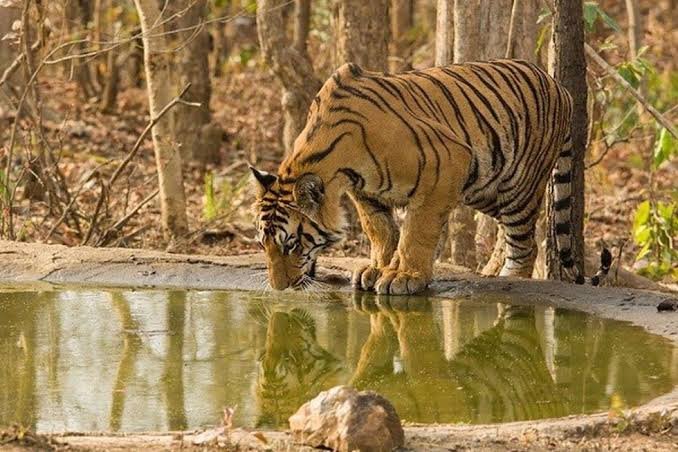
A tiger was recently found dead in Nawegaon-Nagzira Tiger Reserve (NNTR), Maharashtra, with electrocution suspected as the cause. Forest authorities detained eight people, including a farmer, for questioning.
Location & Establishment
1. Location: Located in Gondia and Bhandara districts of Maharashtra, within the Central Indian Tiger Landscape.
2. Establishment: Declared India’s 46th Tiger Reserve in 2013 under Project Tiger.
3. Area: About 1,894.90 sq km, including a core area of 656.36 sq km.
Constituent Protected Areas (5 Units):
- Nawegaon National Park
- Nawegaon Wildlife Sanctuary
- Nagzira Wildlife Sanctuary
- New Nagzira Wildlife Sanctuary
- Koka Wildlife Sanctuary
4. Landscape Connectivity: Linked through forest corridors with Kanha, Pench, and Tadoba-Andhari Tiger Reserves.
5. Topography: Undulating terrain, with Zenda Pahad (about 702 m) as the highest point.
6. Drainage: Forms the catchment area of the Wainganga, Chulbandh, and Gadvi rivers.
Vegetation & Biodiversity
- Forest Type: Mainly Southern Tropical Dry Deciduous Forest.
- Major Flora: Teak, Ain, Haldu, Dhaora, and Bamboo.
- Carnivores: Bengal tiger, leopard, dhole (wild dog), sloth bear, striped hyena, and jackal.
- Herbivores: Gaur (Indian bison), sambar, chital, nilgai, barking deer, and wild boar.
- Birds: Red-collared dove, spotted dove, and black-winged kite.
Conservation Importance
- Tiger Corridors: Connects major reserves, supporting safe tiger movement, genetic diversity, and population growth.
- Water & Soil Protection: Protects river catchments and reduces soil erosion.
- Ecosystem Services: Serves as a vital ecological anchor in the Satpura-Maikal landscape, functioning as a natural carbon sink and supporting regional climate stability.
Key Challenges
- Human-Wildlife Conflict: Farming near forest boundaries increases the risks of illegal electrocution, retaliatory killing, and habitat disturbance.
- Corridor Fragmentation: Roads, railways, and expanding settlements threaten natural wildlife movement between connected reserves.
- Biotic Pressure & Fires: Unregulated livestock grazing and seasonal forest fires degrade forest undergrowth, increasing habitat stress.
FAQs
Q1. Where is Nawegaon-Nagzira Tiger Reserve located?
Ans. It is located in the Gondia and Bhandara districts of northeastern Maharashtra.
Q2. Which rivers are part of its catchment area?
Ans. The Wainganga, Chulbandh and Gadvi rivers.
Q3. What is the predominant vegetation of Nawegaon-Nagzira Tiger Reserve?
Ans. Southern Tropical Dry Deciduous Forests, with tea