Context
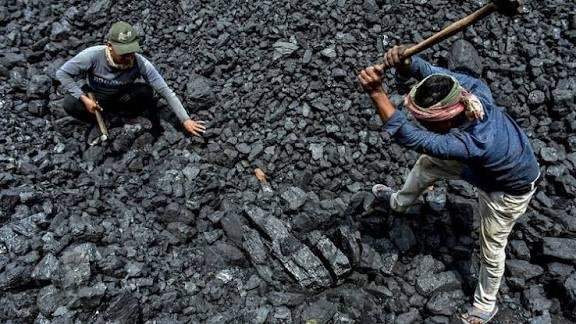
The ₹37,500-crore coal gasification initiative received only two applications in its second round, indicating low investor participation.
About Coal Gasification
- Definition: A thermochemical process that converts coal into syngas (synthesis gas) using controlled oxygen (or air) and steam at high temperatures.
- Operating Conditions: Done at 800–1,600°C under high pressure through partial oxidation rather than complete burning.
- Syngas Composition: Mainly contains CO (carbon monoxide) and (hydrogen), with small amounts of methane, (carbon dioxide), water vapour, and sulphur compounds.
- Applications: Used to produce methanol, ammonia, urea (fertilisers), SNG (Synthetic Natural Gas), hydrogen, synthetic fuels, and industrial chemicals.
Coal Gasification Process
- Coal Preparation: Coal is crushed and dried.
- Pyrolysis: Heating releases volatile gases and leaves behind carbon-rich solid char.
- Partial Oxidation: Limited oxygen reacts with coal and char to generate heat.
- Gasification: Steam and react with hot char to produce CO and (syngas).
- Gas Cleaning: Dust, sulphur compounds, and impurities are removed from syngas.
Advantages of Coal Gasification
- Domestic Resource Utilisation: Allows productive use of India’s abundant low-grade coal and coal residues.
- Industrial Feedstock: Produces domestic raw materials for fertilisers, chemicals, and synthetic fuels, reducing import dependence.
- Air Pollution Control: Cleaning syngas before use removes sulphur compounds and particulate matter effectively.
- Power Generation: IGCC (Integrated Gasification Combined Cycle) uses syngas in a gas turbine and recovers waste heat to generate extra electricity.
- Hydrogen & Emission Control: Syngas can produce hydrogen, while pairing with CCUS (Carbon Capture, Utilisation and Storage) helps reduce emissions.
Government Initiatives
- ₹37,500-Crore Scheme (2026): Approved on 13 May 2026 to promote surface coal and lignite gasification, offering financial support of up to 20% of eligible plant and machinery costs (subject to limits).
- National Coal Gasification Mission: Targets 100 million tonnes of coal gasification capacity by 2030.
- Earlier Incentive Scheme (2024): A separate ₹8,500-crore scheme was approved in January 2024 to support public and private projects.
- Latest Developments: The second round received only two applications—both from NTPC Limited—for urea, methanol, and DME (Dimethyl Ether) production. The third round opened on 10 November 2026.
Key Challenges
- High Capital Costs: Requires heavy upfront investment in specialised equipment and infrastructure.
- Commercial Uncertainty: Uncertain demand and prices for gasification products discourage investors.
- Logistical Constraints: Coal transport and plant location increase operating costs.
- Environmental Concerns: Generates significant (carbon dioxide) emissions, consumes large amounts of water, and produces contaminated wastewater.
Way Forward
- Pithead Plants: Set up gasification plants near coal mines (pithead locations) to cut coal transport costs.
- Market Assurance: Provide offtake guarantees (assured buying by fertiliser and chemical PSUs — Public Sector Undertakings) and VGF (Viability Gap Funding) to attract private investors.
- Green & Water Safeguards: Pair plants with CCUS (Carbon Capture, Utilisation and Storage) to cut emissions and use ZLD (Zero Liquid Discharge) systems to recycle wastewater.
- Indigenous R&D: Boost domestic R&D (Research and Development) to adapt technology for India’s high-ash coal and lower equipment costs.
FAQs
Q1. What is coal gasification?
Ans. A thermochemical process that converts coal into synthesis gas (syngas) using controlled oxygen or air and steam at high temperatures.
Q2. What are the principal components of syngas?
Ans. Carbon monoxide (CO) and hydrogen (H₂), along with smaller amounts of methane, carbon dioxide and water vapour.
Q3. What is India’s coal gasification target?
Ans. India aims to achieve 100 million tonnes of coal gasification capacity by 2030 under the National Coal Gasification Mission.
Q4. What is Integrated Gasification Combined Cycle (IGCC)?
Ans. A power generation technology that uses coal-derived syngas in gas and steam turbines to generate electricity.
Q5. How can coal gasification help reduce air pollution?
Ans. It allows sulphur compounds and particulate matter to be removed from syngas before combustion, although it does not automatically reduce greenhouse gas emissions.