Context
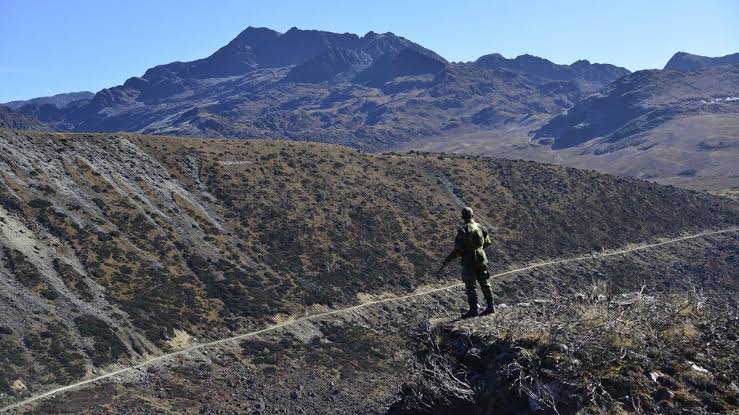
Reports of face-offs between Indian and Chinese troops in the Asaphila, Taksing and Longju areas of Arunachal Pradesh have raised concerns about India’s territorial security. The Director General of the Indo-Tibetan Border Police (ITBP) confirmed that face-offs had taken place at several locations in Arunachal Pradesh. Reports of Chinese camps and increased activity near the disputed border have renewed debate over India’s response to such developments.
Emerging Chinese Activities in Arunachal Pradesh
- Face-offs in the Eastern Sector: The ITBP Director General confirmed that confrontations between Indian and Chinese forces had occurred at multiple locations and were continuing.
- Asaphila Stand-off: Reports indicate that tensions near Asaphila had persisted since late July 2026.
- Maja–Longju Developments: Chinese troops reportedly returned in greater numbers after a confrontation near Maja and established temporary camps approximately 6–7 km inside the Line of Actual Control (LAC), as perceived by India.
- Local Concerns: Local organisations have reported Chinese construction of roads, bridges and camps near traditional grazing grounds. Such reports underline the importance of independent verification and ground-level monitoring.
- Diplomatic Engagement: The developments have reportedly continued despite discussions through military and diplomatic mechanisms, including the Working Mechanism for Consultation and Coordination (WMCC).
Official Responses and Growing Concerns
- India’s Position: The Ministry of External Affairs stated that disturbances occur when Chinese forces deviate from established patrolling patterns. It also emphasised the need to maintain peace and avoid misunderstandings along the LAC.
- China’s Position: China has maintained that its patrols are normal activities intended to protect its territorial sovereignty.
- Arunachal Pradesh Government’s Concerns: Chief Minister Pema Khandu stated that repeated Chinese transgressions were linked to Beijing’s rejection of the McMahon Line.
- Uncertainty on the Ground: Reports of camps and construction near traditional grazing grounds require careful verification. However, the confirmed face-offs indicate continuing friction in the region.
Historical Context and China’s Border Strategy
- Earlier Flashpoints: Areas such as Namkha Chu, Sumdorong Chu and Longju have witnessed tensions in the past.
- Salami-Slicing Strategy: China is often accused of using small, incremental actions, such as temporary camps, patrols and infrastructure development, to gradually strengthen its position without triggering a full-scale conflict.
- Eastern Ladakh Experience (2020): The prolonged stand-off in Eastern Ladakh demonstrated how local confrontations can escalate into wider military tensions and create difficult ground situations.
- 1959 Line: Some strategic commentary has suggested that China seeks to enforce its claimed 1959 Line in the eastern sector. India does not accept this unilateral claim.
- Changing Ground Situation: Any expansion of military presence or obstruction of Indian patrols beyond established patterns could affect India’s ability to maintain its position along the frontier.
China’s Territorial Claims and India’s Position
- McMahon Line (1914): The boundary was drawn during the Simla Convention between British India and Tibet. India recognises it as the basis of the boundary in the eastern sector, while China rejects its legitimacy.
- China’s Claim over Arunachal Pradesh: China refers to Arunachal Pradesh as Zangnan or South Tibet and claims it as part of its territory.
- India’s Position: India considers Arunachal Pradesh an integral and inalienable part of the country and rejects China’s territorial claims.
- LAC Disagreement: The LAC is not mutually delineated throughout its entire length, resulting in differing perceptions of the boundary and periodic patrol confrontations.
Bilateral Agreements and Border Management
| Agreement | Key provisions |
| 1993 Agreement | Both countries agreed to maintain peace and tranquillity along the LAC and resolve the boundary question through peaceful consultations. |
| 1996 Agreement | It introduced military confidence-building measures, including restrictions on certain military activities and mechanisms to reduce tensions. |
| 2005 Protocol | It laid down procedures for implementing military confidence-building measures and resolving differences through consultation. |
| 2005 Political Parameters Agreement | It established guiding principles for resolving the boundary dispute. |
| 2012 WMCC Agreement | It established a mechanism for consultation and coordination on India-China border affairs. |
Diplomatic and Political Response: Lessons from the Past
- Chumar Incident (2014): Chinese troops temporarily crossed India’s perception of the LAC in the Chumar area of Ladakh. The issue was raised during Chinese President Xi Jinping’s visit to India, and the troops withdrew following a flag meeting between local commanders.
- Eastern Ladakh Stand-off (2020): The prolonged military stand-off demonstrated the limitations of negotiations when differences over ground positions remain unresolved.
- Need for Multi-Level Engagement: India should use military, diplomatic and political channels together to address serious border confrontations.
- Consistency in Communication: India should clearly distinguish routine patrol encounters from incidents involving prolonged deployments, construction or obstruction of Indian patrols.
Need of strong response from India
- Preventing Incremental Territorial Changes: A delayed or inadequate response may allow temporary developments to create lasting ground-level advantages.
- Maintaining Territorial Claims: Clear communication and consistent patrolling help India protect its stated position along the LAC.
- Preserving Local Confidence: Border residents need assurance that their security, traditional access and livelihoods are being protected.
- Strengthening Diplomatic Credibility: Consistent communication helps India explain its position to the international community and avoid leaving contested narratives unchallenged.
Way Forward
- Strengthen Border Infrastructure: India should improve roads, bridges, tunnels, airstrips and communication networks to ensure faster mobilisation and better connectivity.
- Improve Surveillance: India should expand the use of drones, satellites, ground sensors and integrated intelligence systems for real-time monitoring.
- Ensure Regular Patrolling: India should maintain consistent patrolling in sensitive areas to prevent changes in established ground conditions.
- Strengthen ITBP Capabilities: The ITBP should receive modern equipment, high-altitude training, specialised commando capabilities and better logistical support.
- Pursue Diplomatic Engagement: India should use the WMCC, military commander-level meetings and Special Representatives mechanism to resolve disputes and reduce miscalculations.
- Seek LAC Clarification: India should continue efforts to clarify disputed stretches and develop a common understanding of the LAC.
- Empower Border Communities: Initiatives such as the Vibrant Villages Programme should strengthen infrastructure, livelihoods and population retention in border areas.
- Adopt Clear Strategic Communication: The government should communicate verified developments transparently while protecting sensitive operational information.
Conclusion
Chinese activities along the Arunachal frontier highlight the continuing challenge of managing an unsettled boundary with a powerful neighbour. India must distinguish routine patrol confrontations from developments that could alter the ground situation. Strategic restraint should be accompanied by military preparedness, diplomatic consistency and transparent communication. Silence cannot substitute for a clear and sustained policy to protect India’s territorial interests.
FAQs
Q1. Which areas of Arunachal Pradesh have reportedly witnessed India-China face-offs?
Ans: The reported locations include Asaphila, Taksing and Longju, including the Maja area near Longju.
Q2. What is the McMahon Line?
Ans: The McMahon Line was drawn during the 1914 Simla Convention and forms the basis of the boundary between India and Tibet in the eastern sector. China does not recognise it.
Q3. What does China call Arunachal Pradesh?
Ans: China refers to Arunachal Pradesh as Zangnan or South Tibet and claims it as part of its territory.
Q4. What is the 1959 Line?
Ans: It refers to China’s unilateral perception of the India-China boundary in 1959. India has not accepted it as the basis for settling the boundary dispute.
Q5. What is the significance of the 1993 India-China Agreement?
Ans: The Agreement on the Maintenance of Peace and Tranquillity along the LAC was signed on 7 September 1993. It requires both countries to respect the LAC pending a final boundary settlement
Q6. What is the WMCC?
Ans: The Working Mechanism for Consultation and Coordination on India-China Border Affairs was established in 2012 to facilitate consultation and coordination on border-related issues.