Context
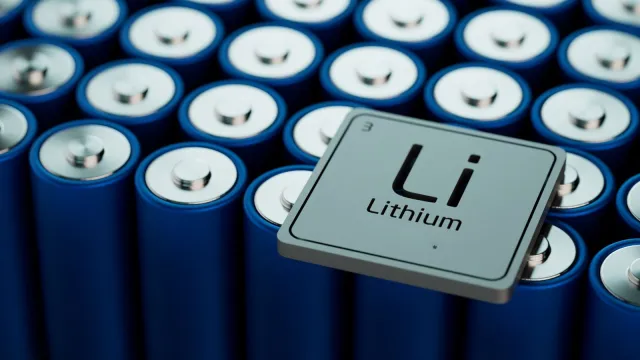
On 4 November 2026, the Union Cabinet approved the Capex Support Scheme to Promote Critical Mineral Processing, with an outlay of ₹2,814 crore for FY 2026–27 to FY 2030–31, to promote domestic processing of lithium and nickel into high-purity compounds.
About the Scheme
- Core Focus: Concentrates on midstream processing — refining raw or recycled minerals into compounds for batteries, electronics, defence, and speciality steel.
- Financial Support & Targets: Offers a 30% capital subsidy for four plants (two lithium plants of at least 30 kt capacity each, and two nickel plants).
- Subsidy Limits: Capped at ₹500 crore per lithium beneficiary and ₹900 crore per nickel beneficiary, while encouraging by-product recovery (like cobalt).
- Strategic Significance: Targets India’s limited domestic refining capacity to reduce heavy import dependence on a few nations for processed critical minerals.
Critical Minerals: Meaning and Key Concepts
- Definition & Core Criteria: Critical minerals are essential for economic development and national security, determined by high economic importance and severe supply disruption risks.
- Supply Risk Drivers: Caused by geographic concentration of reserves, high import dependence, geopolitical risks, low recycling, and lack of substitutes.
- Exclusions & India’s List: Excludes fuel minerals (coal, oil, gas, uranium) and construction materials; Ministry of Mines identified 30 critical minerals in 2023.
- REEs (Rare Earth Elements): A specific set of 17 elements (15 lanthanides plus scandium and yttrium), crucial for magnets (e.g., neodymium), electronics, and defence.
- Why Named ‘Rare’: Not physically scarce in the Earth’s crust, but finding concentrated deposits and managing complex chemical separation is extremely difficult.
- Core Distinction: REEs are a specific chemical group, whereas critical minerals are a broader category defined by strategic need and supply vulnerability.
Why India Needs Critical Minerals
- Growing Demand: Essential for EVs (Electric Vehicles), battery storage, renewable energy, semiconductors, and defence, driving India’s net-zero target by 2070.
- Global Concentration: Refining is heavily controlled by China, while mining is concentrated in the DRC (Democratic Republic of the Congo) for cobalt, Indonesia for nickel, and Australia/South America for lithium.
- Import Dependence: India imports almost all refined critical minerals, including 100% of its lithium requirement.
- Strategic Risks: Heavy dependence exposes Indian supply chains to export restrictions, geopolitical shocks, and price volatility.
India’s Critical Mineral Resources
- Rare Earth Deposits: Holds substantial monazite beach sands along coastal regions of Kerala, Tamil Nadu, and Odisha.
- Lithium Discovery: Identified inferred lithium reserves in the Reasi district of Jammu & Kashmir.
- Hard-Rock Deficit: Lacks significant domestic hard-rock reserves for critical metals like lithium, cobalt, and nickel.
- Future Potential: High scope to improve self-reliance through accelerated exploration, domestic midstream processing, and urban mining/recycling.
Policy Measures for Critical Minerals
- National Critical Mineral Mission (NCMM, 2025): Accelerates domestic exploration, streamlines clearances, builds processing parks, acquires overseas assets, and creates Centres of Excellence.
- KABIL (Khanij Bidesh India Ltd): PSU joint venture mandated to acquire critical mineral assets overseas.
- MMDR Amendment Act, 2023: Removed 6 minerals (including lithium) from the atomic list for private mining, allowed Exploration Licences, and let captive mines sell 50% output in the open market.
- FDI & Exploration Funding: Allows 100% FDI via automatic route; NMET (National Mineral Exploration Trust) funds advanced exploration (G4 to G1 stages).
- Recycling & Circular Economy: ₹1,500 crore scheme supports mineral recycling; GSI and CSIR drive recovery from industrial waste and tailings.
- International Alliances: Member of the US-led MSP (Minerals Security Partnership) and bilateral deals to secure supply chains.
Challenges
- Limited Scale: Four initial plants may not significantly lower India’s high import dependence.
- Feedstock Deficit: Processing units require a steady supply of ore, concentrate, or scrap, which remains heavily imported.
- Tech & Skill Gaps: Lack of advanced refining technology and specialized technical workforce.
- Cost Disadvantage: Competition with Chinese processors who benefit from huge economies of scale and lower operational costs.
- Environmental Impact: Processing is water- and energy-intensive, generating hazardous waste that requires strict management.
Way Forward
- Secure Feedstock: Combine long-term overseas agreements with accelerated domestic exploration.
- Tech Development: Boost R&D (Research and Development) and global partnerships for refining and recycling.
- Processing Clusters: Build dedicated processing parks with shared infrastructure and faster clearances.
- Diversify Supply: Leverage partnerships like MSP (Minerals Security Partnership) to reduce reliance on single suppliers.
- Sustainability: Strict standards for waste management, water reuse, and emissions.
FAQs
Q1. How are critical minerals identified?
Ans. Based on economic importance and supply risk, considering supply concentration, limited substitutes and recycling; fuel minerals and common construction materials are excluded.
Q2. How many critical minerals has India identified?
Ans. 30 critical minerals, identified by the Ministry of Mines in 2023.
Q3. Why are rare earth elements called “rare”?
Ans. They are difficult to find in concentrated, economically mineable deposits and separate, despite being present in the Earth’s crust.
Q4. What is the National Critical Mineral Mission?
Ans. A mission approved in January 2025 to strengthen domestic exploration, processing, recycling and overseas mineral supply.
Q5. What is KABIL?
Ans. Khanij Bidesh India Ltd, a joint venture of public sector companies that acquires critical mineral assets abroad.