Context
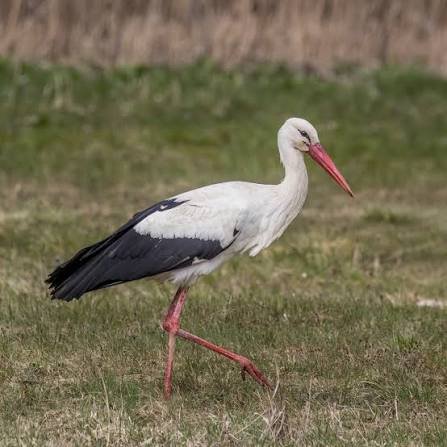
A rare White Stork (Ciconia ciconia) was recently spotted at the Okhla Bird Sanctuary in Uttar Pradesh, attracting birdwatchers, naturalists and wildlife photographers. The sighting highlights the importance of wetlands as habitats and feeding grounds for migratory birds.
About White Stork
- Scientific Name: Ciconia ciconia.
- Family: Ciconiidae (stork family).
- Type: Large wading bird.
- Conservation Status: IUCN Red List: Least Concern.
Habitat and Distribution
- Geographical Distribution: Found across Europe, Asia Minor, northern Africa and the Middle East.
- Migratory Behaviour: During winter, white storks migrate towards tropical regions of Africa, parts of the Middle East and the Indian subcontinent.
- Preferred Habitat: They generally inhabit grassy meadows, agricultural fields, pastures, steppes, savannas and shallow wetlands. They avoid areas with dense tall grass and shrubs.
- Flying Pattern: They fly with their necks stretched forward and legs trailing behind. They use rising air currents (soaring) to conserve energy during long-distance flights.
Key Features
- Size: Measures around 95–110 cm in height, with a wingspan of approximately 183–217 cm.
- Appearance: Has white plumage with black wing and shoulder feathers, a long red bill (14–19 cm) and red legs.
- Sexual Differences: Males and females look similar, although males are generally larger.
- Lifespan: Can live for up to 40 years.
- Diet: Feeds mainly on small animals found in fields and shallow water.
- Social Behaviour: White storks are generally social (gregarious) and non-territorial birds.
About Okhla Bird Sanctuary
- Location: Situated at the entrance of Noida in Gautam Buddha Nagar district, Uttar Pradesh.
- Geographical Significance: Located at the point where the Yamuna River enters Uttar Pradesh after leaving the territory of Delhi.
- Area: Covers approximately 4 sq. km.
- Major Feature: Its most prominent feature is a large lake formed by damming the Yamuna River.
- Conservation Recognition: Recognised as an Important Bird and Biodiversity Area (IBA) by BirdLife International.
Conclusion
The sighting of the White Stork highlights the ecological importance of the Okhla wetlands as a habitat for resident and migratory birds. Protecting such wetlands is essential for conserving bird diversity and maintaining healthy ecosystems.
Frequently Asked Questions (FAQs)
Q1. What is the White Stork?
The White Stork (Ciconia ciconia) is a large migratory wading bird belonging to the Ciconiidae family. It is classified as Least Concern on the IUCN Red List.
Q2. Where is the White Stork found, and where does it migrate?
It is found across Europe, Asia Minor, northern Africa and the Middle East. During winter, it migrates towards tropical Africa, parts of the Middle East and the Indian subcontinent.
Q3. What are the major physical features of the White Stork?
It has white plumage, black wing feathers, a long red bill and red legs. It measures around 95–110 cm in height, with a wingspan of 183–217 cm.
Q4. What is the preferred habitat and diet of the White Stork?
It inhabits grassy meadows, agricultural fields, pastures, savannas and shallow wetlands. It mainly feeds on small animals found in fields and shallow water.
Q5. Where is Okhla Bird Sanctuary located, and why is it important?
Located in Gautam Buddha Nagar, Uttar Pradesh, it covers approximately 4 sq. km. Its large lake supports bird habitats, and BirdLife International recognises it as an Important Bird and Biodiversity Area (IBA).