Context
The Supreme Court recently declined to examine the merits of a challenge relating to the revised boundaries of Nahargarh Wildlife Sanctuary in Rajasthan, leaving the matter to be dealt with by the Rajasthan High Court.
About Nahargarh Wildlife Sanctuary
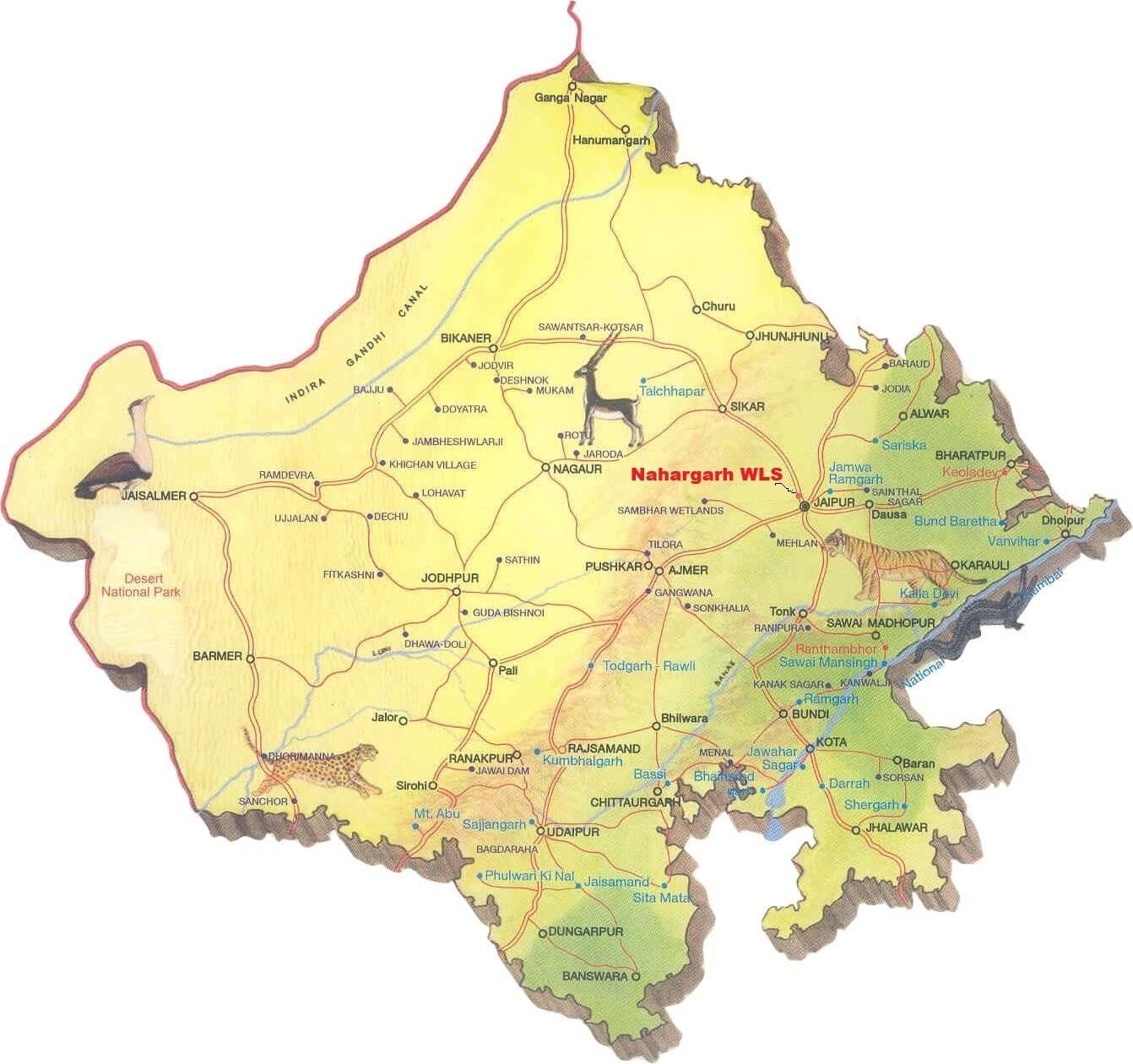
- Location: Situated in Jaipur district, Rajasthan.
- Area: Covers approximately 52.40 sq. km.
- Geographical Location: Located in the Aravalli Range, characterised by rugged hills, valleys and seasonal streams.
- Name: Named after Nahargarh Fort, built in the 18th century by Maharaja Sawai Jai Singh II, the founder of Jaipur.
- Ecological Connectivity: It is ecologically connected with other forest areas, including the Ranthambore Tiger Reserve.
- Nahargarh Biological Park: Located within the sanctuary, it covers around 720 hectares and focuses on wildlife conservation, including species such as Bengal tigers, Asiatic lions and sloth bears.
- Major Forest Types: Tropical Dry Deciduous Forests and Tropical Thorn Forests.
- Important Tree Species: Dhok, Babool, Khejri and Ber.
- Major Fauna:
- Mammals: Royal Bengal Tiger, Indian Leopard, Chinkara (State Animal of Rajasthan), Indian Wolf, Sloth Bear and Caracal.
- Birds: The sanctuary is an important destination for birdwatching, with species including Great Indian Bustard (State Bird of Rajasthan), Blackbuck, Sarus Crane, Peacocks, Owls and eagles.
- Reptiles and Amphibians: Indian Rock Python, Monitor Lizards, Frogs and toads.
Ecological Significance
- Biodiversity Conservation: Provides habitat for several mammals, birds, reptiles and amphibians.
- Aravalli Ecosystem: Contributes to the conservation of forest and wildlife habitats in the Aravalli Range.
- Wildlife Connectivity: Its ecological links with other forest areas support the wider landscape-level conservation of wildlife.
Conclusion
Nahargarh Wildlife Sanctuary is an important biodiversity habitat in the Aravalli Range. Protecting its boundaries and forest connectivity is essential for conserving wildlife and maintaining the ecological health of the region.
Frequently Asked Questions (FAQs)
Q1. Where is Nahargarh Wildlife Sanctuary located?
Nahargarh Wildlife Sanctuary is located in Jaipur district, Rajasthan. It covers approximately 52.40 sq. km and lies in the Aravalli Range, characterised by rugged hills, valleys and seasonal streams.
Q2. Why is Nahargarh Wildlife Sanctuary named so?
The sanctuary is named after Nahargarh Fort, which was built in the 18th century by Maharaja Sawai Jai Singh II, the founder of Jaipur.
Q3. What are the major forest types and tree species found in the sanctuary?
The sanctuary contains tropical dry deciduous and tropical thorn forests. Important tree species include Dhok, Babool, Khejri and Ber, which form part of its natural vegetation.