Context
The Matua community is in the news due to its connection with the Citizenship (Amendment) Act (CAA), 2019. Many members of the community migrated from present-day Bangladesh to India but lack documentary proof of Indian citizenship.
About the Matua Community
- It is a Hindu reformist Vaishnava religious sect. It originated in East Bengal (present-day Bangladesh). It was founded in 1860 by Harichand Thakur, who organised the Matua Mahasangha.
- Core Beliefs and Principles: The community emphasises equality, devotion & social reform.
- Rejection of caste hierarchy: Opposes caste-based discrimination and ritualism.
- Devotion (Bhakti): Emphasises devotion to God and chanting His name rather than elaborate religious rituals.
- Household life: Believes that people can attain salvation while living a normal family life; renouncing the household is not necessary.
- Equality of women: Supports equal status for women.
- Key principle: Har haate kaaj, mukhe naam
- Meaning: Work with hands and keep God’s name on the lips.
- It encourages people to continue their daily work while remaining devoted to God.
- Thakurbari / Thakurnagar, West Bengal: It is an important religious centre and sacred site of the Matua community. The community’s ancestral seat is Orakandi, located in present-day Bangladesh.
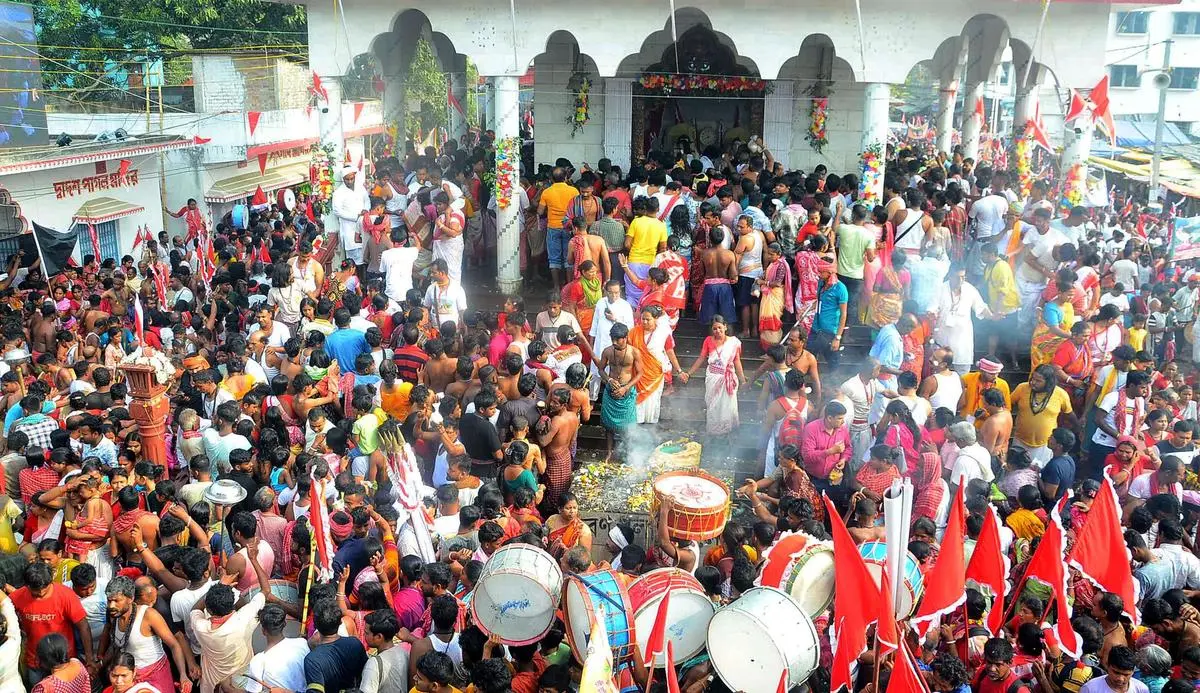
- Baruni Mela: It is an annual religious fair celebrated by the Matua community. It is generally held in March at Thakurnagar, West Bengal.
- Connection with the Citizenship (Amendment) Act, 2019 – The CAA is important for the Matua community because many of its members migrated from Bangladesh and have faced difficulties in establishing their Indian citizenship through documents.
Key provisions of the CAA, 2019:
|
Frequently Asked Questions (FAQs)
Q1. Who are the Matua community?
The Matua community is a Hindu reformist Vaishnava religious sect originating in East Bengal (present-day Bangladesh). It was founded in 1860 by Harichand Thakur.
Q2. What are the core beliefs of the Matua community?
The community emphasises equality, devotion (Bhakti), rejection of caste discrimination, equal status for women and the belief that salvation can be attained while living a normal household life.
Q3. What is the meaning of the principle ‘Har haate kaaj, mukhe naam’?
It means “Work with hands and keep God’s name on the lips.” It encourages people to perform their daily duties while remaining devoted to God.
Q4. What is the religious significance of Thakurnagar and Baruni Mela?
Thakurnagar in West Bengal is an important religious centre of the Matua community. Baruni Mela is an annual religious fair generally held in March at Thakurnagar.
Q5. Why is the Citizenship (Amendment) Act, 2019 important for the Matua community?
Many Matua members migrated from Bangladesh and lack documentary proof of Indian citizenship. The CAA provides eligible migrants from six religious communities an easier route to Indian citizenship, subject to specified conditions.