Context
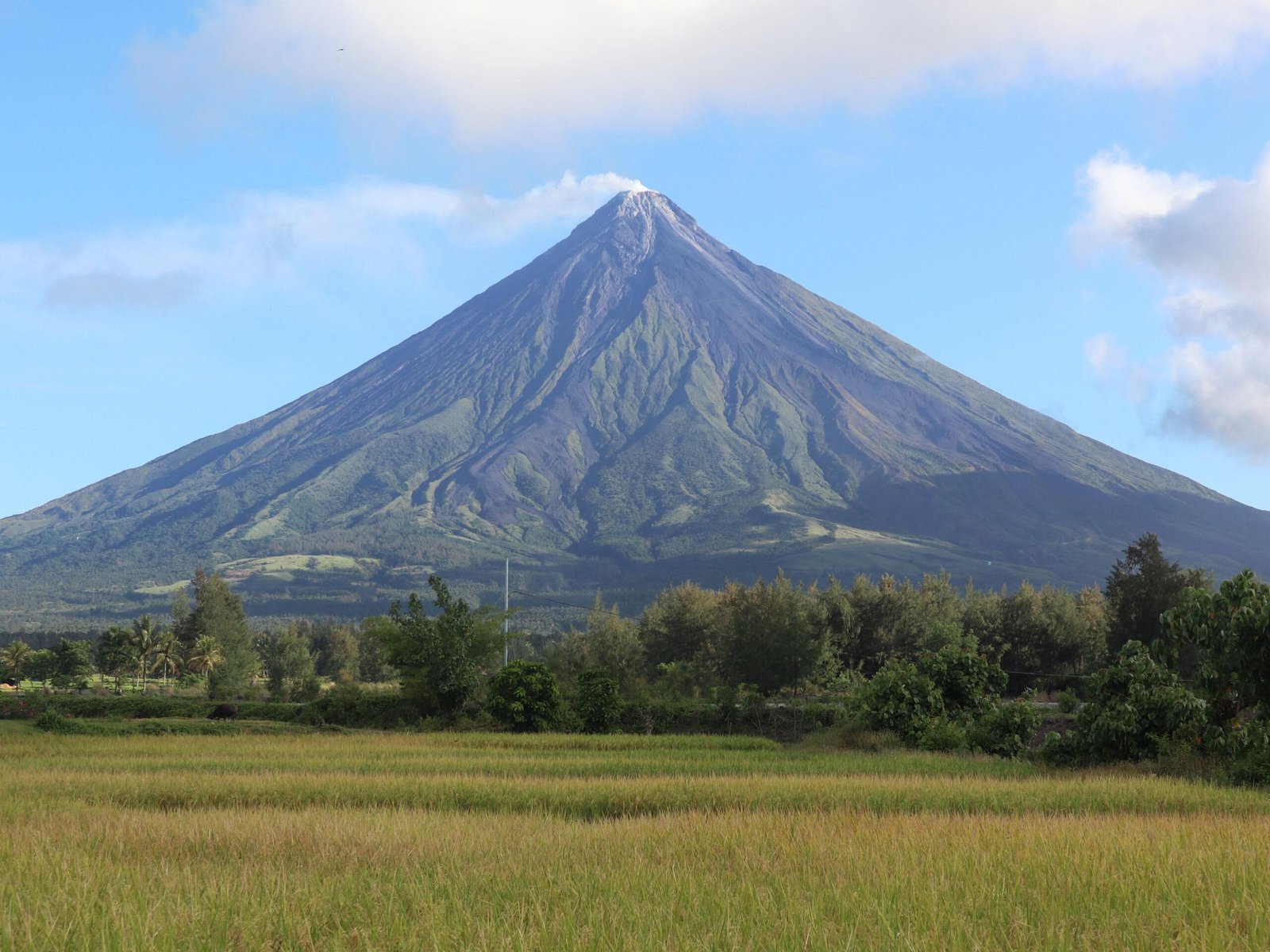
Mayon Volcano, one of the most active volcanoes in the Philippines, recently witnessed a moderately explosive eruption, sending a dark ash column approximately 3,000 metres into the sky. The event highlights the volcanic activity of the Pacific Ring of Fire and the importance of disaster preparedness.
About Mayon Volcano
- It is located in Albay Province, on Luzon Island in the Philippines.
- It is an active stratovolcano, formed by alternating layers of lava and ash.
- Approximately 2,462 metres above the Albay Gulf.
- It is a part of the Pacific Ring of Fire.
- Geographical setting: It is located in eastern Luzon, near the Philippine Trench, a convergent plate boundary where the Philippine Sea Plate moves beneath the Philippine Mobile Belt.
- Famous for its remarkably symmetrical volcanic cone, steep upper slopes and circular summit crater measuring approximately 250 metres across.
- It is approximately 130 km in circumference.
Ecological and geographical significance
- Mayon Volcano National Park: The volcano forms the centre of this national park and is popular among climbers and campers.
- UNESCO Biosphere Reserve: The area was designated a UNESCO Biosphere Reserve in 2016.
- Abaca plantations: Its lower slopes support large plantations of abaca, a plant used to produce strong natural fibres.
Major hazards associated with Mayon Volcano
- Ashfall: Volcanic ash can affect human health, agriculture, water supplies and aviation.
- Lava flows: Molten rock can destroy settlements, roads and agricultural land.
- Pyroclastic flows: Extremely hot mixtures of volcanic gases, ash and rock fragments move rapidly down the slopes.
- Lahars: Volcanic ash and debris mix with rainwater to form destructive mudflows.
- Rockfalls: Volcanic rocks may fall from steep slopes and threaten nearby communities.
Conclusion
Mayon Volcano demonstrates the impact of plate tectonics on volcanic activity. Its repeated eruptions underline the need for continuous monitoring, early-warning systems, evacuation planning and community preparedness.
FAQs
Q1. Where is Mayon Volcano located?
Ans: It is located in Albay Province on Luzon Island in the Philippines.
Q2. Why is Mayon called a stratovolcano?
Ans: Because it is formed by successive layers of lava, ash and other volcanic materials.
Q3. What is the tectonic setting of Mayon Volcano?
Ans: It is located near the Philippine Trench, where the Philippine Sea Plate moves beneath the Philippine Mobile Belt.
Q4. What was the impact of the 1814 eruption?
Ans: It killed more than 1,200 people and devastated several settlements.
Q5. What is Strombolian activity?
Ans: It is a type of volcanic eruption characterised by intermittent, relatively short bursts of lava, gas and volcanic fragments.