Context
On 30 October 2026, the Madras High Court constituted a five-member Board of Management to administer the Chidambaram temple until identified irregularities are rectified. The case arose from a challenge by the hereditary priests, Podhu Dikshitars, to a State order allowing devotees to access the Kanaka Sabha for darshan.
About the Temple
- Location & Primary Deity: Located in Cuddalore district, Tamil Nadu; dedicated to Nataraja (Shiva as the Cosmic Dancer). Also known as the Thillai Nataraja Temple or Sri Sabanayagar Temple.
- Panchabhuta Sthalam: Represents Akasha (Space/Ether) among the five sacred Shiva temples linked to the natural elements.
- Chidambara Rahasyam: Represents the formless, ultimate aspect of Shiva (Nirguna) via an empty space veiled by a curtain in the sanctum.
- Scientific Significance: Holds considerable scientific interest as it is positioned at the world’s Magnetic Equator.
- Literary Significance: Extensively praised by the Nayanmars (Shaivite saint-poets) in the sacred devotional canon Thevaram.
Historical Patronage & Management
- Early Origins: Existed as an ancient Shiva shrine prior to the 7th century CE when the site was known as Thillai.
- Chola Imperial Patronage: The Chola Dynasty adopted Nataraja as their family deity (Kula Deivam). Parantaka I gilded the sanctum roof with gold, while major additions were made by Rajaraja I, Kulottunga I, and Vikrama Chola.
- Later Rulers: Expanded under the Vijayanagara Empire, Madurai Nayakas, and Sethupathis of Ramnad.
- Present Structure: The main surviving architectural complex dates primarily to the 12th and 13th centuries CE.
- Traditional Management: Maintained and administered by a hereditary community of Shaivite priests called Podhu Dikshitars.
Architectural Features & Dance Heritage
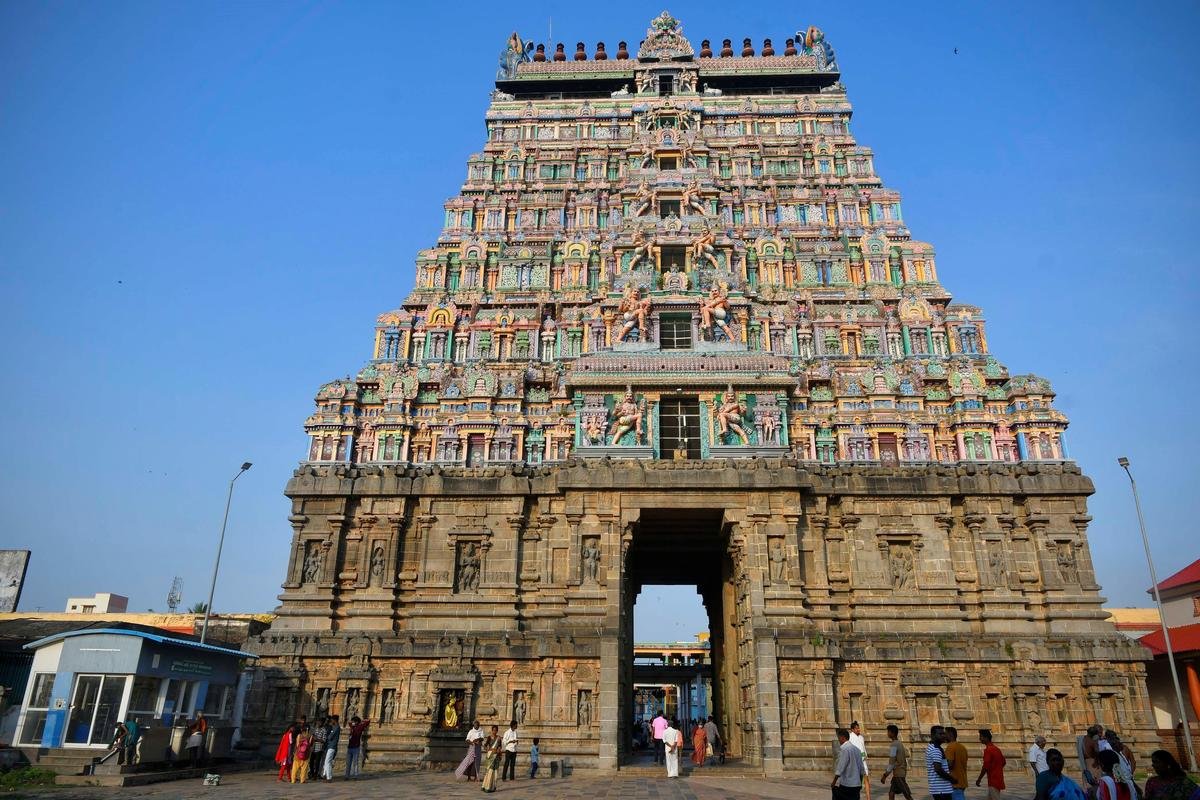
- Layout & Enclosures: Covers nearly 40 acres with four concentric Prakarams (enclosure walls) and four towering Gopurams (gateway towers) aligned with the cardinal directions.
- The Five Sabhas (Halls):
- Chit Sabha: Main sanctum enshrining Nataraja.
- Kanaka Sabha: Hall preceding the sanctum with the gold-plated roof.
- Nritta Sabha: Hall of dance, carved in the shape of a chariot drawn by horses.
- Deva Sabha: Repository for temple bronzes and administrative assemblies.
- Raja Sabha: The massive 1000-pillared hall (Aayiram Kaal Mandapam).
3. Natya Shastra Sculptures: Stone reliefs on the inner walls of the Gopurams depict all 108 Karanas (dance postures) described in the Natya Shastra, forming a visual foundation for Bharatanatyam.
FAQs
Q1. Who are the Podhu Dikshitars?
Ans. A hereditary community of priests responsible for temple rituals and administration.
Q2. Which dynasty patronised the temple most?
Ans. The Cholas, who regarded Nataraja as their family deity.
Q3. Why is Chidambaram called a Panchabhuta Sthalam?
Ans. It represents Akasha (space), one of the five elements associated with five Shiva temples.