Manipur
Context
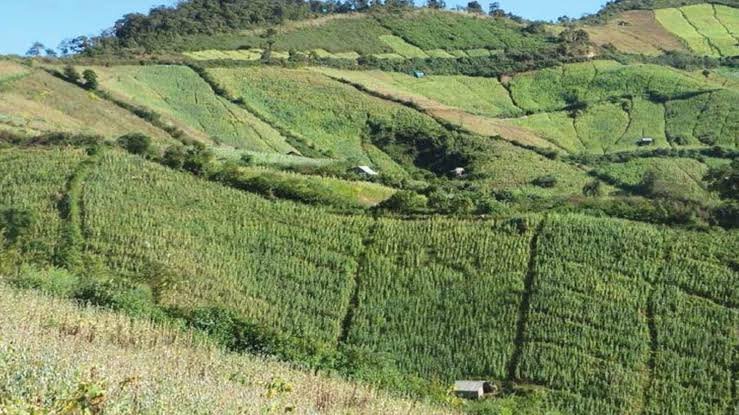
The Manipur Forest Department is promoting bamboo plantations on forestlands previously used for illegal poppy cultivation. The initiative aims to restore degraded forests, discourage the return of illicit cultivation and create alternative livelihood opportunities for local communities.
Understanding the Problem: Poppy Cultivation and Insecurity
Illegal poppy cultivation in Manipur’s hill districts creates environmental, economic and law-enforcement concerns.
- Forest Degradation: Clearing forest vegetation for poppy cultivation damages natural habitats, exposes soil to erosion and reduces ecological quality.
- Illicit Economy: Poppy cultivation supplies raw material for opium production and can sustain illegal trafficking networks.
- Cross-Border Smuggling: Manipur’s location along the India–Myanmar border creates challenges in controlling the movement of illicit goods. The Forest Department has also reported smuggling of products such as areca nuts and Myanmar teak.
- Livelihood Dependence: Simply destroying illegal crops may not provide cultivators with a sustainable source of income, making alternative livelihoods important for long-term rehabilitation.
Why is Bamboo being promoted?
Bamboo can provide a combination of ecological and economic benefits when the appropriate species are planted and supported by a reliable value chain.
- Ecological Benefits
- Forest Restoration: Bamboo plantations can help restore vegetation on degraded sites and provide ground cover.
- Soil Conservation: Bamboo’s interconnected underground rhizomes and extensive root systems can help stabilise soil and reduce erosion.
- Renewable Resource: Bamboo grows relatively quickly compared with many conventional timber species and can provide a renewable source of raw material.
- Reduced Pressure on Natural Forests: Bamboo grown on suitable non-forest land can supply industries with raw material, potentially reducing pressure on natural forests.
- Economic and Social Benefits
- Alternative Livelihoods: Bamboo cultivation can provide farmers and local communities with income from harvesting and selling culms.
- Employment Generation: Nursery management, plantation maintenance, harvesting, processing and manufacturing create jobs across the value chain.
- Support for Women: Bamboo-based industries, including handicrafts and agarbatti production, can provide employment opportunities for women & rural self-help groups.
- Local Industrial Development: Products such as engineered bamboo boards, furniture, handicrafts, paper & incense sticks can generate value beyond the sale of raw bamboo.
- Bamboo cultivation is intended to make restoration economically worthwhile. However, stable markets and sustained community participation are also essential.
Agro-Climatic Requirements for Bamboo Cultivation
Bamboo belongs to the grass family, Poaceae, rather than being a true tree in botanical classification. Its cultivation requirements vary across species and local conditions.
- Sunlight: Most commercial bamboo species grow well with adequate direct sunlight.
- Temperature: Generally grows in temperatures ranging from around 7°C to 40°C, depending on the species.
- Climate: Suitable for tropical and subtropical climates.
- Soil: Prefers fertile, organic-rich, well-drained sandy-loam or clay-loam soils.
- Water: Requires adequate moisture, especially during initial growth; waterlogging should be avoided.
- Nutrients: Requires sufficient nutrients due to rapid biomass production; soil testing and balanced fertilisation support healthy growth.
- Species Selection: Bamboo species should be selected according to local rainfall, temperature, soil conditions and commercial purpose.
Legal Reform: Why Did Bamboo Cultivation Receive a Boost in 2017?
- Before the 2017 amendment, bamboo was included in the definition of a tree under the Indian Forest Act, 1927. Consequently, felling and transporting bamboo grown outside forests could also attract regulatory requirements, creating difficulties for farmers and bamboo-based businesses.
- The Indian Forest (Amendment) Ordinance, 2017, followed by the Indian Forest (Amendment) Act, 2017, removed bamboo from the definition of a tree under Section 2(7) of the Act.
- For Non-Forest Land: Bamboo grown outside forests was exempted from the relevant felling and transit-permit requirements under the amended central law, subject to other applicable rules.
- For Forest Land: Bamboo growing within forests continues to be governed by the applicable forest laws and regulations.
- The reform was intended to encourage bamboo cultivation on private and other non-forest land, improve farmers’ incomes and support the development of bamboo-based industries.
Major Bamboo-Growing Regions in India
- Bamboo is widely distributed across India, with particularly important resources in the Northeast. Major bamboo-growing states include:
- Northeastern India: Arunachal Pradesh, Mizoram, Nagaland, Tripura and Sikkim.
- Central and Western India: Madhya Pradesh and Maharashtra.
- Other Regions: Bamboo is also cultivated in other suitable states according to local agro-climatic conditions.
- The Northeast’s bamboo resources offer opportunities for handicrafts, construction materials, furniture and other value-added industries.
Government Initiatives Promoting Bamboo Cultivation
- National Bamboo Mission (NBM): Launched in 2018–19 as a Centrally Sponsored Scheme to develop the bamboo sector through plantation expansion, quality planting material, processing facilities, value addition, market linkages and skill development.
- Bamboo Industrial Parks: Promote local processing of bamboo into furniture, engineered boards, handicrafts, agarbatti sticks and paper, thereby creating rural employment and improving farmers’ incomes.
- Gadchiroli Agarbatti Project, Maharashtra: Launched in 2012, it developed 32 production centres by 2020, providing livelihoods to around 1,100 people, nearly 90% of whom were women.
Frequently Asked Questions (FAQs)
Q1. Why is the Manipur Forest Department promoting bamboo plantations on land previously used for poppy cultivation?
The initiative aims to restore degraded forests, prevent the return of illicit cultivation and provide sustainable livelihood opportunities to local communities.
Q2. How can bamboo cultivation support forest restoration?
Bamboo provides vegetation cover, while its interconnected rhizomes and root systems help stabilise soil and reduce erosion.
Q3. Why was the Indian Forest (Amendment) Act, 2017 significant for bamboo cultivation?
It removed bamboo grown on non-forest land from the definition of a tree under the Indian Forest Act, 1927, easing relevant felling and transit-permit requirements under the central law.
Q4. What is the National Bamboo Mission?
Launched in 2018–19, it promotes bamboo plantations, quality planting material, processing, value addition, market linkages and skill development.
Q5. How can bamboo cultivation generate rural employment?
It creates opportunities in nursery management, harvesting, handicrafts, furniture, engineered boards, paper and agarbatti production, including employment for women and self-help groups.