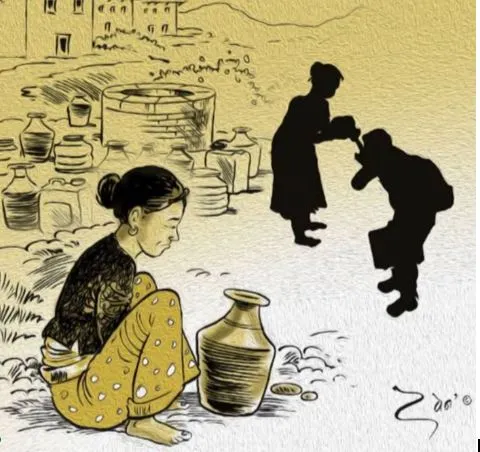
Context
- A recent controversy over a “purification” ritual after Mallikarjun Kharge’s rally revived debate on the persistence of caste-based notions of purity and pollution.
- It raises a wider question: Can constitutional and legal prohibition alone eliminate a deeply embedded social practice like untouchability?
Legal Framework
- Article 17 abolishes untouchability and prohibits enforcement of any disability arising from it.
- The Protection of Civil Rights Act, 1955 punishes the preaching and practice of untouchability and enforcement of disabilities arising from it.
- The SC/ST (Prevention of Atrocities) Act, 1989 provides protection against specified forms of caste-based humiliation, violence and atrocities.
- Article 338 establishes the National Commission for Scheduled Castes to investigate safeguards and grievances relating to Scheduled Castes.
- In Sukanya Shantha v. Union of India (2024), the Supreme Court struck down caste-discriminatory prison practices involving segregation and caste-based allocation of work.
Impact of Legal Safeguards
- Legal safeguards have made overt practices of caste exclusion unlawful and legally challengeable.
- They provide victims with institutional remedies against discrimination, humiliation and violence.
- Judicial interpretation has expanded scrutiny from direct physical exclusion to institutional and structural forms of caste discrimination.
- Constitutional affirmative action has expanded educational and occupational opportunities, contributing to greater social mobility.
- Together, these measures have strengthened the constitutional principles of equality, dignity and non-discrimination.
Why Untouchability Persists
- Social conditioning: Ideas of purity, pollution and hierarchy continue through family and community practices.
- Covert discrimination: Caste exclusion increasingly appears through housing segregation, dining practices, occupational stereotyping and social distancing.
- Endogamy: Caste-based marriage preserves social boundaries and reproduces caste identities across generations.
- Economic dependence: Vulnerable households may hesitate to challenge dominant groups because of dependence on land, employment or local networks.
- Enforcement gaps: Delayed trials, weak investigation, hostile witnesses and difficulty proving caste-based intent can reduce the effectiveness of protective laws.
- Thus, the law can prohibit discriminatory conduct, but it cannot by itself immediately transform the social attitudes that sustain caste hierarchy.
What More Is Needed
- Constitutional morality: Equality and dignity must gradually replace notions of hereditary hierarchy and purity-pollution.
- Socialization through education: School curricula and teacher training should directly challenge caste prejudice from an early age.
- Social integration: Inter-dining, common institutions and wider social interaction can reduce inherited caste distance.
- Effective enforcement: Better investigation, Special Courts and witness protection can strengthen implementation of anti-atrocity laws.
- Economic empowerment: Education, skills, entrepreneurship and secure livelihoods can reduce dependence on dominant caste groups.
- Inter-caste marriage: Protection for consenting inter-caste couples can help weaken rigid caste boundaries over time.
FAQs
Q1. Which Article abolishes untouchability?
Article 17 of the Constitution.
Q2. Which law specifically punishes the practice of untouchability?
The Protection of Civil Rights Act, 1955.
Q3. Which law deals with caste-based atrocities against SCs and STs?
The SC/ST (Prevention of Atrocities) Act, 1989.
Q4. What did Sukanya Shantha v. Union of India address?
It addressed caste-based discrimination, segregation and allocation of prison work.
Q5. Why are legal safeguards alone insufficient?
Because untouchability also survives through social norms, economic dependence and informal discriminatory practices.