Context
- The Andhra Pradesh government is set to use 3D Concrete Printing (3DCP) for constructing houses under PMAY-G, bringing automated construction technology into rural affordable housing.
How 3D Concrete Printing Works
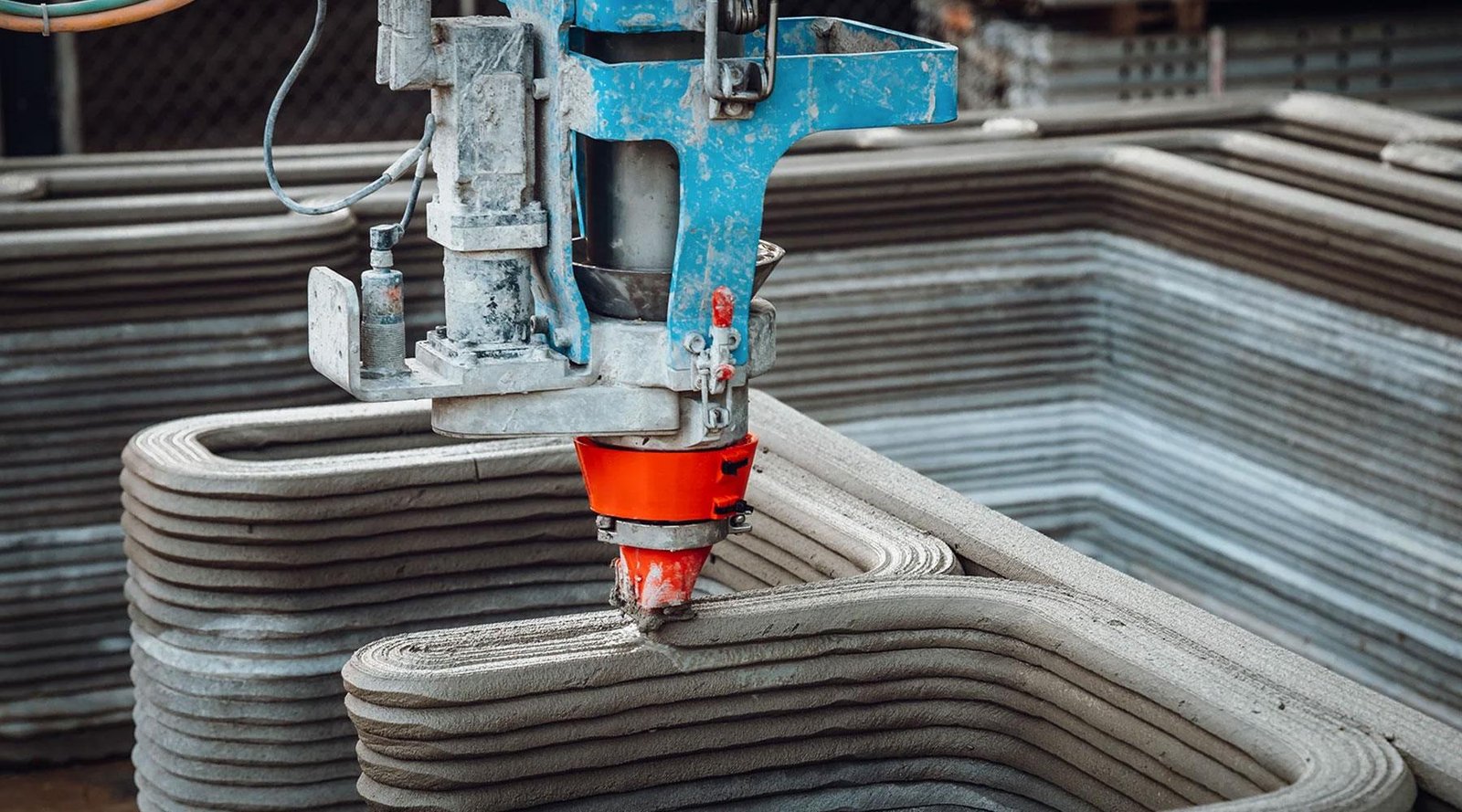
- 3D Concrete Printing (3DCP) is a form of construction-scale additive manufacturing in which a structure is built layer by layer through an automated system.
- A digital building design, often prepared through Building Information Modelling (BIM), is converted into machine instructions.
- A robotic printer then extrudes a specially formulated cementitious material through a nozzle in successive horizontal layers.
- The material must have suitable extrudability, buildability and rapid-setting properties so that each fresh layer can support the next one without collapsing.
- Because the structure is digitally printed, the process reduces dependence on conventional brick masonry, repetitive manual labor and timber or steel formwork.
- This can improve construction speed, dimensional precision, design flexibility and material efficiency.
Why It Matters for PMAY-G and Affordable Housing
- For PMAY-G, 3D printing can shorten construction time where large numbers of standardized rural houses need to be delivered quickly.
- Lower dependence on formwork and more precise material placement can reduce waste and repetitive construction processes, improving resource efficiency.
- Digital construction can also support customised designs, allowing houses to be adapted to local climatic and functional requirements.
- Its wider usefulness extends to disaster-relief shelters, remote-area construction, defence infrastructure and rapidly deployable public facilities.
- However, large-scale adoption will depend on cost of printing equipment, availability of suitable materials, skilled operators, quality control and compliance with structural standards.
- Its environmental advantage is also conditional: lower construction waste can improve efficiency, but the technology still depends heavily on cement, making low-carbon mixes and material reuse important.
- The real policy value of 3DCP therefore lies in whether it can make affordable housing faster, scalable and resource-efficient without compromising safety, durability or local suitability.
FAQs
Q1. What is 3D Concrete Printing?
It is an additive construction technology that builds structures layer by layer using digitally controlled concrete extrusion.
Q2. What is the role of BIM in 3D printing?
Building Information Modelling (BIM) provides the digital design that guides the automated printing process.
Q3. What are the main advantages of 3DCP?
Its major advantages are faster construction, reduced material waste, less formwork and greater design flexibility.
Q4. Why is it relevant for PMAY-G?
It can potentially accelerate construction of affordable rural houses while improving standardization and efficiency.
Q5. What are its major challenges?
Key challenges include equipment cost, specialized materials, skilled operation, quality assurance and structural-code compliance.