Context
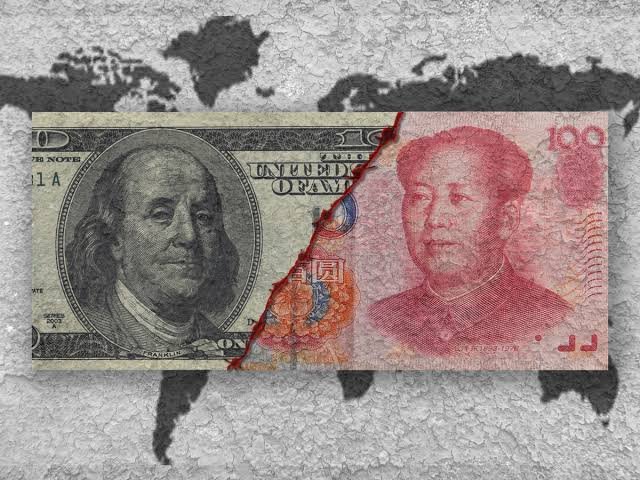
Amid rising US–China trade tensions, tariffs and sanctions, concerns are growing over the long-term dominance of the US dollar. At the same time, China is promoting greater international use of the Renminbi (RMB/Yuan) through trade settlement and cross-border payment systems.
Latest Developments
- Dollar dominance: The US dollar accounted for 57.13% of global official forex reserves in Q1 2026, compared with about 2% for the RMB in late 2025.
- Global transactions: The dollar was involved in 89.2% of global forex transactions in 2025, against 8.5% for the RMB, as per the BIS Triennial Survey.
- Economic strength: In 2025, US GDP stood at about $30.8 trillion, compared with $19.5 trillion for China, supporting continued global demand for the dollar.
- China’s payment infrastructure: By August 2026, the Cross-Border Interbank Payment System (CIPS) had 211 direct and 1,642 indirect participants, covering nearly 5,300 banking entities across 192 countries and regions.
Why the US Dollar Dominates
- Economic strength: The large and globally integrated US economy creates sustained demand for the dollar.
- Reserve currency: Central banks hold dollars as a major part of their foreign-exchange reserves.
- Deep financial markets: US Treasury securities offer large, liquid and relatively safe investment options.
- Institutional trust: A long-established legal, financial and institutional framework supports confidence in dollar assets.
- Network effect: Widespread use of the dollar in trade, finance and commodity markets reinforces its global dominance.
Factors Supporting the Yuan
- Trade integration: China’s large trade network supports greater use of the RMB in international trade settlements.
- CIPS: Cross-Border Interbank Payment System (CIPS) facilitates cross-border RMB payments and reduces dependence on Western payment infrastructure.
- Growing usage: The RMB’s share of global foreign-exchange turnover reached 8.5% in 2025.
- Diversification: Geopolitical tensions and sanctions risks may encourage countries to adopt alternative currencies and payment systems.
Challenges to Yuan Internationalisation
- Capital controls: Restrictions on capital flows and limited RMB convertibility reduce its global use.
- Institutional deficit: Limited transparency, regulatory controls and concerns over policy predictability can constrain international confidence in the RMB.
- Limited reserve share: The RMB’s share of global foreign-exchange reserves remains much lower than the dollar’s.
- Financial-market depth: China needs deeper and more open financial markets with greater liquidity.
- Dollar network effect: The dollar’s established role in trade, finance and banking makes rapid substitution difficult.
Implications for India
- Currency risks: A shift towards a multipolar currency system could increase exchange-rate volatility and transaction risks.
- Rupee internationalisation: Greater use of the rupee in cross-border trade could reduce dependence on the dollar and support India’s global financial integration.
- Trade flexibility: Wider local-currency settlement can provide more options for trade with countries facing dollar-access or payment restrictions.
- Financial-market development: Greater international use of the rupee would encourage deeper forex and financial markets and stronger cross-border payment infrastructure.
- External stability: Greater currency diversification could help India manage external financial shocks, provided adequate forex reserves are maintained.
FAQs
Q1. Why is the US dollar the world’s dominant currency?
Ans. Its dominance is supported by the size of the US economy, deep financial markets, reserve-currency status, high global liquidity and strong network effects.
Q2. What is CIPS?
Ans. Cross-Border Interbank Payment System (CIPS) is China’s payment and settlement infrastructure for cross-border RMB transactions.
Q3. What is the difference between CIPS and SWIFT?
Ans. CIPS is a payment and settlement system focused on cross-border RMB transactions, whereas SWIFT is primarily a global financial messaging network used by institutions to communicate payment instructions.
Q4. How can India respond to changes in the global currency system?
Ans. India can strengthen the rupee, diversify trade and payment arrangements, maintain adequate forex reserves and deepen domestic financial markets.