Context
Sulphur prices in India have surged to around $1,050–1,100 per tonne in 2026 from below $200 in 2019–20, amid supply disruptions in Russia and West Asia. Rising demand for sulphuric acid in fertiliser and mineral processing, including battery-related nickel processing, is adding further pressure.
Why is Sulphur Important?
- By-product: About 90% of global sulphur is recovered during petroleum refining and natural gas processing, while only 10% is mined.
- Energy Link: Disruptions in refineries or gas-processing facilities can reduce sulphur supply and push up prices.
- Fertiliser Use: Around 70 million tonnes of sulphur is consumed globally each year, with nearly 60% used in fertiliser production.
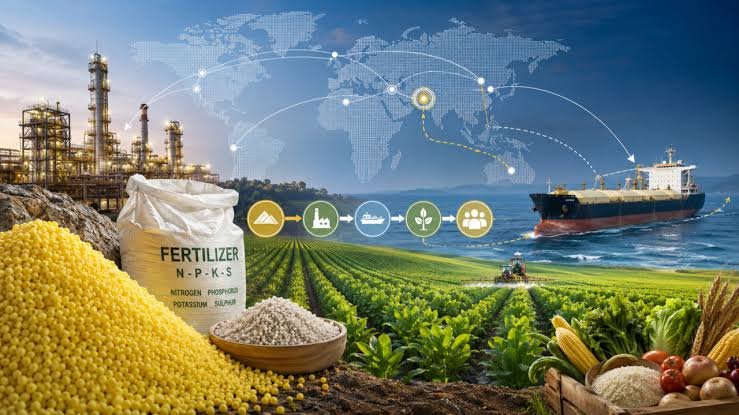
Sulphur–Fertiliser–Food Link
- Fertiliser Production: Sulphur is converted into sulphuric acid, which is used to process rock phosphate into a form that plants can absorb. This makes sulphur important for producing DAP (Diammonium Phosphate), SSP (Single Super Phosphate) and complex fertilisers such as 20:20:0:13, 10:26:26 and 12:32:16.
- Cost Impact: Higher sulphur prices raise fertiliser production and farm-input costs, potentially increasing the government subsidy burden.
- Food Security: Persistent increases in fertiliser costs can raise agricultural production costs and put pressure on food prices and food security.
Why are Sulphur Prices Rising?
- Supply Disruptions
- Supply Dependence: About 90% of sulphur is recovered as a by-product of oil refining and natural-gas processing; disruptions to these facilities can tighten global supply.
- Geopolitical Risk: Conflicts affecting Russia and West Asia have disrupted energy infrastructure and increased freight, insurance and supply-chain costs. India’s imports of sulphur have been particularly affected.
- India’s Import Dependence: India imports around 52% of its sulphur requirement, making domestic fertiliser production vulnerable to global supply shocks.
- Rising Industrial Demand
- Mineral Processing: Sulphuric acid is widely used in mineral processing and is an important industrial input.
- EV Link: Growing EV and battery supply chains can increase demand for sulphuric acid because it is used in processing minerals such as nickel, which is used in some lithium-ion battery chemistries.
- Competing Demand: Rising demand from both fertiliser production and industrial applications can add pressure to sulphur availability and prices.
India’s Vulnerability
- High Consumption: India uses around 3.8–3.9 million tonnes of sulphur annually, with about 2–2.1 million tonnes used by the fertiliser sector.
- Import Dependence: In 2024, India imported about 1.96 million tonnes of crude sulphur, mainly from Qatar, UAE, Oman, Kuwait and Saudi Arabia.
- Key Risks: Import dependence exposes India to geopolitical disruptions, shipping costs and global price volatility, affecting fertiliser and food security.
Challenges
- Fertiliser Costs: Higher sulphur prices increase the cost of phosphatic fertilisers, raising farm-input costs.
- Food Security: Sustained increases in fertiliser costs can raise agricultural production costs and put pressure on food prices.
- Subsidy Burden: Higher fertiliser costs may increase the government’s fertiliser subsidy burden if subsidies are raised to protect farmers.
- Import and Geopolitical Risk: Dependence on West Asian supplies exposes India’s fertiliser and chemical industries to geopolitical disruptions and supply shocks.
- Industrial Demand: Rising demand from mineral processing, batteries and EV supply chains can increase competition for sulphur and sulphuric acid.
- Cross-Sector Impact: Sulphur price shocks can simultaneously affect agriculture, mining, manufacturing and energy-transition supply chains.
Way Forward
- Diversify Imports: Broaden sourcing beyond West Asian suppliers to reduce external supply risks.
- Increase Domestic Recovery: Maximise sulphur recovery from domestic refineries and gas-processing facilities where feasible.
- Strengthen Supply Resilience: Improve storage, logistics and procurement planning to manage supply disruptions.
- Promote Recycling: Recover sulphur and sulphuric acid from suitable industrial processes.
- Integrated Fertiliser Planning: Include sulphur and sulphuric acid alongside rock phosphate and finished fertilisers in fertiliser-security planning.
- Secure Transition Inputs: Ensure that growth of EV and battery supply chains is supported by reliable access to critical minerals and processing inputs.
Conclusion
Securing sulphur supplies is essential for India’s fertiliser affordability, food security and energy-transition resilience. Diversifying supplies and strengthening domestic recovery can reduce external vulnerabilities and help strengthen India’s economic and strategic resilience.
FAQs
Q1. Why is sulphur important for fertiliser production?
Ans. Sulphur is used to produce sulphuric acid, a key input in processing rock phosphate for phosphatic fertilisers such as DAP and SSP.
Q2. Why can disruptions in oil and gas infrastructure affect sulphur prices?
Ans. Most sulphur is recovered as a by-product of petroleum refining and natural-gas processing. Therefore, disruption to these facilities can reduce sulphur supply.
Q3. How can higher sulphur prices affect India?
Ans. They can increase fertiliser production costs, raise the subsidy burden and put pressure on farm-input costs and food prices.