Context
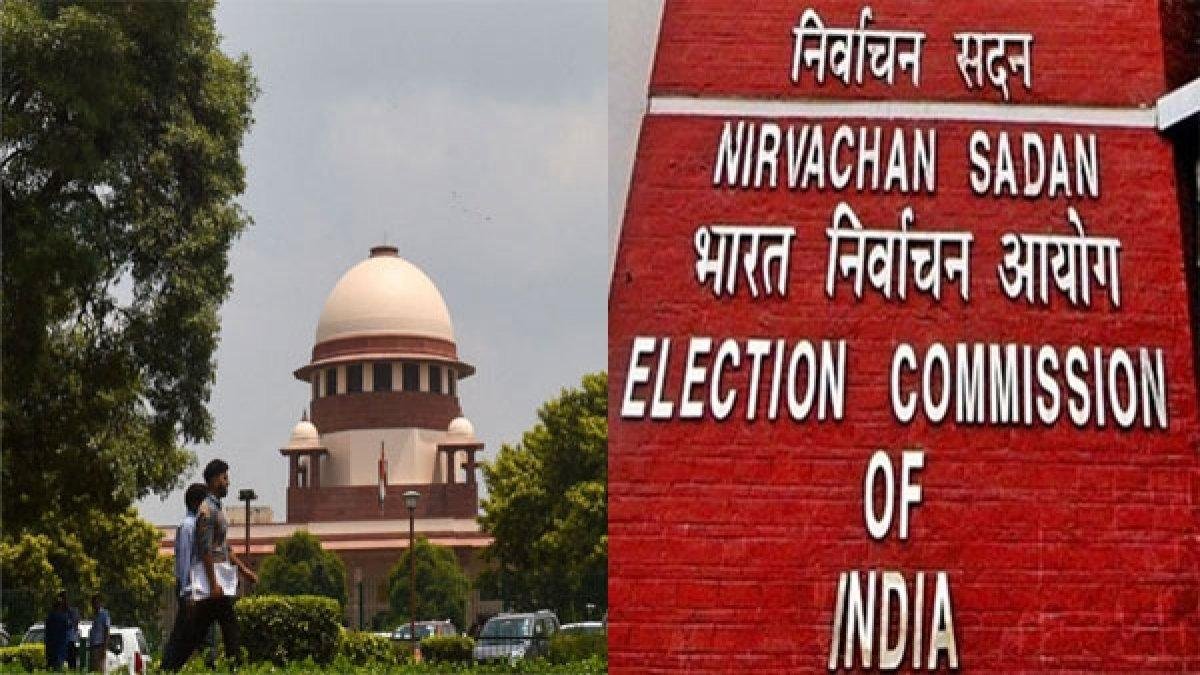
- The Election Commission of India (ECI) is a constitutional body under Article 324 of the Constitution.
- It is responsible for conducting elections to Parliament, State Legislatures, and the offices of the President and Vice-President.
- Recent developments have brought attention to electoral-roll management, internal decision-making, digital centralisation, and the institutional framework for appointing Election Commissioners.
Electoral Rolls and Special Intensive Revision
- An electoral roll is the official list of registered voters in a constituency. It requires periodic updating to account for changes such as newly eligible voters, deaths and changes of residence.
- Special Intensive Revision (SIR) involves detailed verification and updating of electoral rolls.
- The recent exercise has generated concerns regarding the scale of deletions, verification procedures and access to remedies for affected electors.
- It was reported that the exercise across 30 States and Union Territories involved around 13 crore names. This remains a reported figure within the ongoing debate and is not independently established by the supplied material.
- The central administrative concern is whether changes to voter records are carried out through transparent, verifiable and accessible procedures.
Internal Functioning of the ECI
- The differences among Election Commissioners concerning electoral-roll administration, including voter additions, deletions, registration procedures and centralisation of electoral data.
- Form 6 is used for inclusion in the electoral roll. Objections to a change requiring information on whether a voter’s parents or grandparents had participated in an earlier SIR exercise.
- The Chief Election Commissioner has rejected the characterization of these differences as institutional dissent, stating that questions raised during deliberations do not necessarily amount to disagreement with the final decision.
- The episode highlights the importance of institutional deliberation and proper recording of differing views within a multi-member constitutional body.
Digitalisation of Electoral Management
- ECI Net is identified as a centralised platform for electoral-roll data.
- The shift from greater reliance on constituency- and district-level processing towards centralised digital management changes how voter information is handled.
- Centralisation can facilitate coordinated electoral administration, but it also raises questions about concentration of control, transparency and accountability.
- Appropriate institutional safeguards are therefore important for the management of centralised electoral information.
Appointment of Election Commissioners
- The question of institutional independence also extends to the appointment of the Chief Election Commissioner (CEC) and Election Commissioners (ECs).
- In Anoop Baranwal v. Union of India (2023), the Supreme Court noted that Parliament had not enacted a law governing such appointments and prescribed an interim mechanism comprising the Prime Minister, Leader of Opposition in the Lok Sabha and Chief Justice of India.
- Parliament subsequently enacted the Chief Election Commissioner and Other Election Commissioners (Appointment, Conditions of Service and Term of Office) Act, 2023.
- The Act replaced the Chief Justice of India on the selection committee with a Union Cabinet Minister nominated by the Prime Minister.
- The present committee consequently comprises the Prime Minister, the nominated Union Cabinet Minister and the Leader of Opposition in the Lok Sabha.
Supreme Court’s Latest Development
- Petitions challenging the 2023 appointment law were considered by a two-judge Bench comprising Justice Dipankar Datta and Justice Satish Chandra Sharma.
- The judges differed on whether the existing Bench could decide the constitutional challenge or whether it required consideration by a larger Bench.
- They agreed to place the matter before the Chief Justice of India for consideration of an appropriately constituted Bench.
- Justice Datta’s reasoning examined whether the appointment framework provides adequate safeguards against excessive executive influence and emphasised the importance of public confidence in institutional independence.
- The proceedings also highlighted delays in the adjudication of important constitutional matters.
Significance
- Electoral Participation: Electoral rolls determine which individuals are formally registered to participate in elections.
- Institutional Independence: The ECI requires safeguards that enable it to perform its constitutional functions impartially.
- Procedural Credibility: Transparent and properly documented processes can strengthen confidence in electoral administration.
- Constitutional Governance: The functioning and appointment of constitutional bodies are important aspects of institutional checks and accountability.
Challenges and Way Forward
| Challenges | Way Forward |
| Risk of wrongful exclusion during large-scale electoral-roll revision | Make revision procedures transparent, verifiable and accessible, with effective claims and objection mechanisms |
| Increasing centralisation of electoral-roll data | Provide appropriate oversight and accountability mechanisms for centralised electoral databases and digital processes |
| Differing views among Election Commissioners | Ensure proper institutional deliberation and documentation of differing views before decisions are finalised |
| Concerns regarding institutional autonomy in appointments | Strengthen safeguards for the functional independence and credibility of the ECI |
| Delays in resolving important constitutional questions | Facilitate timely adjudication of constitutional matters concerning key democratic institutions |
Conclusion
The developments demonstrate that electoral integrity begins before polling day. It depends on reliable electoral rolls, transparent institutional procedures and safeguards for the independence of the ECI. Strengthening these dimensions is essential for sustaining confidence in India’s electoral institutions.
FAQs
Q1. What is Special Intensive Revision (SIR)?
Ans: SIR is an exercise for detailed verification and updating of electoral rolls to reflect changes affecting voter records.
Q2. What is Form 6 used for?
Ans: Form 6 is used for the inclusion of a person’s name in the electoral roll.
Q3. What interim appointment mechanism did the Supreme Court prescribe in the Anoop Baranwal case?
Ans: The Court prescribed a committee comprising the Prime Minister, Leader of Opposition in the Lok Sabha and Chief Justice of India in the absence of a parliamentary law governing ECI appointments.
Q4. What was the principal change made by the 2023 appointment law?
Ans: The law replaced the Chief Justice of India with a Union Cabinet Minister nominated by the Prime Minister on the selection committee.
Q5. Why was the challenge to the 2023 law referred for consideration by a larger Bench?
Ans: The two-judge Bench differed on whether it could itself decide the constitutional challenge or whether the matter required consideration by a larger Bench. The judges therefore agreed to place it before the Chief Justice of India.
Q6. What is the institutional concern associated with ECI Net?
Ans: The source material identifies the increasing centralisation of electoral-roll data through ECI Net as raising questions concerning control, transparency and accountability.