Context
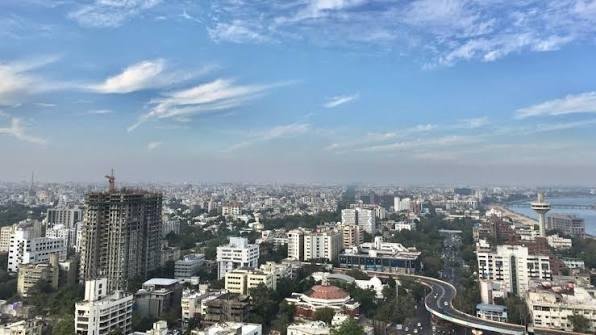
The Global City Climate Resilience Rankings, released by AlphaGeo AI, place Chicago at the top, while Ahmedabad, Kolkata and other South Asian cities feature among the lowest-ranked. Covering 72 major cities, the rankings highlight significant gaps in urban climate resilience.
About Urban Climate Resilience
- Definition: It refers to the ability of a city and its population to anticipate, withstand, adapt to and recover from climate-related hazards.
- Key Risk Factors: Urban climate risk is shaped by three major factors:
-
- Hazard: Climate-related threats such as floods, heat waves, wildfires and storms.
- Exposure: People, buildings, infrastructure and economic activities located in hazard-prone areas.
- Vulnerability: The degree to which exposed people and systems are susceptible to damage.
- Resilience Factors: Effective resilience depends on infrastructure, governance, preparedness, technology, finance, policies and institutional capacity.
Why South Asian Cities Face Higher Urban Climate Risk
- Rapid Urbanisation: Fast growth has outpaced the expansion of resilient infrastructure and services.
- High Population Density: Dense populations increase exposure and potential disaster losses.
- Urban Concretisation: Built-up surfaces reduce natural water absorption, increasing flood risk.
- Wetland Encroachment: Loss and degradation of wetlands and floodplains weaken natural drainage.
- Infrastructure Vulnerability: Power, transport and drainage networks remain exposed to extreme events.
- Multiple Hazards: Increasing heat waves, cold waves, floods and droughts create overlapping risks.
- Cumulative Risk: High hazard, exposure and vulnerability combine to increase overall urban climate risk.
Cascading Urban Disasters
- Chain Reactions: Climate hazards can trigger secondary disruptions across interconnected urban systems.
- Multiple Impacts: A single extreme event can disrupt infrastructure, communications, essential services, food security and livelihoods.
- Power Failure: Damage to power infrastructure can disrupt communications and emergency response.
- Drought Impacts: Reduced agricultural output can raise food prices, affect livelihoods and drive migration, increasing pressure on cities.
- Integrated Resilience: Urban planning must address interconnected risks rather than treating each hazard separately.
Key Measures for Climate-Resilient Cities
- Risk-informed Planning: Integrate hazard assessments, climate-risk maps, building codes and land-use planning into urban development.
- Grey Infrastructure: Strengthen drainage, flood barriers and power systems to maintain essential services during disasters.
- Blue-Green Infrastructure: Protect wetlands, lakes, urban forests, green roofs and permeable surfaces to manage water and reduce flood risk.
- Early Warning Systems: Use real-time monitoring and timely alerts to reduce casualties and cascading impacts.
- GIS-based Mapping: Combine elevation, land-use, weather, population and infrastructure data to identify vulnerable areas.
- Emergency Communication: Maintain reliable communication networks for emergency response during infrastructure disruptions.
- Governance and Finance: Strengthen institutional coordination, regulations, technical capacity and climate-resilience funding.
Role of AI and Geospatial Technology
- Risk Assessment: AI can analyse satellite, GIS, weather, elevation, land-use and population data to identify climate risks.
- Risk Mapping: Geospatial AI can map flood-, heat- and infrastructure-related risks and identify high-risk zones.
- Disaster Management: These tools can shift urban disaster management from response-oriented approaches towards prediction, preparedness, risk reduction and recovery.
Significance
- Protects Urban Systems: Resilience reduces disruptions to essential services, transport, power, communications and livelihoods during extreme events.
- Safeguards Economic Activity: Protecting cities helps reduce climate-related impacts on population, infrastructure and economic activities.
- Supports Long-term Adaptation: Integrating infrastructure, ecosystems, technology and governance strengthens both immediate response and long-term climate adaptation.
- Improves Water Management: Protecting wetlands, lakes and floodplains complements engineered infrastructure and reduces urban water risks.
FAQs
Q1. What is urban climate resilience?
Ans. It is the capacity of an urban area to anticipate, withstand, adapt to and recover from climate-related hazards.
Q2. What are the major components of urban climate risk?
Ans. Urban climate risk is broadly determined by hazard, exposure and vulnerability.
Q3. What is a cascading disaster?
Ans. A cascading disaster occurs when one hazard triggers a sequence of interconnected disruptions. For example, a disaster may damage power infrastructure, which can disrupt communications and emergency services.
Q4. What is blue-green infrastructure?
Ans. It refers to nature-based and water-sensitive urban features such as wetlands, lakes, forests, green roofs and permeable surfaces that help manage water and reduce climate risks.