Context
Greenland has gained renewed geopolitical attention because of a reported understanding involving the United States, Denmark and Greenland concerning a continued and expanded US military presence.
Strategic Importance of Greenland
Geographical Significance
- Greenland lies between North America and Europe across the Arctic region. Its location makes it important for military surveillance, Arctic security and the movement of ships and supplies between the North Atlantic and Arctic regions.
- Greenland is also part of the GIUK Gap — Greenland, Iceland and the United Kingdom. This North Atlantic passage has long been relevant to maritime movement and military monitoring between the Atlantic and the Arctic.
Military and Space Significance
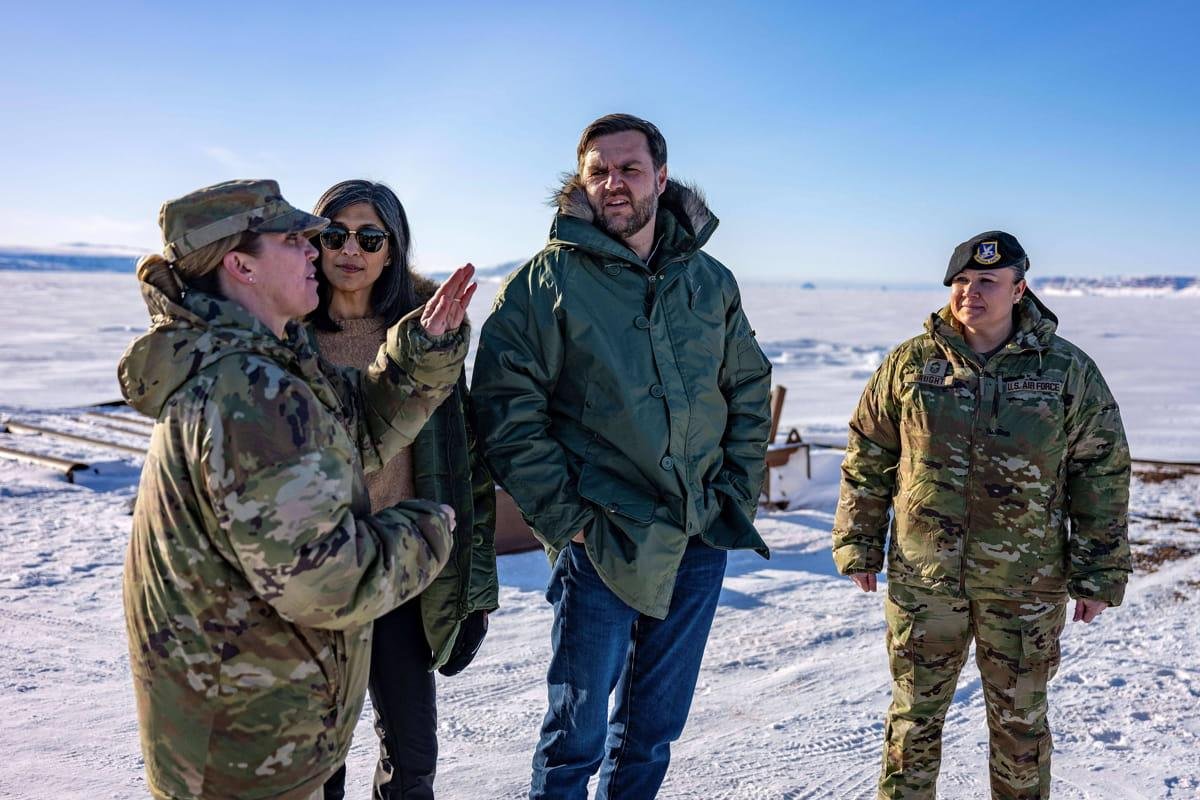
- The United States operates the Pituffik Space Base in Greenland. Its location supports functions associated with air surveillance, missile warning and space-related activities.
- The territory therefore has significance beyond conventional military deployment, particularly for monitoring activity across the Arctic and North Atlantic.
- Natural Resources and Emerging Arctic Routes
- Around 80% of Greenland is covered by ice, leaving a relatively limited area for permanent habitation. The region also contains deposits of critical and rare-earth minerals, which have increased its economic and strategic importance.
- The source also highlights the possibility that continued Arctic ice loss could improve access to mineral resources and create new opportunities for shipping, infrastructure and energy development.
Historical Background
- 1941: US-Denmark Defence Agreement
- US military involvement in Greenland is not a recent development. During World War II, Denmark was occupied by Nazi Germany, increasing concerns about Greenland’s strategic vulnerability.
- In 1941, the United States and Denmark concluded the Denmark-USA Agreement Relating to the Defense of Greenland. It provided the United States with extensive defensive rights while recognising Danish sovereignty over Greenland.
- 1951: NATO Framework
- Following the establishment of NATO in 1949, Denmark became one of its founding members.
- In 1951, the United States and Denmark concluded another defence agreement concerning Greenland within the NATO framework. The arrangement continued the US defensive role while retaining Danish sovereignty.
Post-Cold War Changes
- The end of the Cold War and the dissolution of the Soviet Union reduced the immediate military requirement for multiple US installations in Greenland.
- By 2004, the US military presence had become concentrated at Pituffik Space Base, with the source stating that approximately 150 troops remained there. During this period, Greenland also sought greater self-government and political representation.
The Greenland Dispute Since 2019
- The issue gained wider international attention in 2019, when then-US President Donald Trump proposed purchasing Greenland.
- Greenland rejected the proposal and stated that the territory was not for sale. The dispute highlighted the difference between US strategic interests, Danish sovereignty and Greenland’s claim to self-determination.
- According to the source, subsequent US statements regarding Greenland’s security further intensified this debate.
Recent Developments in Greenland
The source states that in September 2026 , the United States, Denmark and Greenland reached an understanding concerning an expanded and permanent US military presence.
According to the source, the reported provisions include:
- continuation and expansion of US military facilities and forces in Greenland;
- Increased US involvement in Greenland’s strategic infrastructure;
- Investment in ports, supply chains and other infrastructure;
- Greater US interest in rare-earth mineral development; and
- Restrictions on certain sensitive investments by external powers, including Russia and China, subject to US approval.
However, because the complete agreement was not publicly available in the source, these provisions should be treated as reported terms rather than independently established final provisions.
Strategic and Geopolitical Implications
- Arctic Security: A sustained US military presence would reinforce Washington’s ability to monitor developments across the Arctic and North Atlantic. Greenland’s geographical position makes it relevant to surveillance and wider regional security.
- Russia and China: Greenland’s location and mineral resources give it importance in the broader strategic competition involving major powers. Greater US involvement could therefore affect the scope for other countries to develop strategic or economic interests in the territory.
- Critical Minerals: Greenland’s rare-earth and other critical-mineral resources have economic significance because such materials are important for several advanced technologies and industrial supply chains.
- Arctic Connectivity : Changes in Arctic ice conditions may create new possibilities for maritime movement and economic activity. This could increase the importance of Greenland’s ports, infrastructure, energy systems and transport links.
Key Issues for Consideration
The Greenland question involves three principles that must be considered together:
- US security interests in the Arctic and North Atlantic;
- Danish sovereignty over Greenland; and
- Greenlandic self-government and self-determination.
Any long-term arrangement must therefore address security requirements while respecting the political and administrative position of Greenland and Denmark.
Way Forward
A durable framework would require:
- transparency regarding the final terms of any defence arrangement;
- respect for Greenland’s political rights and self-government;
- continued recognition of Danish sovereignty;
- cooperation on Arctic environmental protection and resource development;
- safeguards for strategic infrastructure and critical-mineral supply chains; and
- clear rules governing foreign military and economic activities.
Conclusion
- Greenland’s importance arises from the combination of its geographical location, military significance, mineral resources and emerging Arctic opportunities. The current debate is therefore not simply about territorial control. It also concerns access to strategic infrastructure, security networks, resources and supply chains.
- The central challenge is to reconcile Arctic security with sovereignty, self-determination and responsible resource development.
FAQs
- Why is Greenland strategically important?
Its location between North America and the Arctic approaches to Europe, along with its proximity to the GIUK Gap, gives it military and geopolitical importance.
- What is the GIUK Gap?
The GIUK Gap refers to the maritime space connecting Greenland, Iceland and the United Kingdom, which is important for monitoring and movement between the North Atlantic and Arctic regions.
- What is the significance of Pituffik Space Base?
It is a US military and space facility in Greenland associated with functions including missile warning, surveillance and space-related activities.
- When did the US first establish a major defence arrangement concerning Greenland?
The United States and Denmark signed the Denmark-USA Agreement Relating to the Defense of Greenland in 1941 during World War II.
- How did NATO become relevant to Greenland’s defence?
Denmark joined NATO as a founding member in 1949, and the 1951 US-Denmark Greenland defence agreement was concluded within the NATO framework.
- Why are Greenland’s minerals strategically important?
Greenland possesses critical and rare-earth mineral resources, which can contribute to industrial and technological supply chains.
- What are the three principal issues underlying the Greenland question?
The issue involves US security interests, Danish sovereignty and Greenlandic self-determination