Context
The Rajasthan High Court recently issued notices on a petition seeking a 9% sub-quota for the Bhil community within the existing 12% Scheduled Tribe reservation in Rajasthan.
The petition raises a wider issue: whether benefits within a reserved category are equitably distributed among different communities.
The proposed sub-quota is only a demand before the court and has not become government policy.
Why Is the Reservation Issue Important?
- Intra-ST Representation
The petition raises the question of whether different communities within the ST category receive proportionate access to education and public employment opportunities.
- Uneven Development
Scheduled Tribes are not socially or economically identical.
Differences in education, income, geography and access to public institutions can create unequal outcomes within the same reserved category.
- Need for Reliable Evidence
Any sub-classification requires credible data on:
- population;
- educational representation;
- employment participation;
- socio-economic disadvantage.
- Constitutional and Judicial Scrutiny
Any internal distribution of reservation benefits must remain consistent with the constitutional framework and judicial principles governing affirmative action.
The present case is therefore important because it combines:
Social justice + Intra-category equity + Evidence-based policy
About the Bhil Tribe
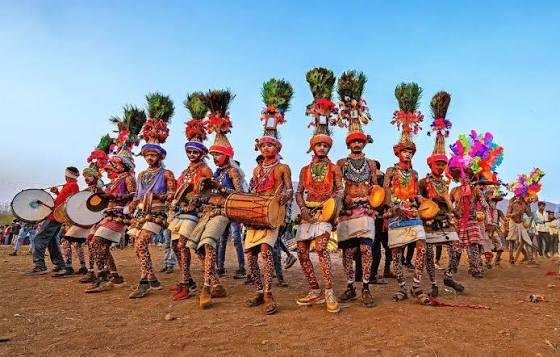
- Bhils are one of India’s largest Scheduled Tribe communities.
- They are mainly concentrated in western and central India.
- The name “Bhil” is commonly associated with a word meaning bow, reflecting their historical association with archery.
- Bhil communities have a long presence in the cultural and historical traditions of western India.
- They should be understood through their social, linguistic and cultural characteristics, rather than outdated racial classifications.
Geographical Distribution
Major Bhil populations are found in:
- Rajasthan;
- Madhya Pradesh;
- Gujarat;
- Maharashtra.
Their settlements are particularly associated with:
- southern Aravalli hills;
- Vindhya–Satpura region;
- adjoining uplands of Gujarat and northern Maharashtra.
Language
- Bhils speak Bhili/Bhilodi and related varieties.
- Bhili belongs to the Indo-Aryan language family.
- Different dialects show influence from neighbouring languages such as:
- Gujarati;
- Rajasthani;
- Marathi.
Livelihood
Agriculture forms the principal livelihood of many Bhil households.
Major activities include:
- settled cultivation;
- agricultural labour;
- forest-produce collection in some regions;
- seasonal wage employment.
Thus, Bhil livelihoods remain closely connected with land, forests and the rural economy.
Cultural Features
Baneshwar Fair
The Baneshwar Fair in Dungarpur, Rajasthan, is an important religious and cultural gathering associated with Bhil communities.
It is held near the confluence of the Mahi and Som rivers.
Bhil Painting
Bhil painting is known for:
- bright colours;
- repeated dot patterns;
- depiction of animals, nature and everyday life.
The dotted style gives Bhil art its distinctive visual identity.
Religious Traditions
Bhil religious practices combine:
- local deities;
- ancestral traditions;
- nature worship;
- influences from broader Hindu traditions.
This reflects a long process of cultural interaction without complete loss of tribal identity.
FAQs
Q1. Where are Bhils mainly found?
In Rajasthan, Madhya Pradesh, Gujarat and Maharashtra.
Q2. Which language is associated with the Bhils?
Bhili/Bhilodi, belonging to the Indo-Aryan language family.
Q3. Which major fair is associated with the Bhils?
The Baneshwar Fair in Rajasthan.
Q4. What is distinctive about Bhil painting?
Its use of bright colours and repeated dot patterns.
Q5. What is the Rajasthan sub-quota dispute about?
A petition seeks a separate share for Bhils within Rajasthan’s existing Scheduled Tribe reservation.