Context
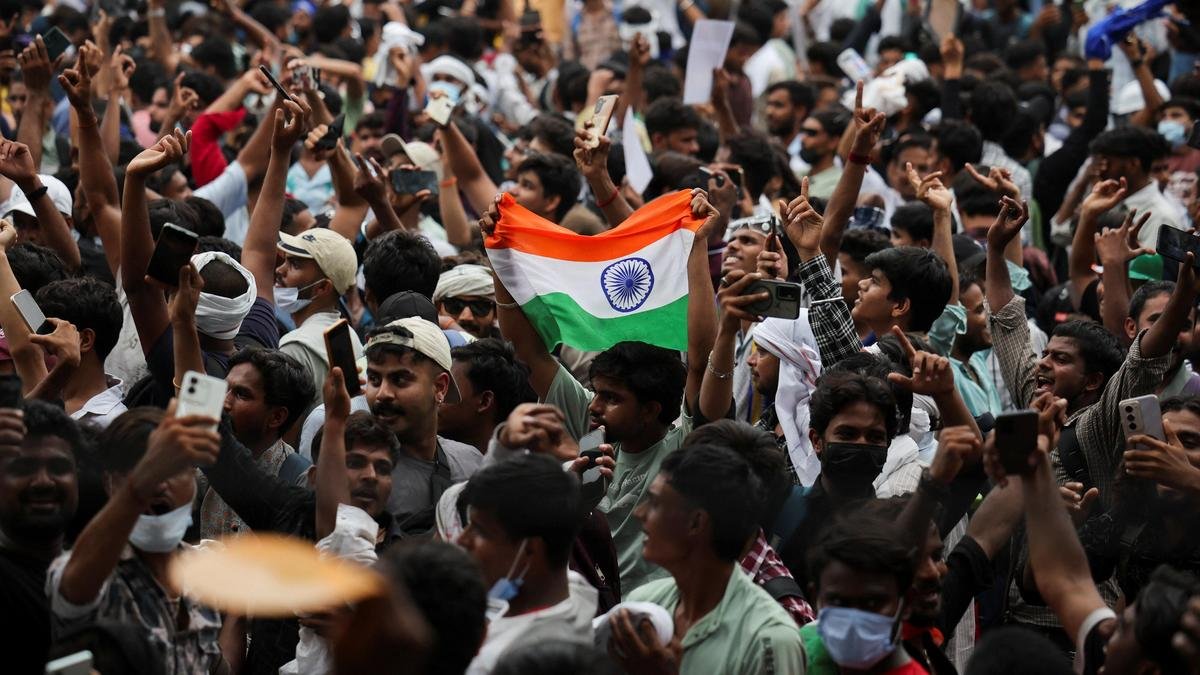
- Gen Z-led mobilisation is reshaping youth participation in public affairs. In India, student protests have increasingly emerged around examination irregularities, recruitment disputes, corruption and governance concerns.
- Such movements may begin with a specific grievance but acquire wider significance when the issue remains unresolved or is perceived as part of a broader institutional problem.
- Experiences in Bangladesh and Nepal illustrate how youth mobilisation can expand beyond an initial demand and acquire wider political significance. Bangladesh witnessed major student-led mobilisation in 2024, while Nepal experienced Gen Z-led protests in 2025 amid concerns relating to governance, corruption, employment prospects and restrictions on social-media platforms.
- These developments highlight the importance of identifying emerging grievances early and maintaining credible democratic channels for their resolution.
Changing Nature of Youth Mobilisation
- Contemporary youth movements can emerge without established political organisations, large membership structures or permanent leadership.
- Digital platforms enable rapid communication, coordination and dissemination of information, reducing the organisational barriers to collective action.
- A local grievance can therefore gain visibility beyond its original geographical setting within a short period.
- The Cockroach Janta Party (CJP) agitation illustrates this transition from online mobilisation to physical protest, with activities at Jantar Mantar, New Delhi, centred on examination-related concerns and institutional accountability.
- The emerging model is characterised by rapid mobilisation, decentralised participation and extensive digital reach.
Drivers of Youth Discontent
- Economic Drivers
- Employment insecurity and uncertainty over stable livelihood opportunities can generate frustration among young people.
- Delays and uncertainty in public recruitment can intensify concerns among aspirants seeking government employment.
- Institutional Drivers
- Examination irregularities, recruitment disputes and administrative opacity directly affect educational and career prospects.
- Perceptions of corruption, unequal treatment and inadequate accountability can further deepen dissatisfaction.
- Recurring concerns across regions can transform individual administrative disputes into broader questions about governance.
- Democratic Significance
- Peaceful protest provides citizens with a democratic means to express dissent, seek accountability and bring unresolved issues into public debate.
- The consequences of youth mobilisation vary according to institutional strength, political conditions, leadership and governmental response.
- Student movements have contributed to political transitions in some contexts, while political upheavals elsewhere have produced instability or changes in political authority.
- Democratic governance must therefore protect legitimate dissent while ensuring that institutions can respond effectively to genuine public concerns.
- From Specific Grievances to Wider Alienation
- Repeated failure to address specific demands can create a perception that formal institutions cannot provide fair and effective remedies.
- Mobilisation may then shift from an issue-specific demand to broader dissatisfaction with established authority.
- The history of Naxalism provides a separate historical lesson on how local grievances can acquire wider political and social dimensions under certain conditions.
- Contemporary student protests should not be equated with Naxalism, as their ideological foundations, objectives and socio-political contexts are different.
- The relevant lesson is that persistent grievances require timely attention before they develop into deeper political alienation.
- Applying broad labels to protesters without examining the substance of their demands can further polarise public discourse.
Governance Challenges
- Authorities must balance public-order requirements with the protection of peaceful democratic dissent.
- Restrictions on demonstrations and the use of force should comply with legality, necessity and proportionality.
- Resolving an immediate controversy may not address the institutional weakness behind it. For example, replacing or cancelling an examination may settle an immediate dispute without correcting deficiencies in examination management, recruitment procedures or oversight.
- Rapid circulation of information through digital platforms also requires timely and credible official communication during contentious situations.
- Effective governance therefore requires both immediate dispute resolution and institutional correction.
Way Forward
- Establish time-bound grievance-redressal mechanisms with clearly assigned responsibility for student and recruitment-related complaints.
- Strengthen examination and recruitment integrity through transparent procedures, independent oversight, secure processes and defined accountability.
- Institutionalise regular consultation with students and youth representatives before grievances escalate.
- Ensure that public-order measures remain lawful, evidence-based and proportionate, supported by accurate and timely communication.
- Create wider avenues for meaningful youth participation in democratic institutions so that young citizens have accessible channels for representation and engagement.
Conclusion
- The changing pattern of youth mobilisation reflects the interaction of economic aspirations, institutional expectations and digital connectivity.
- Its democratic significance depends on whether institutions can respond to emerging concerns through credible and accessible mechanisms.
- Strengthening these mechanisms can help channel youth discontent into constructive civic participation and reinforce democratic resilience.
FAQs
Q1. Why does youth mobilisation have particular significance for governance?
Ans. Young people form a large and politically significant section of society. Their mobilisation can reveal emerging concerns about employment, public services and institutional functioning.
Q2. What is decentralised mobilisation?
Ans. It refers to collective action that does not depend on a single formal organisation or central leadership. Digital networks allow participants to coordinate around common issues through flexible structures.
Q3. Why can local administrative disputes acquire wider significance?
Ans. A dispute can broaden when it is perceived as evidence of a recurring institutional problem. Wider participation may then shift attention from the original issue to governance and accountability.
Q4. What is the relevance of proportionality in managing protests?
Ans. Proportionality requires the state response to remain appropriate to the nature and seriousness of the situation. It helps balance public-order requirements with legitimate democratic freedoms.
Q5. Why is early grievance identification important?
Ans. Early identification allows authorities to investigate and resolve problems before separate concerns accumulate. It can reduce the possibility of an administrative dispute developing into broader institutional distrust.
Q6. How can youth participation extend beyond protest?
Ans. Consultation mechanisms, representative forums and opportunities to engage with public institutions can provide young citizens with regular channels to contribute to policymaking and governance.
Q7. What is the broader lesson for democratic institutions?
Ans. Democratic resilience depends not only on permitting dissent but also on ensuring that citizens have credible institutions through which grievances can be heard, examined and resolved.